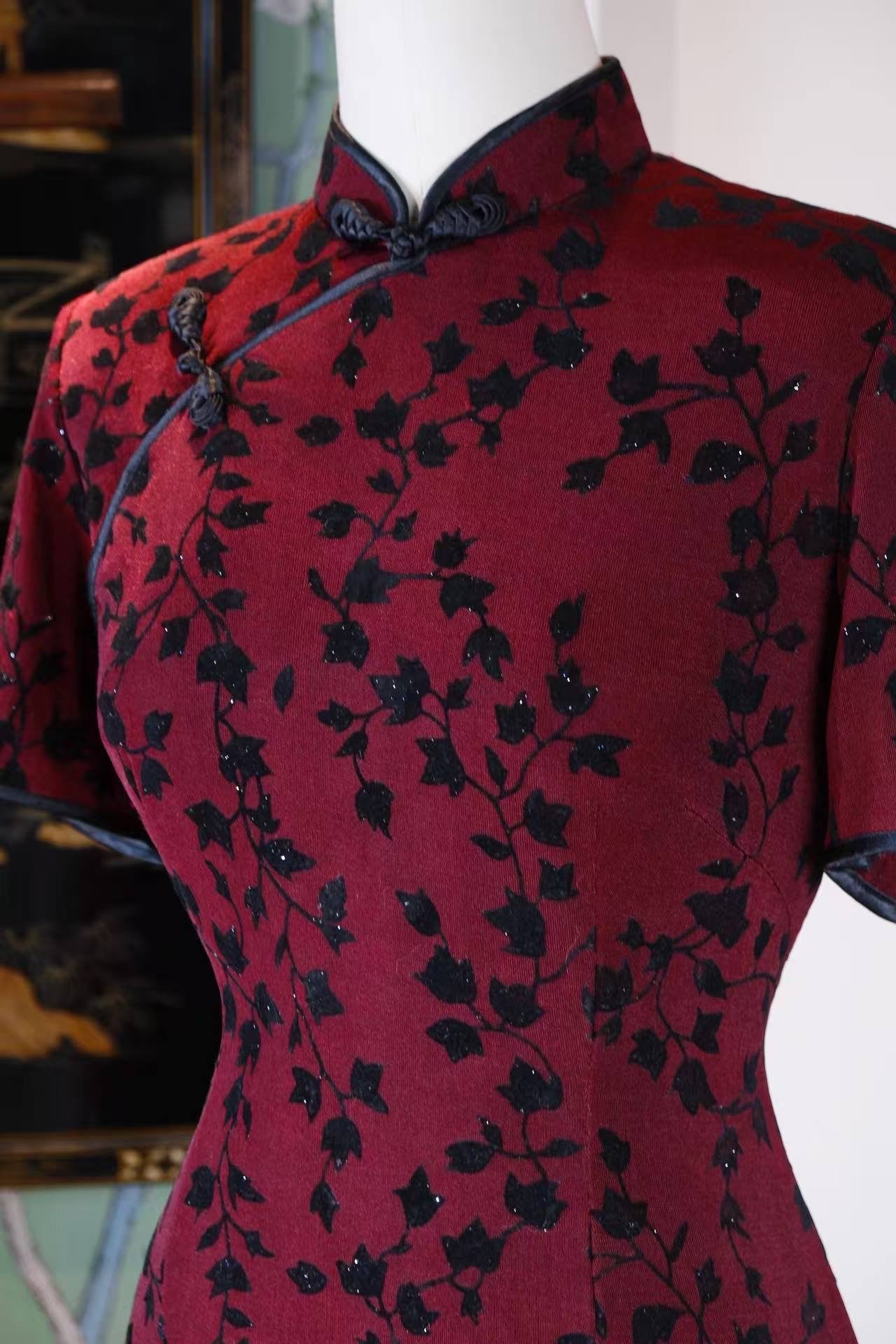
暗香疏影:上世纪六十年代羊毛混纺黑色植绒闪片台湾产古董旗袍
这件上世纪六十年代的台湾产古董旗袍,以其深邃的酒红色为底,仿佛是一幅古典的中国水墨画,而其上的黑色植绒闪片图案,则如同画中的墨迹,勾勒出一幅生动的“暗香疏影”图。旗袍上的图案,以简洁而富有韵律的黑色线条,描绘出一枝枝梅花,它们或疏或密,或斜或直,仿佛在寒风中傲然挺立,散发出淡淡的香气。
这种图案设计,不禁让人联想到宋代诗人林逋的名句:“疏影横斜水清浅,暗香浮动月黄昏。”这不仅是对梅花高洁品质的赞美,也是对穿着者内在气质的一种隐喻。梅花,作为中国传统文化中的重要象征,代表着坚韧不拔和高洁的品格,这与旗袍所体现的女性形象不谋而合。
旗袍的材质采用了羊毛混纺,这种面料在当时的台湾纺织业中极为罕见,它不仅保暖性好,而且质地柔软,穿着舒适。黑色植绒闪片的加入,更是为这件旗袍增添了一抹难以言喻的奢华感。在光线的照射下,这些闪片会反射出点点星光,使得穿着者在任何场合都能成为焦点。
旗袍的剪裁合体,线条流畅,完美地展现了东方女性的曲线美。它的设计既保留了传统旗袍的韵味,又融入了六十年代的时尚元素,体现了那个时代女性对于美的追求和自我表达的渴望。
作为一件古董旗袍,它的稀缺性不言而喻。在当时,这样的旗袍并非人人都能拥有,它往往代表着一定的社会地位和经济实力。如今,它更是成为了收藏家和时尚爱好者眼中的珍宝,不仅因为它的美学价值,更因为它承载着一段历史,见证了一个时代的变迁。
这件旗袍,就像是一部历史的见证者,它静静地诉说着上世纪六十年代台湾的故事,以及那个时代女性的生活和梦想。它是一件艺术品,也是一段记忆,更是一个时代的缩影。
Sparse Shadows and Faint Fragrance: 1960s Taiwanese Antique Wool-Blend Qipao with Black Flock-Print and Sequins
This 1960s antique Qipao from Taiwan features a profound burgundy base, resembling a classical Chinese ink wash painting. The black flock-printed patterns with sequins act like brushstrokes of ink, outlining a vivid scene of "sparse shadows and faint fragrance." The design uses concise yet rhythmic black lines to depict plum blossoms—some dense, some sparse, some slanted, and some straight—as if standing proud in the cold wind, exuding a subtle, ethereal scent.
I. Floral Metaphor: The Spirit of the Plum Blossom
The pattern design inevitably evokes the famous lines of the Song Dynasty poet Lin Bu: "Sparse shadows slant across the clear, shallow water; faint fragrance floats under the twilight moon." This is not only a tribute to the noble quality of the plum blossom but also a metaphor for the wearer’s inner grace. As a significant symbol in traditional Chinese culture, the plum blossom represents resilience and purity, perfectly aligning with the feminine image embodied by the Qipao.
II. Material and Craft: A Rare Symphony of Texture
The garment is crafted from a wool blend, a material that was exceptionally rare in Taiwan’s textile industry at the time. It offers both warmth and a soft, comfortable texture. The addition of black flock-printing and sequins adds an indescribable sense of luxury. Under the light, these sequins reflect tiny glimmers of starlight, ensuring the wearer becomes the focal point in any setting.
III. Silhouette and Era: The Pursuit of Beauty
The tailoring is impeccable, with fluid lines that perfectly showcase the curvaceous beauty of the Oriental silhouette. Its design preserves the charm of the traditional Qipao while integrating 1960s fashion elements, reflecting the women of that era's pursuit of beauty and their desire for self-expression.
IV. Scarcity and Legacy: A Microcosm of History
As an antique Qipao, its scarcity is self-evident. In its time, such a garment was not accessible to everyone; it often represented a certain social status and economic strength. Today, it has become a treasure for collectors and fashion enthusiasts—not only for its aesthetic value but because it carries a segment of history and witnesses the changes of an era.
This Qipao is a silent witness to history, quietly narrating the stories of 1960s Taiwan and the lives and dreams of women from that time. It is a work of art, a memory, and a microcosm of an era.