深圳溯源
60年代 - 梧桐影里的时光:一件六十年代台湾机绣蕾丝旗袍的考据与美学 | 1960s - Time Amidst the Shadows of Plane Trees: Research and Aesthetics of a 1960s Taiwanese Machine-Embroidered Lace Cheongsam
60年代 - 梧桐影里的时光:一件六十年代台湾机绣蕾丝旗袍的考据与美学 | 1960s - Time Amidst the Shadows of Plane Trees: Research and Aesthetics of a 1960s Taiwanese Machine-Embroidered Lace Cheongsam
无法加载取货服务可用情况
梧桐影里的时光:一件六十年代台湾机绣蕾丝旗袍的考据与美学
衣服尺寸:
胸围/腰围/臀围:88/74/102 厘米
衣长:124 厘米
细节描述:
在服饰史的漫长卷轴中,上世纪六十年代的台湾旗袍,是一抹独特的墨色。彼时,大陆旗袍的繁盛已渐入尾声,而在台湾,这一服饰却以另一种姿态延续着它的生命,并融入了海岛特有的温润与坚韧。这件台湾产的机绣蕾丝古董旗袍,便是那个特殊时代的见证者与幸存者。
一、图案考据:几何秩序中的自然诗意
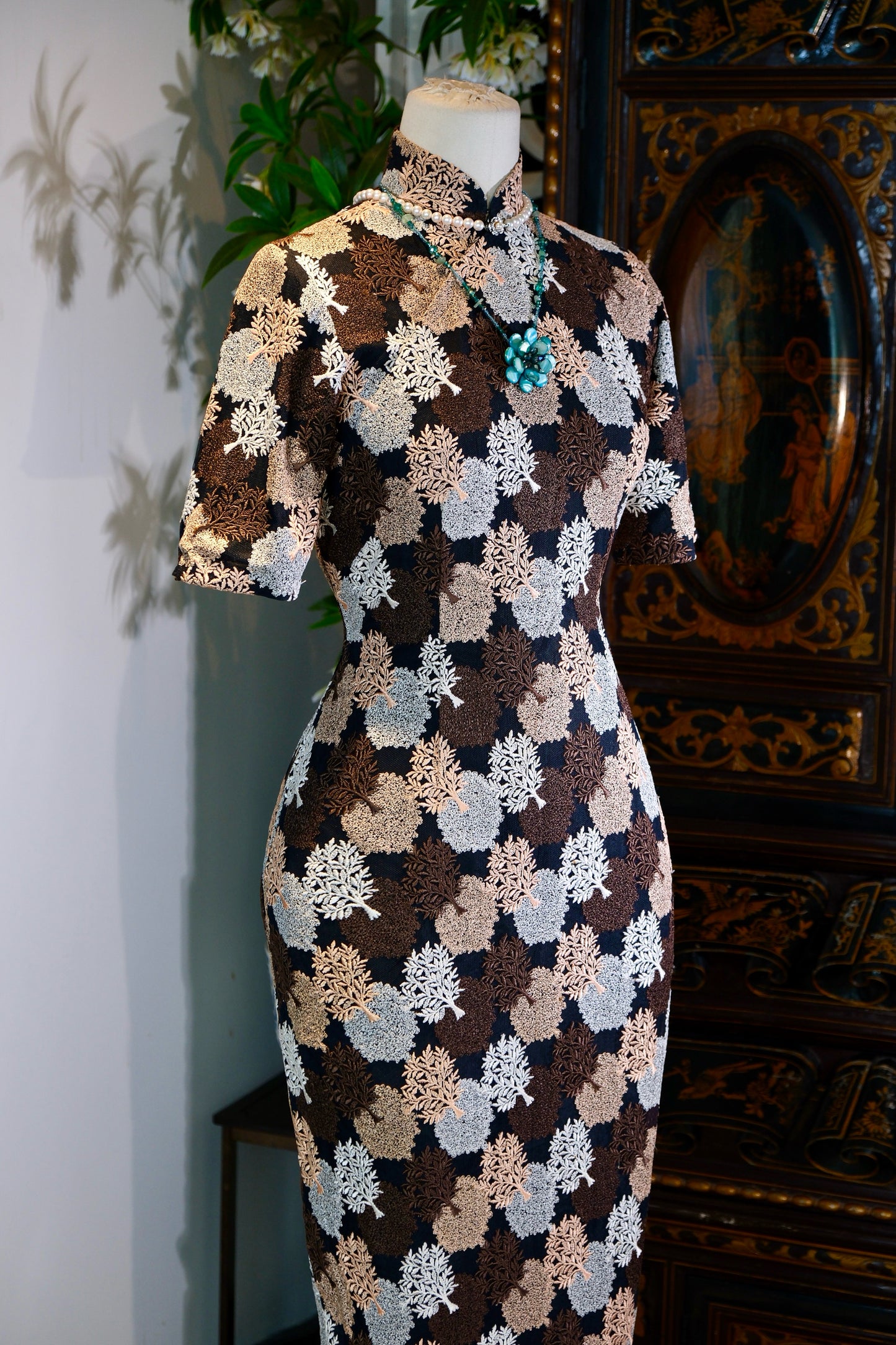
这件旗袍最引人入胜之处,在于其面料的图案设计。它并未采用传统旗袍常见的缠枝花卉或龙凤呈祥,而是展现了一种极具现代感的构成主义美学。
- 几何骨架:面料的底色为深沉的藏蓝或黑色,之上是由菱形格纹构成的隐形骨架。这种格纹并非简单的线条,而是由不同色彩的蕾丝纹样填充而成,形成了一种“格中有花,花中有格”的视觉韵律。
- 梧桐意象:仔细观察每一个菱形格内的蕾丝纹样,它们并非抽象的几何图形,而是高度风格化的梧桐叶或珊瑚枝。这些纹样以米白、浅褐、深棕、银灰等大地色系呈现,通过机绣工艺,将丝线层层堆叠,形成了浮雕般的立体感。梧桐在中国传统文化中象征着高洁与忠贞,如《诗经·大雅·卷阿》所云:“凤凰鸣矣,于彼高冈。梧桐生矣,于彼朝阳。”将梧桐纹样以如此现代的方式重构,既保留了文化寓意,又彰显了六十年代的革新精神。
- 色彩韵律:色彩的排列并非杂乱无章,而是遵循着一种微妙的节奏。米白与银灰的明亮,与深棕与藏蓝的深沉相互交织,如同秋日梧桐林在阳光下的斑驳光影,既有秩序感,又不失自然的灵动。
二、工艺与材质:机绣蕾丝的时代印记
六十年代的台湾,正处于从传统手工业向现代轻工业转型的时期。这件旗袍所采用的机绣蕾丝,正是这一时代背景的产物。
- 机绣的兴起:与费时费力的手工刺绣不同,机绣的出现,使得精美的蕾丝面料得以规模化生产,让更多女性能够拥有兼具美感与品质的服饰。这件旗袍的机绣工艺极为精湛,针脚细密,图案清晰,即便是以今日的眼光审视,也毫不逊色。
- 蕾丝的质感:面料的基底是轻薄的蕾丝,透气性佳,非常适合台湾的亚热带气候。蕾丝的镂空特性,使得旗袍在庄重之余,又增添了一丝若有若无的性感与轻盈。这种材质的选择,也反映了六十年代女性对于舒适与时尚的双重追求。
三、稀缺性与艺术风格:孤品的价值
这件旗袍的稀缺性,不仅在于其年代久远,更在于其独特的艺术风格。
- 孤品属性:古董衣的魅力在于其不可复制性。这件旗袍的图案设计、色彩搭配以及机绣工艺,都是特定时代的产物,如今已难以再现。每一处针脚,每一片蕾丝,都承载着历史的温度。
- 中西合璧的美学:这件旗袍在剪裁上保留了传统旗袍的立领、修身廓形,但在面料图案上却大胆采用了具有现代构成主义风格的设计。这种中西合璧的美学,正是六十年代台湾旗袍的典型特征,它既是对传统的致敬,也是对未来的探索。
四、古董衣的故事:时光的沉淀
想象一下,在六十年代的台北街头,一位身着此旗袍的女子,或许正要去参加一场画展,或是一场朋友的茶会。她步履轻盈,旗袍上的梧桐纹样随着她的动作而摇曳,仿佛在诉说着那个时代的风雅与从容。
这件旗袍,不仅仅是一件衣服,它是一段凝固的时光,一个关于美、关于时代、关于女性的故事。它从历史的尘埃中走来,带着那个时代的温度与气息,等待着新的主人,续写它的故事。
这件六十年代台湾机绣蕾丝旗袍,是服饰史上的一个注脚,也是艺术美学的一次实践。它以其独特的图案、精湛的工艺与稀缺的价值,成为了不可多得的收藏佳品。它提醒着我们,时尚并非只是转瞬即逝的潮流,更是可以穿越时光,历久弥新的艺术。
Time Amidst the Shadows of Plane Trees: Research and Aesthetics of a 1960s Taiwanese Machine-Embroidered Lace Cheongsam
Measurements / Size Guide:
Bust / Waist / Hips: 88/74/102 cm
Total Length: 124 cm
Detailed Description:
In the long scroll of costume history, the Taiwanese cheongsam (qipao) of the 1960s stands as a unique stroke of ink. While the peak of the qipao’s prominence on the mainland was drawing to a close, it continued its life in Taiwan with a different posture, blending with the island's characteristic warmth and resilience. This antique machine-embroidered lace qipao is both a witness and a survivor of that exceptional era.
I. Pattern Research: Natural Poetry within Geometric Order
The most captivating aspect of this qipao is its fabric design. Moving away from traditional motifs like intertwining flowers or dragons and phoenixes, it showcases a Constructivist aesthetic full of modern flair.
-
Geometric Skeleton: The base color is a deep navy or black, topped with an invisible skeleton formed by lozenge (diamond) lattices. These are not simple lines but are filled with lace patterns of varying colors, creating a visual rhythm of "flowers within lattices, and lattices within flowers."
-
The Imagery of Plane Trees: A close look at each diamond reveals motifs that are not abstract shapes but highly stylized plane tree leaves (Wutong) or coral branches. Rendered in an earth-tone palette—off-white, light tan, deep brown, and silver-grey—the silk threads are layered through machine embroidery to create a sculptural relief. In Chinese culture, the plane tree symbolizes nobility and loyalty. Reconstructing this traditional motif in such a modern way preserves its cultural meaning while manifesting the innovative spirit of the 1960s.
-
Color Rhythm: The arrangement of colors follows a subtle tempo. The brightness of off-white and silver-grey interweaves with the depth of brown and navy, much like the dappled light in a plane tree forest on an autumn day—ordered, yet capturing the vitality of nature.
II. Craft and Material: The Era’s Mark on Machine-Embroidered Lace
The 1960s was a period of transition for Taiwan from traditional handicrafts to modern light industry. The machine-embroidered lace of this qipao is a direct product of this historical background.
-
The Rise of Machine Embroidery: Unlike labor-intensive hand embroidery, machine embroidery allowed for the large-scale production of exquisite lace, enabling more women to own garments that balanced beauty and quality. The embroidery here is superb, with dense stitches and crisp patterns that hold up even to modern scrutiny.
-
The Texture of Lace: The lace base is lightweight and breathable, perfectly suited for Taiwan’s subtropical climate. Its openwork nature adds a touch of subtle sensuality and lightness to the garment's solemnity, reflecting the 1960s woman's dual pursuit of comfort and fashion.
III. Scarcity and Art Style: The Value of a Unique Specimen
The scarcity of this qipao lies not only in its age but in its unique artistic style.
-
One-of-a-Kind Attribute: The allure of antique clothing is its irreproducibility. The pattern design, color palette, and embroidery techniques are products of a specific time. Every stitch and lace fragment carries the warmth of history.
-
East-Meets-West Aesthetics: While the tailoring preserves the traditional standing collar and slim silhouette, the fabric boldly embraces modern Constructivist design. This fusion is a hallmark of 1960s Taiwanese qipaos—a tribute to tradition and an exploration of the future.
IV. The Story of the Garment: The Sediment of Time
Imagine a woman on the streets of Taipei in the 1960s, perhaps on her way to an art exhibition or a tea gathering. With every light step, the plane tree motifs on her qipao sway, recounting the elegance and composure of that era.
This qipao is more than a garment; it is a segment of frozen time—a story about beauty, the era, and femininity. Emerging from the dust of history, it carries the warmth and atmosphere of its time, awaiting a new owner to continue its narrative.
This 1960s Taiwanese machine-embroidered lace cheongsam serves as both a footnote in costume history and a definitive practice in artistic aesthetics. With its unique patterns, exquisite craftsmanship, and scarcity, it has become an invaluable collector's masterpiece. It serves as a profound reminder that fashion is never merely a fleeting trend, but a timeless art form that endures and renews itself through the passage of years.
分享