六十年代香港古董旗袍:古波斯纹样的东方涅槃
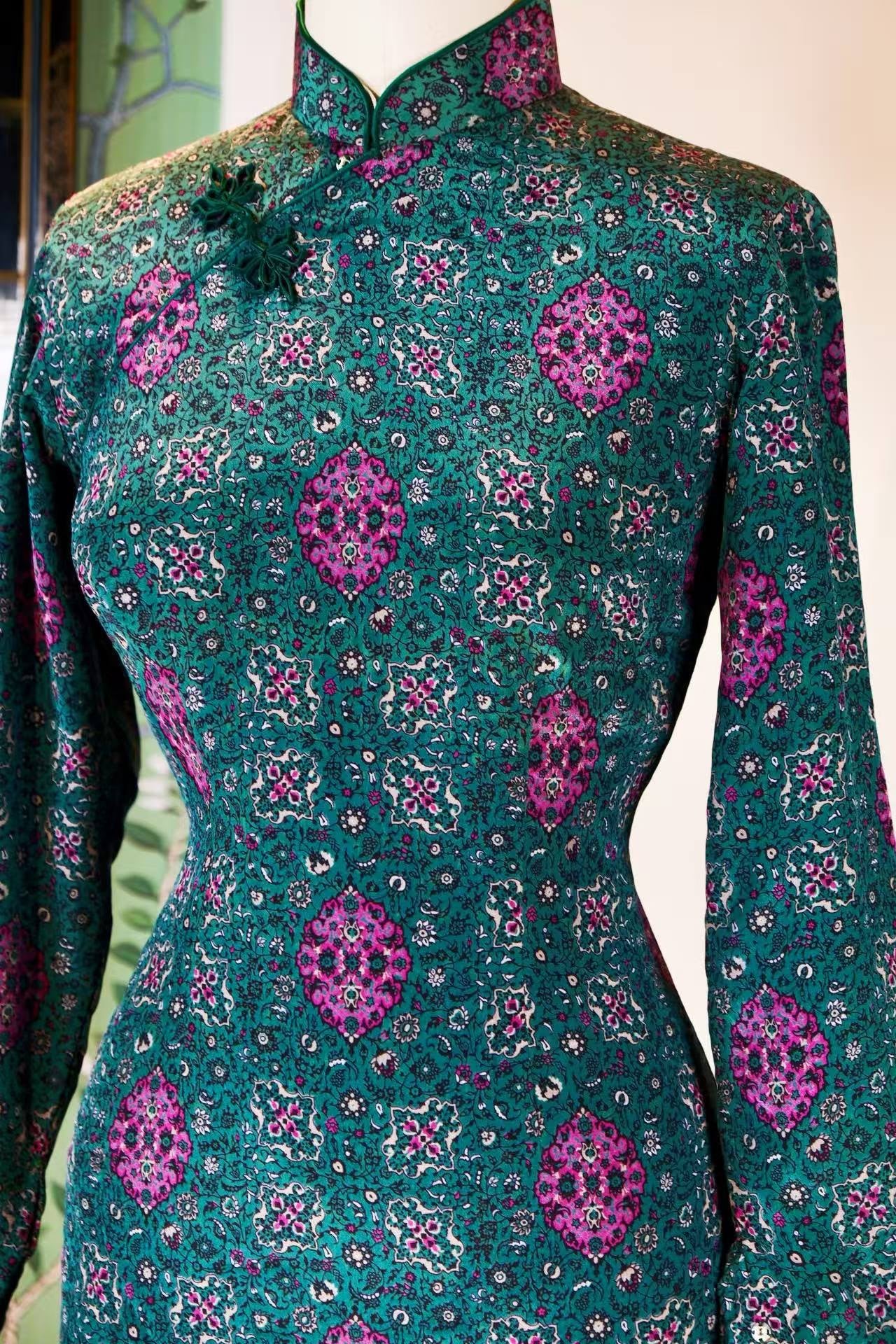
当波斯细密画的瑰丽纹样邂逅东方旗袍的婉约身姿,这件上世纪六十年代的香港产古董旗袍,恰似一部凝固的丝绸史诗,在线香绲的纤细脉络与嵌丝硬花扣的精雕细琢中,铺陈开东西方美学交融的惊艳图卷。
旗袍面料以孔雀蓝为底,织就古波斯特有的花卉纹样——紫红菱形开光内,缠枝莲以卷草纹为骨,勾连出永生花的意象。《天工开物》载“织法以经纬错综,花纹乃现”,将波斯纹样的热烈奔放,化作江南女子的含蓄风流。
线香绲工艺如发丝般细腻,沿立领、斜襟、袖口蜿蜒而下,恰似给花纹系上一条隐形的丝绸项链。嵌丝硬花扣以真丝编结,扣头雕琢成海棠花形,与面料花纹形成“花中藏扣,扣映花魂”的呼应。
此袍面料采用进口波斯纹样印花绸,仅供给高端旗袍作坊;而线香绲与嵌丝硬花扣的组合工艺,更需资深绣娘耗时百日方能完成。正如《中国古代服饰研究》中所言:“旗袍之美,在于料、工、意的统一”,这件旗袍不仅承载着六十年代香港的都市风情,更见证了丝绸之路沿线的纺织技艺交融——波斯纹样的浪漫想象,最终在东方丝绸上找到了最完美的归宿。
当霓裳轻曳,花纹在光影中流转,仿佛能听见丝绸摩擦时的沙沙声,那是岁月在低语,诉说着一件古董旗袍穿越时空的永恒魅力。它不仅是一件衣物,更是一段凝固的历史,一种流动的艺术,值得被珍藏,被品读,被传颂。
Oriental Nirvana of Persian Motifs: A 1960s Hong Kong Vintage Cheongsam
When the magnificent motifs of Persian miniature painting encounter the subtle grace of the Oriental cheongsam silhouette, this vintage robe from 1960s Hong Kong becomes a condensed silk epic. It unfolds a stunning tapestry of East-West aesthetic fusion, detailed within the fine veins of the incense stick piping (xiàn xiāng gǔn) and the intricate carving of the inlaid hard flower buttons (qiàn sī yìng huā kòu).
The cheongsam fabric features a peacock blue base, woven with unique ancient Persian floral patterns—within crimson rhombic frames (kāi guāng), scrolling lotus vines use tendrils as their structure, outlining the imagery of the eternal flower. Tiān Gōng Kāi Wù (The Exploitation of the Works of Nature) records: "Weaving methods rely on the intricate staggering of warp and weft for patterns to appear." This process transformed the passionate exuberance of Persian motifs into the reserved elegance of a Jiangnan woman.
The incense stick piping is as delicate as a strand of hair, winding down the stand collar, diagonal placket, and cuffs, resembling an invisible silk necklace adorning the pattern. The inlaid hard flower buttons are braided with real silk, and the button heads are carved into the shape of crab-apple blossoms (hăi táng huā), creating a mutual resonance with the fabric pattern: "buttons concealed within the flowers, flowers reflecting the button's spirit."
The fabric of this robe utilized imported Persian-patterned printed silk, which was only supplied to high-end cheongsam workshops. Furthermore, the combined craftsmanship of the incense stick piping and inlaid hard flower buttons required the labor of a senior embroideress for potentially a hundred days to complete. As stated in A Study of Ancient Chinese Costume: "The beauty of the cheongsam lies in the unity of material, craftsmanship, and meaning." This cheongsam not only carries the urban flair of 1960s Hong Kong but also witnesses the integration of textile techniques along the Silk Road—the romantic imagination of Persian motifs ultimately found its perfect home on Oriental silk.
When the iridescent garment sways gently and the patterns flow in the light, one can almost hear the rustling sound of the silk, a whisper of the years, narrating the timeless charm of an antique cheongsam traversing time and space. It is not merely a garment; it is a condensed history, a flowing art form, worthy of collection, appreciation, and narration.