深圳溯源
无法加载取货服务可用情况
衣服尺寸:
胸围/腰围/臀围:100/90/110 厘米
衣长:103 厘米
细节描述:
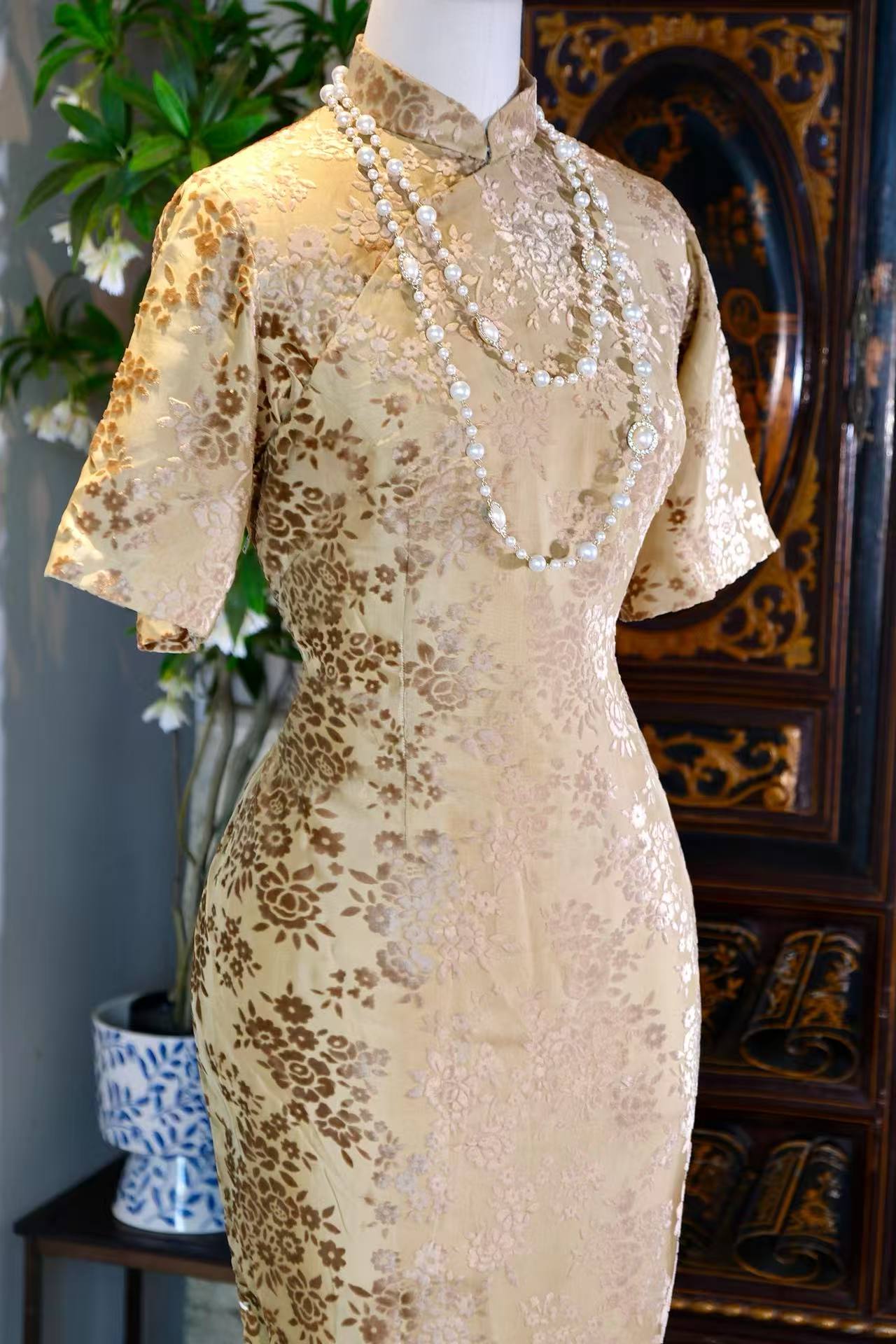
当指尖拂过这件上世纪六十年代台湾产的烧花丝绒旗袍,仿佛触到了时光的肌理。作为一件承载着特定历史记忆的服饰,它不仅是一件衣裳,更是一段凝固的岁月史诗。
一、面料密码:六十年代烧花工艺的巅峰之作
这件旗袍的面料,是上世纪六十年代台湾纺织业黄金时期的烧花丝绒杰作。烧花工艺,又称“烂花”,是通过化学药剂在丝绒表面蚀刻出镂空花纹,形成“绒地透花”的独特效果。这种工艺在六十年代达到技术与艺术的双重巅峰,却因环保要求与技术迭代,如今已极为罕见。面料上的图案,以缠枝牡丹与缠枝莲为主,辅以缠枝卷草纹,构成“满地花”的繁复布局。牡丹象征富贵,莲花寓意高洁,缠枝纹则暗合“生生不息”的传统美学。图案采用“散点透视”构图,花朵大小错落,枝叶蜿蜒舒展,既保留了传统纹样的吉祥寓意,又融入了现代设计的疏密节奏。在光线下,丝绒的绒面与烧花的镂空形成明暗对比,如“雾里看花”,朦胧中透出奢华。
二、剪裁叙事:六十年代台湾旗袍的优雅转身
上世纪六十年代,台湾成为旗袍文化的重要传承地。这件旗袍的剪裁,体现了那个时代的审美转向:
- 立领与斜襟:立领高度适中,既保持了传统旗袍的端庄,又避免了过度拘谨;斜襟线条流畅,从领口至腋下自然过渡,暗合人体工学。
- 收腰与开衩:腰部采用“省道”剪裁,精准贴合女性曲线,下摆开衩高度适中,行走时隐约露出小腿,兼具含蓄与风情。
- 短袖设计:短袖袖口微喇,既适应了台湾的亚热带气候,又增添了现代感,是传统旗袍向日常化转型的明证。
三、文化隐喻:从“衣以载道”到“衣以载情”
旗袍从来不只是服饰,更是文化的载体。这件烧花丝绒旗袍,承载了多重文化隐喻:
- 六十年代台湾风情:六十年代的台湾,经济腾飞,文化多元。旗袍作为“新女性”的象征,既保留了传统韵味,又融入了现代审美。这件旗袍,或许曾是某位女性在“圆山大饭店”参加晚宴的华服,或是她在“西门町”逛街时的时尚单品,针脚里藏着她们的自信与风情。
- 工艺绝唱:烧花丝绒工艺的失传,让这件旗袍成为“不可复制的艺术品”。如今,我们只能在博物馆或古董衣收藏中,一睹这种工艺的风采。这件旗袍,不仅是服饰,更是“纺织技术的活化石”。
四、稀缺性:时光的馈赠
这件旗袍的稀缺性,不仅在于其烧花丝绒面料的罕见,更在于其“六十年代台湾产”的身份。那个时代的台湾,纺织业以“高品质、高工艺”著称,而这件旗袍,正是那个时代的“工艺标杆”。如今,随着时光流逝,保存完好的六十年代台湾产烧花丝绒旗袍,已如“凤毛麟角”,成为收藏家们竞相追逐的“时光珍宝”。
五、结语:一件旗袍,一段历史
这件烧花丝绒旗袍,是时光的馈赠,是工艺的绝唱,是文化的载体。它让我们看到,六十年代的台湾,如何在传统与现代之间,找到属于自己的时尚语言;也让我们感受到,一件衣裳,如何承载一个时代的风情与记忆。如今,它静静伫立,等待着新的主人,续写属于它的时光叙事。
Measurements / Size Guide:
Bust / Waist / Hips: 100/90/110 cm
Total Length: 103 cm
Detailed Description:
As your fingertips brush over this 1960s Taiwanese-made burn-out velvet cheongsam (qipao), you can almost feel the very texture of time. As a garment carrying specific historical memories, it is more than just clothing; it is a solidified epic of a bygone era.
The fabric of this cheongsam is a masterpiece of burn-out velvet from the golden age of Taiwan's textile industry in the 1960s. The burn-out process, also known as "Devoré," utilizes chemical agents to etch openwork patterns onto the velvet surface, creating a unique effect of "translucent motifs on a plush ground." This craft reached its dual peak of technique and artistry in the 1960s but has become extremely rare today due to environmental regulations and technological shifts.
The patterns feature intertwining peonies and lotuses, complemented by scrolling grass motifs, forming a dense "All-over Floral" (Mandi Hua) layout. The peony symbolizes wealth and honor, the lotus represents purity, and the intertwining vines align with the traditional aesthetic of "endless vitality." Utilizing a "scattered perspective" composition, the varying sizes of blossoms and the rhythmic stretching of stems retain traditional auspicious meanings while integrating the spatial cadence of modern design. Under the light, the contrast between the plush pile and the etched openwork creates an effect of "looking at flowers through a mist"—a hazy, sophisticated luxury.
In the 1960s, Taiwan became a vital sanctuary for cheongsam culture. The tailoring of this piece reflects the aesthetic shifts of that era:
Standing Collar and Diagonal Bodice: The collar height is moderate, maintaining traditional dignity without excessive constriction. The diagonal line flows smoothly from the neck to the underarm, aligning with ergonomic grace.
Cinched Waist and Side Slits: Precision "dart" tailoring ensures a fit that contours the female silhouette. The side slits are of a modest height, subtly revealing the lower leg during movement—balancing reserve with allure.
Short Sleeve Design: The slightly flared cuffs not only adapted to Taiwan’s subtropical climate but also added a touch of modernity, serving as clear evidence of the traditional qipao’s transition toward daily wear.
A cheongsam is never just a garment; it is a cultural vessel. This burn-out velvet piece carries multiple metaphors:
1960s Taiwan Atmosphere: During the 1960s, Taiwan experienced an economic takeoff and cultural pluralism. As a symbol of the "New Woman," the qipao retained traditional charm while embracing modern aesthetics. This garment might have been a gala gown worn at the Grand Hotel Taipei, or a fashion statement for a stroll in Ximending. Their confidence and grace are hidden within its stitches.
A Technical Swan Song: The disappearance of traditional burn-out velvet craftsmanship makes this cheongsam an "unrepeatable work of art." Today, we can only glimpse the splendor of this technique in museums or private antique collections. It is, quite literally, a "living fossil of textile technology."
The scarcity of this cheongsam lies not only in the rarity of the Devoré velvet but in its identity as a "1960s Taiwanese-made" original. Taiwan's textile industry was then renowned for "high quality and superior craft," and this piece stands as a "craftsmanship benchmark." With the passage of time, a well-preserved burn-out velvet qipao from this period has become as rare as "phoenix feathers and unicorn horns"—a temporal treasure for collectors to pursue.
This burn-out velvet cheongsam is a gift from time, a swan song of craftsmanship, and a vessel of culture. It shows us how 1960s Taiwan found its own fashion language between tradition and modernity. It stands silently now, waiting for a new owner to continue its temporal narrative.