深圳溯源
无法加载取货服务可用情况
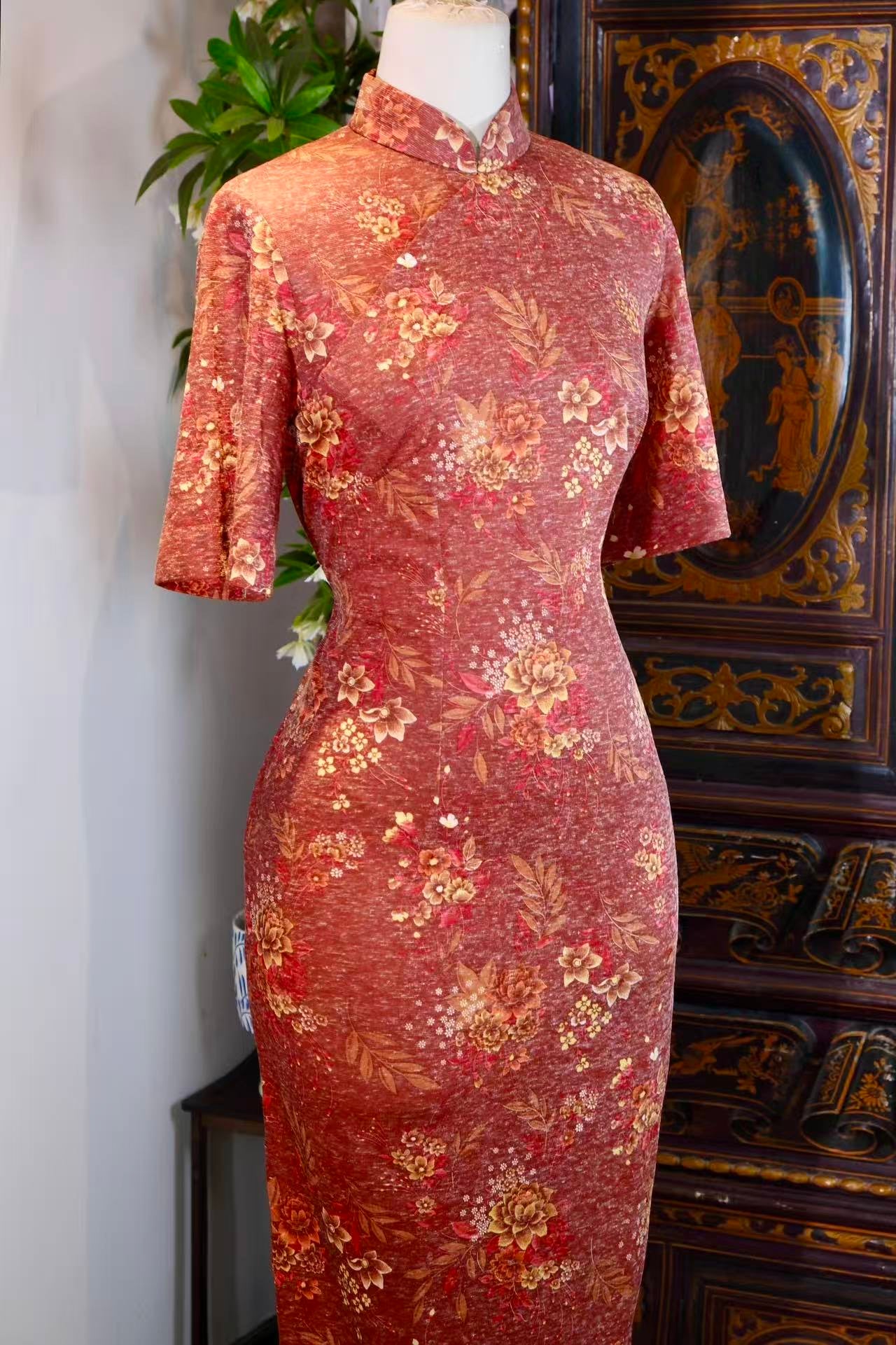
衣冠考据:六十年代台湾弹力针织旗袍
这件藏品并非寻常布帛,
- 形制之妙:它保留了传统旗袍的立领与斜襟结构,
- 工艺之珍:六十年代的针织技术尚未普及,
图案解读:繁花似锦中的东方意象
这件旗袍的印花图案并非随意堆砌,
- 色彩基调:主色调为铁锈红(或称赭石红),
- 纹样构成:
- 主体花卉:图案中盛开的花朵形态饱满,花瓣层层叠叠,
- 辅助元素:花朵之间穿插着细碎的枝叶与小花簇。
- 构图韵律:图案分布看似随意,实则遵循着一种自然的生长律动。
古董衣的故事:时光深处的优雅
每一件古董衣都是一段被穿在身上的历史。
这件旗袍的主人,或许是一位生活在六十年代台湾的知性女性。
它见证了那个时代女性身份的转变——从大家闺秀走向职场丽人。
引经据典:旗袍里的文学与美学
若要形容这件旗袍的风韵,张爱玲在《更衣记》
这件旗袍,正是那一出“袖珍戏剧”:
- 它的弹力针织,暗合了现代主义对“功能与形式统一”的追求;
- 它的繁花图案,则是东方古典主义的浪漫回响。
正如著名学者苏青所言:“旗袍是女性身体的诗。” 这件六十年代的珍品,便是用铁锈红的笔墨,写就了一首关于岁月、
结语
这是一件集技术、艺术与历史于一身的稀缺藏品。
This collection piece is no ordinary textile; it is a "Stretch-Knit Printed Cheongsam" that crystallizes the cross-strait flow of garment culture and technological innovation. Born in 1960s Taiwan, it hails from an era where traditional Oriental aesthetics and Western modern textile industries collided with profound intensity.
The Mastery of Form: While preserving the traditional mandarin collar and diagonal closure (pankou), it boldly adopts the most advanced stretch-knit fabric of the time. This material is tight-fitting and supple, perfectly tracing the contours of the human body—often referred to as a "second skin." Unlike the heavily stylized aesthetics of old Shanghai calendars, this cheongsam highlights the modern woman’s efficiency and grace, standing as physical evidence of the aesthetic awakening of the "New Woman."
The Rarity of Craft: In the 1960s, knitting technology was not yet ubiquitous. Producing such a dense fabric with rich, intricate prints was a hallmark of high-end Taiwanese textile manufacturing. The material is wrinkle-resistant and comfortable, representing the ultimate pursuit of "utilitarian aesthetics" during that decade.
The printed patterns on this cheongsam are not mere haphazard decorations; they carry profound traditional Chinese auspicious meanings and visual aesthetics.
The Color Palette: The primary tone is rust red (or ochre red), a warm, steady, and vintage hue. In traditional culture, red symbolizes celebration and vitality, yet this slightly muted shade adds a sense of historical precipitation. It possesses both the gentleness of "red sleeves adding fragrance" and the dignified poise of a well-bred lady.
Pattern Composition:
Primary Flora: The blossoms are in full bloom with layered petals, closely resembling peonies or chrysanthemums. The peony, the "King of Flowers," symbolizes wealth and auspiciousness; the chrysanthemum represents nobility and longevity. In 1960s print design, these two were often paired to convey the idiom "Hua Kai Fu Gui" (Wealth blooms with the flowers).
Supplementary Elements: Interspersed among the blooms are delicate branches and small flower clusters. These golden-toned, fluid lines create a sharp contrast with the base color, adding depth and a three-dimensional quality. This "all-over" (mandiwen) design provides a strong visual impact, a hallmark of that era's aesthetic.
Compositional Rhythm: The distribution appears spontaneous but follows a natural growth rhythm. The varying density and size of the flowers are meticulously arranged, as if a Gongbi (meticulous brush) flower-and-bird painting were printed directly onto flowing silk, filled with the poetic sense of "riotous flowers becoming a blur to the eye."
Every antique garment is a piece of history worn on the body.
The original owner of this cheongsam might have been an intellectual woman living in 1960s Taiwan. At that time, the island was on the cusp of an economic takeoff; Western culture was flooding in, yet traditional etiquette and aesthetics remained deeply rooted. Wearing this cheongsam—a marriage of Western knitting and Oriental floral motifs—she walked the streets of Taipei, both a guardian of tradition and an embracer of modern life.
It witnessed the transformation of female identity: from the secluded lady of the household to the professional woman of the workplace. This stretch fabric liberated women from the constraints of traditional silk, allowing for greater freedom of movement. It is more than a garment; it is a manifesto of an attitude: elegant but not fragile; traditional but not stagnant.
To describe the grace of this cheongsam, the prose of Eileen Chang in Chronicle of Changing Clothes is most fitting. She once wrote: "For those who cannot speak, clothes are a kind of language—a pocket drama one carries with them."
This cheongsam is precisely that "pocket drama":
Its stretch-knit aligns with the modernist pursuit of the "unity of function and form."
Its floral patterns are a romantic echo of Oriental Classicism.
As the famous scholar Su Qing remarked: "The cheongsam is the poetry of the female body." This 1960s treasure is a poem written in rust-red ink, recounting the unique resilience and brilliance of Oriental women through the passage of time.
This is a rare collectible that integrates technology, art, and history. It is not merely a piece of clothing, but a slice of an era—a memory sealed by the years. To wear it is to hear the wind of the sixties, smell the fragrance of old times, and touch the unique elegance and strength of a generation of women amidst the tides of history.