深圳溯源
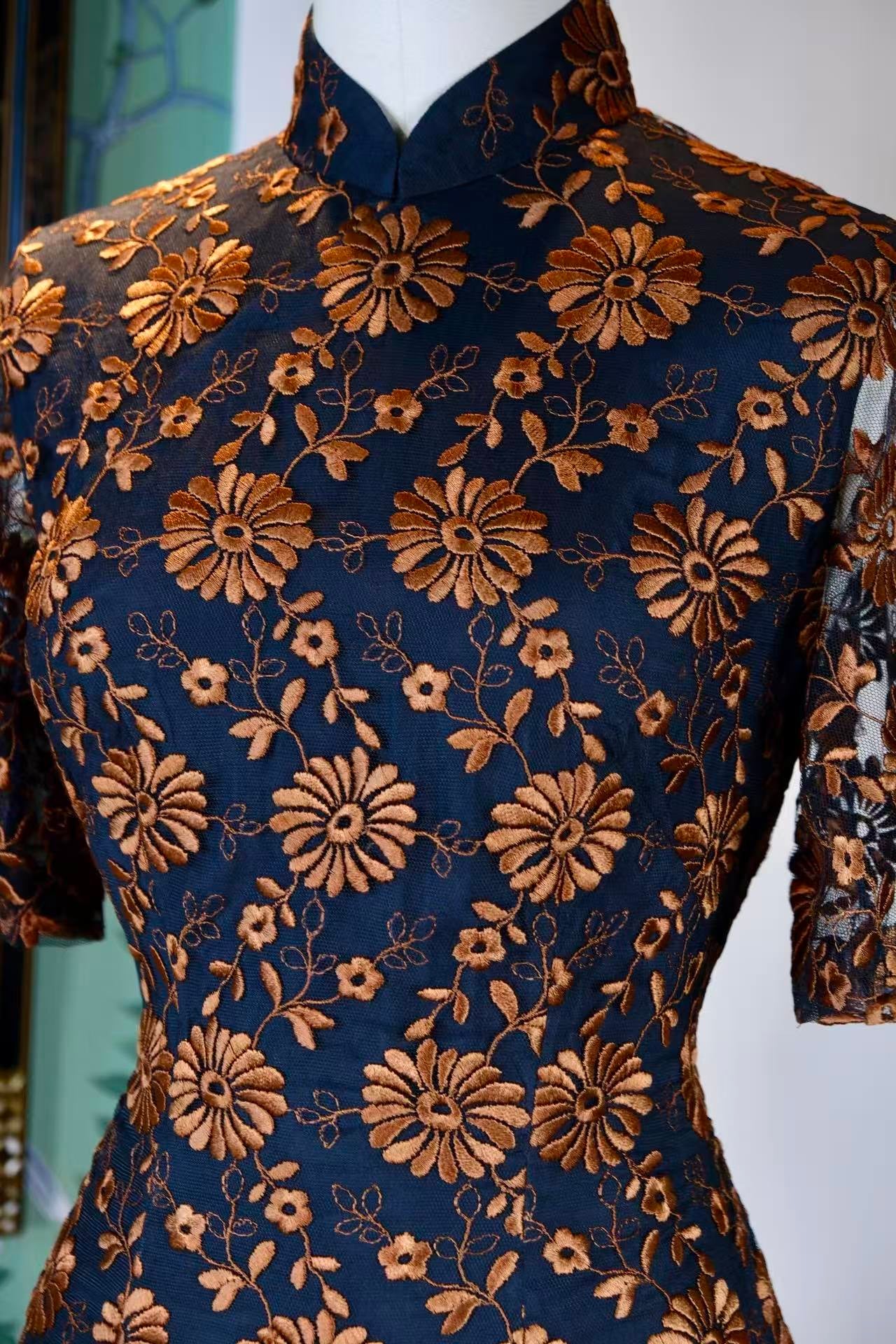
60年代 - 鎏金藤蔓·1960年代台湾产墨色蕾丝铜棕浮雕刺绣工艺古董旗袍 | 1960s - Burnished Vines: A 1960s Taiwan Vintage Ink-Black Lace Cheongsam with Copper-Brown Relief Embroidery
60年代 - 鎏金藤蔓·1960年代台湾产墨色蕾丝铜棕浮雕刺绣工艺古董旗袍 | 1960s - Burnished Vines: A 1960s Taiwan Vintage Ink-Black Lace Cheongsam with Copper-Brown Relief Embroidery
无法加载取货服务可用情况
分享一件上世纪六十年代刺绣蕾丝古董旗袍。
这件六十年代台湾产古董旗袍,以深邃墨色为底,
六十年代台湾纺织业初兴,机器刺绣尚未完全取代手工,
此袍非仅衣饰,更是一轴流动的史书——在经纬交织的针脚中,
🧵 Bronze Vines on Ink: A 1960s Taiwan Vintage Embroidered Lace Cheongsam
This 1960s vintage cheongsam from Taiwan features a profound ink-black base, upon which copper-brown machine embroidery grows like burnished gold vines. The three-dimensional blossoms, resembling chrysanthemums or sunflowers, intermingle with smaller daisy-like florets. The intertwining branches and leaves capture the rhythmic vitality of "uneven duckweed" from the Classic of Poetry and the exquisite precision of "broken-branch sketching" found in Song Dynasty court-style bird-and-flower paintings. The translucent lace sleeves contrast with the solid bodice, creating an interplay of "Void and Solid" (Xū Shí Xiāng Shēng). This evokes the "imagery of hidden beauty" (Yǐn Xiù) described in The Literary Mind and the Carving of Dragons, sketching a dialectical tension of Oriental aesthetics between the heavy and the ethereal.
During the burgeoning of Taiwan's textile industry in the 1960s, machine embroidery had not yet fully replaced handwork. This robe uses copper-brown silk threads to stack a relief-like texture onto the lace base; the density of the stitches reflects the legacy of the "too tight for a needle" craftsmanship. The floral pattern employs a "full-ground floral" (Mǎn Dì Pū Huā) composition, which preserves the freehand spirit of traditional embroidery while granting the motifs a geometric regularity through mechanical production. This collision of tradition and modernity serves as a precious material testament to the transformation of garment technology in post-war Taiwan.
This robe is more than an adornment; it is a fluid scroll of history. Within the interwoven stitches, one glimpses the silhouette of Taiwan’s post-war economic rise, touches the contemporary translation of Chinese cultural genes, and contemplates the eternal philosophy of Oriental aesthetics: "The Tao resides within the vessel" (Dào Zài Qì Zhōng).
分享