深圳溯源
60年代 - 锦瑟华年:一件六十年代香港金属蕾丝旗袍的物质文化考古 | 1960s - Golden Years: A Material Culture Archaeology of a 1960s Hong Kong Metallic Lace Qipao
60年代 - 锦瑟华年:一件六十年代香港金属蕾丝旗袍的物质文化考古 | 1960s - Golden Years: A Material Culture Archaeology of a 1960s Hong Kong Metallic Lace Qipao
无法加载取货服务可用情况
锦瑟华年:一件六十年代香港金属蕾丝旗袍的物质文化考古
衣服尺寸:
胸围/腰围/臀围:82/72/86 厘米
衣长:114 厘米
细节描述:
图案:错彩镂金的东方意象
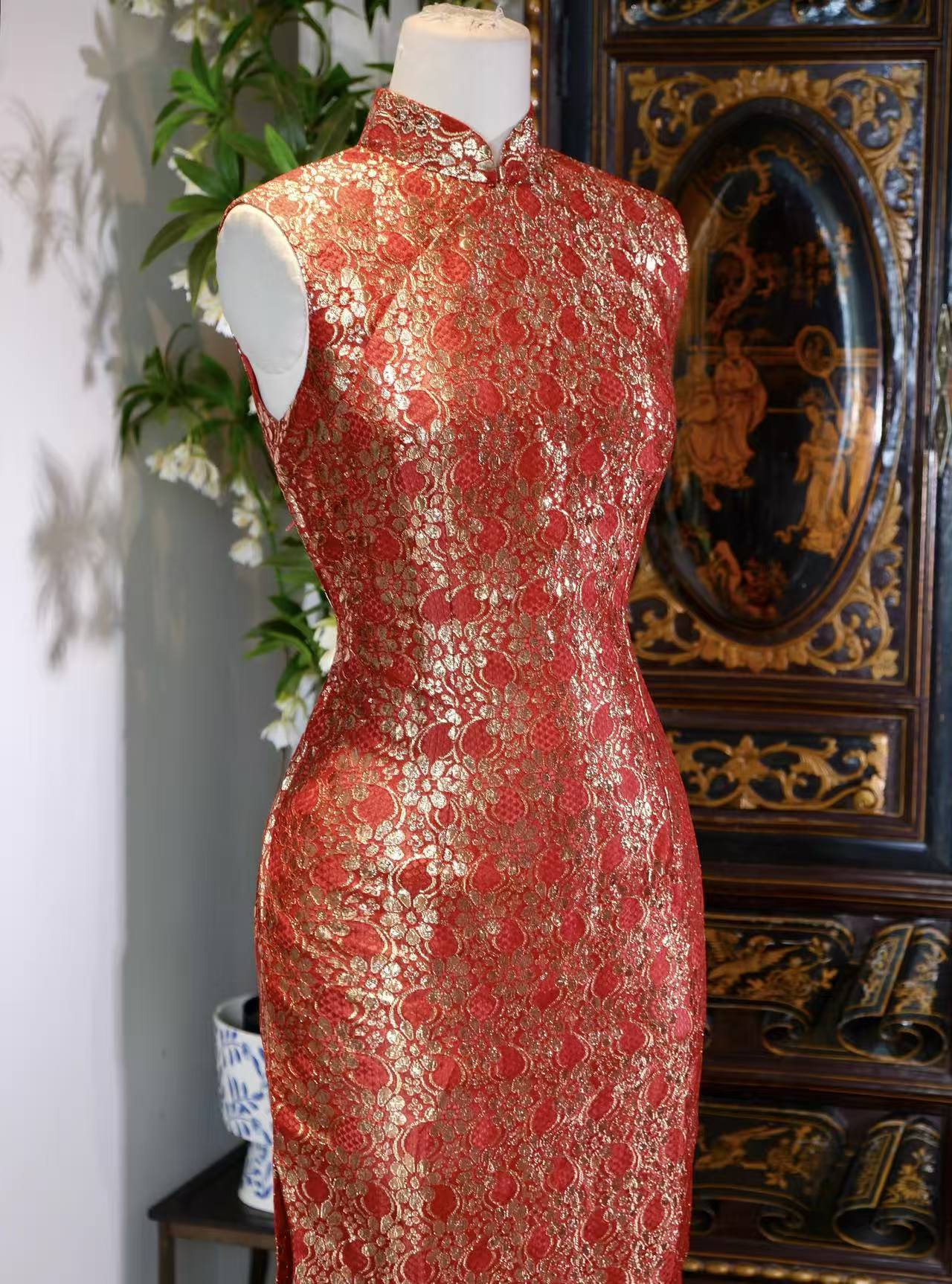
这件诞生于上世纪六十年代香港的无袖旗袍,其视觉核心在于那层令人屏息的金色金属蕾丝。不同于传统丝绸刺绣的温婉,这种蕾丝以更为现代、更为锐利的方式,诠释了古典的吉祥寓意。
图案主体由连绵不绝的缠枝纹与团花构成。细观之,金色的金属丝线勾勒出无数枚抽象化的“柿蒂纹”与“宝相花”。柿蒂纹,取“柿”与“事”之谐音,寓意“事事如意”;而那层层绽放、结构严谨的宝相花,则是佛教艺术东传后与中国本土花卉纹样融合的产物,象征着圣洁、圆满与富贵。这些纹样并非孤立存在,而是通过卷曲的枝蔓相互勾连,形成“万代绵长”的视觉韵律。
尤为精妙的是,金色的蕾丝覆盖在正红的内衬之上,光影交错间,仿佛阳光穿透了镂空的黄金屏风,投射在朱红色的宫墙之上。这种“金碧辉煌”的视觉效果,既是对唐代“金缕衣”传统的遥远回响,也是六十年代香港作为东西方交汇点,在审美上追求奢华与现代感的直接体现。
故事:香江旧梦与摩登时代
这件旗袍的诞生地——香港,在六十年代正处于一个剧烈的转型期。彼时,上海的老裁缝师傅南下香江,将海派旗袍的精湛工艺带到了这片土地,并与西方的剪裁理念及新兴面料发生了奇妙的化学反应。
这件旗袍便是那个时代的缩影。它保留了中式旗袍标志性的立领与盘扣,但在廓形上更加贴合人体曲线,展现出一种自信的、摩登的女性美。无袖的设计,在那个年代不仅是清凉的需要,更是女性解放肢体、追求自由的宣言。
我们可以想象,在1965年的某个夜晚,九龙半岛的霓虹灯初上。一位名媛身着此衣,出席一场盛大的晚宴。当她在爵士乐的伴奏下转身,金色的蕾丝在灯光下熠熠生辉,内里的红色若隐若现,既有东方的含蓄,又有西方的热烈。这件旗袍,不仅仅是一件衣服,它是那个“流金岁月”的见证者,承载着一段关于繁华、机遇与文化融合的集体记忆。
艺术风格与稀缺性:传统的现代性转译
从艺术史的角度审视,这件旗袍展现了“装饰艺术”风格与中国传统纹样的完美融合。金属蕾丝的使用,打破了传统织锦缎的沉闷感,赋予了图案一种轻盈的浮雕感。这种材质在当时属于昂贵且时髦的进口物,多用于高级定制礼服,用于制作旗袍则更显珍贵。
其稀缺性体现在三个方面:
- 工艺的失传:这种高密度的金属蕾丝面料,随着化工技术的更迭和审美潮流的变迁,如今已极难寻得同款。现代复刻往往难以还原当年那种金属丝特有的光泽与挺括感。
- 时代的绝响:六十年代的香港旗袍,是海派旗袍最后的辉煌与港式风格初兴的交汇点。它既不同于民国早期的宽袍大袖,也不同于后期的极简主义,具有独特的断代史价值。
- 保存的完好:金属丝线在岁月中极易氧化变黑或脆断,而这件旗袍历经半个多世纪,金线依然璀璨,红衬依旧鲜艳,实属凤毛麟角。
正如《诗经》所云:“衣锦褧衣”,古人讲究在华丽的锦衣外罩上单衣,以示含蓄。而这件旗袍,则是将那份“锦衣”的华丽直接通过镂空的方式外化,是传统美学在现代语境下的一次大胆突围。它不仅是一件可供穿着的古董,更是一件可流动的纺织艺术品,是那个黄金时代遗落在人间的惊鸿一瞥。
Golden Years: A Material Culture Archaeology of a 1960s Hong Kong Metallic Lace Qipao
Measurements / Size Guide:
Bust / Waist / Hips: 82/72/86 cm
Total Length: 114 cm
Detailed Description:
The Pattern: An Oriental Imagery of Carved Gold
The visual core of this sleeveless qipao, born in 1960s Hong Kong, lies in its breathtaking layer of golden metallic lace. Distant from the gentle elegance of traditional silk embroidery, this lace interprets classical auspicious meanings in a sharper, more modern, and more striking manner.
The main motif consists of continuous winding sprigs and floral medallions. Upon closer inspection, the golden metallic threads outline numerous abstracted "Persimmon Calyx" (Shi-Di) and "Baoxiang" flowers. The persimmon motif, a pun on the Chinese word for "affairs" (Shi), symbolizes "may all affairs go as you wish" (Shi Shi Ru Yi). Meanwhile, the meticulously structured Baoxiang flowers—a fusion of Buddhist art and native Chinese flora—represent holiness, perfection, and wealth. These patterns do not exist in isolation; they are interconnected by curling vines, creating a visual rhythm of "longevity for ten thousand generations."
Most exquisite is how the golden lace overlays a vibrant red lining. In the interplay of light and shadow, it appears as if sunlight is piercing through a hollowed golden screen, casting its glow upon vermilion palace walls. This "resplendent" visual effect is both a distant echo of the "Golden Threaded Garments" tradition of the Tang Dynasty and a direct manifestation of 1960s Hong Kong’s pursuit of luxury and modernity as a crossroads between East and West.
The Story: Old Hong Kong Dreams and the Modern Era
Hong Kong, the birthplace of this qipao, was undergoing a dramatic transformation in the 1960s. During this time, master tailors from Shanghai moved south to Hong Kong, bringing the exquisite craftsmanship of "Haipai" (Shanghai-style) qipaos to this land. There, they engaged in a marvelous chemical reaction with Western tailoring concepts and emerging materials.
This qipao is a microcosm of that era. It retains the iconic standing collar and frog buttons of the Chinese qipao but features a silhouette that fits the body's curves more closely, showcasing a confident and modern feminine beauty. The sleeveless design was not just a practical response to the heat; it was a manifesto of women liberating their bodies and pursuing freedom.
One can imagine a night in 1965 as the neon lights of the Kowloon Peninsula flicker to life. A socialite dons this garment to attend a grand banquet. As she turns to the accompaniment of jazz music, the golden lace shimmers under the lights, with the red interior flashing intermittently—possessing both Eastern restraint and Western passion. This qipao is more than just a piece of clothing; it is a witness to those "Golden Years," carrying a collective memory of prosperity, opportunity, and cultural fusion.
Artistic Style and Rarity: A Modern Translation of Tradition
From the perspective of art history, this qipao demonstrates a perfect fusion of the "Art Deco" style and traditional Chinese motifs. The use of metallic lace breaks the heaviness of traditional brocade, endowing the pattern with a lightweight, relief-like quality. At the time, this material was an expensive and fashionable import, mostly reserved for haute couture gowns, making its use in a qipao even more precious.
Its rarity is manifested in three aspects:
-
Vanishing Craftsmanship: This type of high-density metallic lace fabric has become extremely difficult to find due to changes in chemical technology and shifting aesthetic trends. Modern replicas often fail to restore the specific luster and stiffness characteristic of the original metallic threads.
-
An Era’s Echo: 1960s Hong Kong qipaos represent the intersection of the final glory of the Shanghai style and the rise of the Hong Kong style. They hold unique historical value, distinct from the wide-sleeved robes of the early Republican era or the minimalism of later periods.
-
Impeccable Preservation: Metallic threads are highly susceptible to oxidation, darkening, or becoming brittle over the decades. For this qipao to remain radiant in its gold threads and vivid in its red lining after half a century is truly exceptional.
As the Classic of Poetry says: "To wear a brocade, and then a plain over-garment." The ancients emphasized covering gorgeous brocade with a simple outer layer to show restraint. This qipao, however, externalizes that "brocade" splendor through its hollowed-out lace—a bold breakthrough of traditional aesthetics in a modern context. It is not just a wearable antique; it is a fluid piece of textile art, a fleeting, breathtaking glimpse of a golden age left behind in the world.
分享