深圳溯源
无法加载取货服务可用情况
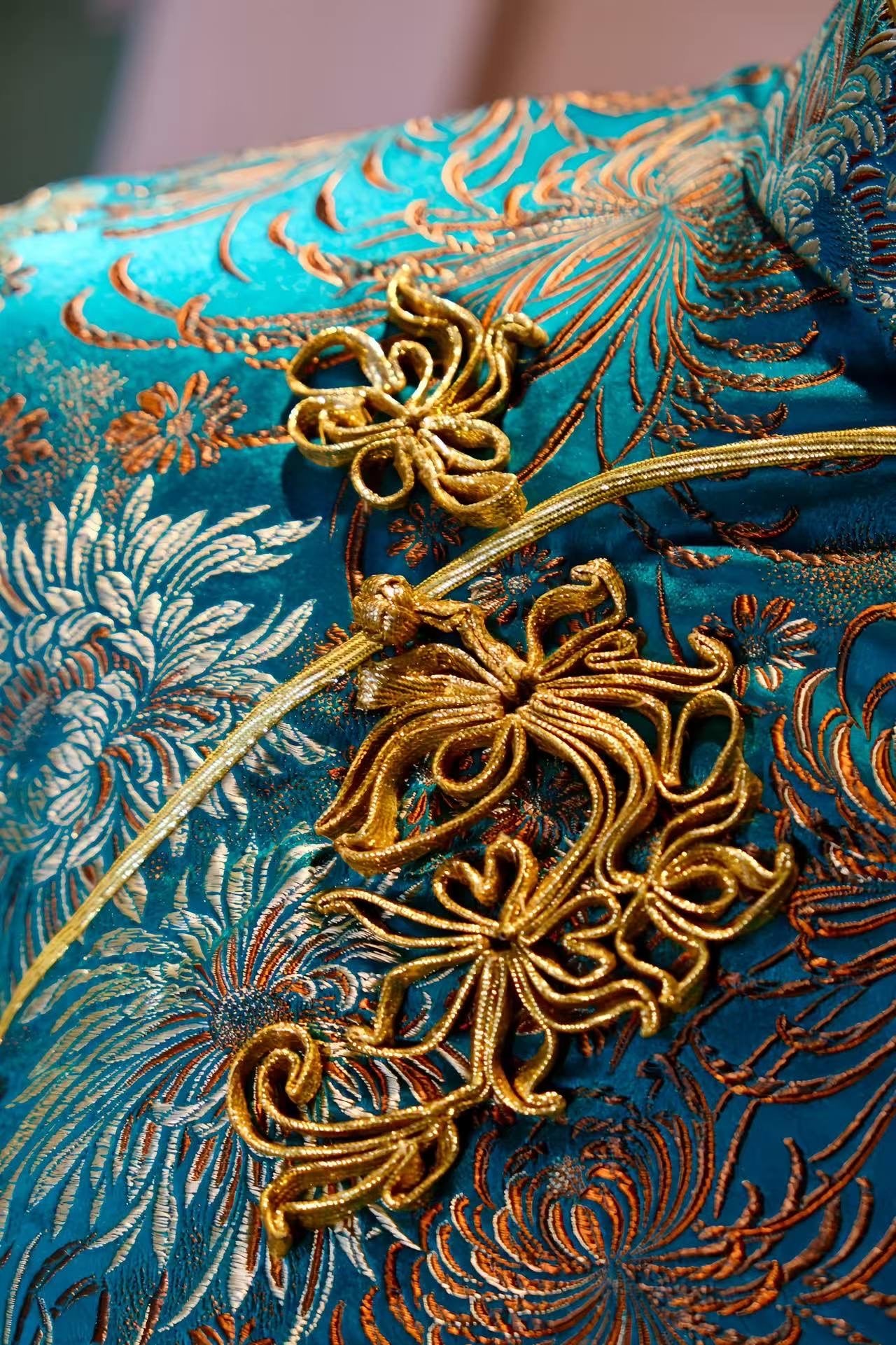
碧海金菊:六十年代香港提花织锦缎嵌丝硬花扣古董旗袍
此件旗袍产自上世纪六十年代香港,
旗袍主体纹样为满地菊花,采用提花织锦缎工艺,以孔雀蓝为底色,
纹样采用“满地锦”构图,菊花大小错落,主花直径约5-8厘米,
这件碧海金菊旗袍,不仅是六十年代香港时尚的缩影,
This cheongsam was produced in Hong Kong during the 1960s, a critical period when the qipao was transitioning from traditional to modern styles. The stand collar is approximately 4.5 cm high, perfectly sculpting the neckline. The three-quarter sleeves (七分袖) retain the modesty of a traditional qipao while incorporating the minimalist style of Western fashion at the time. The precise balance between the cinched waist and the slit height (approximately 10 cm above the knee) perfectly outlines the feminine curves of the East.
The main pattern on the cheongsam features chrysanthemums covering the entire ground, executed using the brocade jacquard (织锦缎) technique. Set against a peacock blue (孔雀蓝) base color, golden threads weave the three-dimensional floral motifs. As one of the "Four Gentlemen" (四君子), the chrysanthemum carries multiple layers of symbolism in Chinese culture: the reclusive ambition of Tao Yuanming, who "plucked chrysanthemums by the eastern fence," and the unwavering integrity of Zheng Sixiao, who preferred "to hold the fragrance unto death on the branch." The appearance of golden chrysanthemums further aligns with the seasonal beauty of "in the final month of autumn, the chrysanthemum has yellow flowers" from the Classic of Rites: Monthly Ordinances (礼记·月令), and the auspicious image of "golden chrysanthemums spitting forth glory" from imperial gardens.
The pattern employs the "all-over brocade" (满地锦) composition. The chrysanthemums vary in size, with primary flowers measuring about 5–8 cm in diameter, complemented by smaller clusters to fill the gaps, creating a visual rhythm of "loose enough for a horse to run through, dense enough to block the wind." The petals are treated with the "fading wash technique" (退晕法), gradually transitioning from pale gold to antique bronze, simulating the natural light and shadow as the flower fully blooms.
This "Golden Chrysanthemums on a Cerulean Sea" cheongsam is not only a microcosm of 1960s Hong Kong fashion but also a perfect fusion of traditional Chinese craftsmanship and modern aesthetics. It takes the chrysanthemum as its soul, brocade as its structure, and gold thread as its ornamentation, with every inch carrying the profound heritage of Oriental culture. As Eileen Chang stated in Rondeau of Clothes: "The straight lines of the qipao are the Eastern woman's poetic expression of her body." This cheongsam, with the complexity of the all-over chrysanthemum pattern and the exquisite fitted hard buttons (嵌丝硬花扣), pushes this poetic expression to the extreme. Its scarcity lies not just in the exquisite craftsmanship, but more importantly, in its witness to the cultural memory of that special era—when the Western fashion world was undergoing the "mini-skirt" revolution, Eastern women still used the qipao as armor, guarding their own elegance and dignity across the river of time.