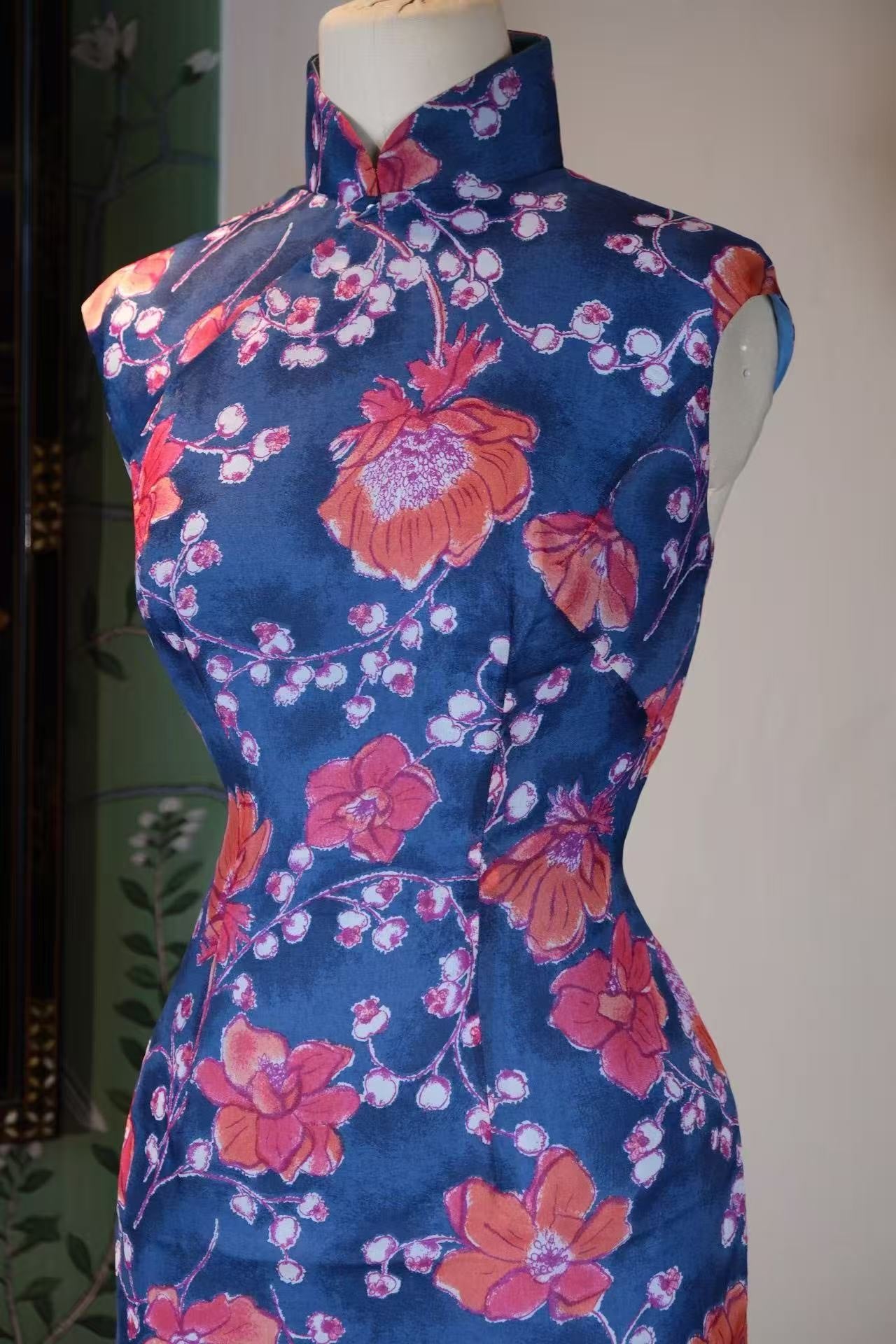
Flourishing Crimson on Profound Blue: 1960s Hong Kong Silk Printed Qipao
This Qipao features an indigo base with a fabric that is light and ethereal. Upon this surface, freehand floral motifs are laid out using reactive printing—vibrant crimson peonies and pale pink blossoms entwine and spread, their petal edges rendered with soft gradients, while the vines are outlined with fine strokes to suggest a swaying motion in the wind. This pattern inherits the compositional tradition of "broken-branch florals" from the Qing Dynasty while integrating the abstract brushwork of modern art. It evokes the fiery vitality of "The peach tree is young and elegant; brilliant are its flowers" from The Classic of Poetry, and aligns with the "East-meets-West" design trend of 1960s Hong Kong: preserving the core of traditional auspicious motifs while reconstructing the floral layout through the color logic of Western painting. It is truly an extension of the Shanghai School’s freehand spirit onto fabric.
In 1960s Hong Kong, the Qipao served as both a symbol of traditional identity and the "fashion armor" of modern urban women. This piece features a sleeveless design with a moderate collar height and side slits reaching just above the knee. It upholds the Qipao's essence of "curvaceous beauty" while breaking the traditional shackles of "rigid attire." As Eileen Chang noted in Chronicle of Changing Clothes: "The Qipao, cinched at the waist and reaching below the knee, flutters in the wind, carrying the legacy of the early Republic while possessing the sleekness of a new era." The indigo base resonates with the traditional Chinese aesthetic philosophy of "blue extracted from indigo," while the crimson blossoms symbolize the unyielding vitality of "the rouge makeup unchanged." The collision of the two creates an aesthetic tension of "movement within stillness, elegance without vulgarity"—a vivid portrayal of Hong Kong women at the time seeking a balance between tradition and modernity.