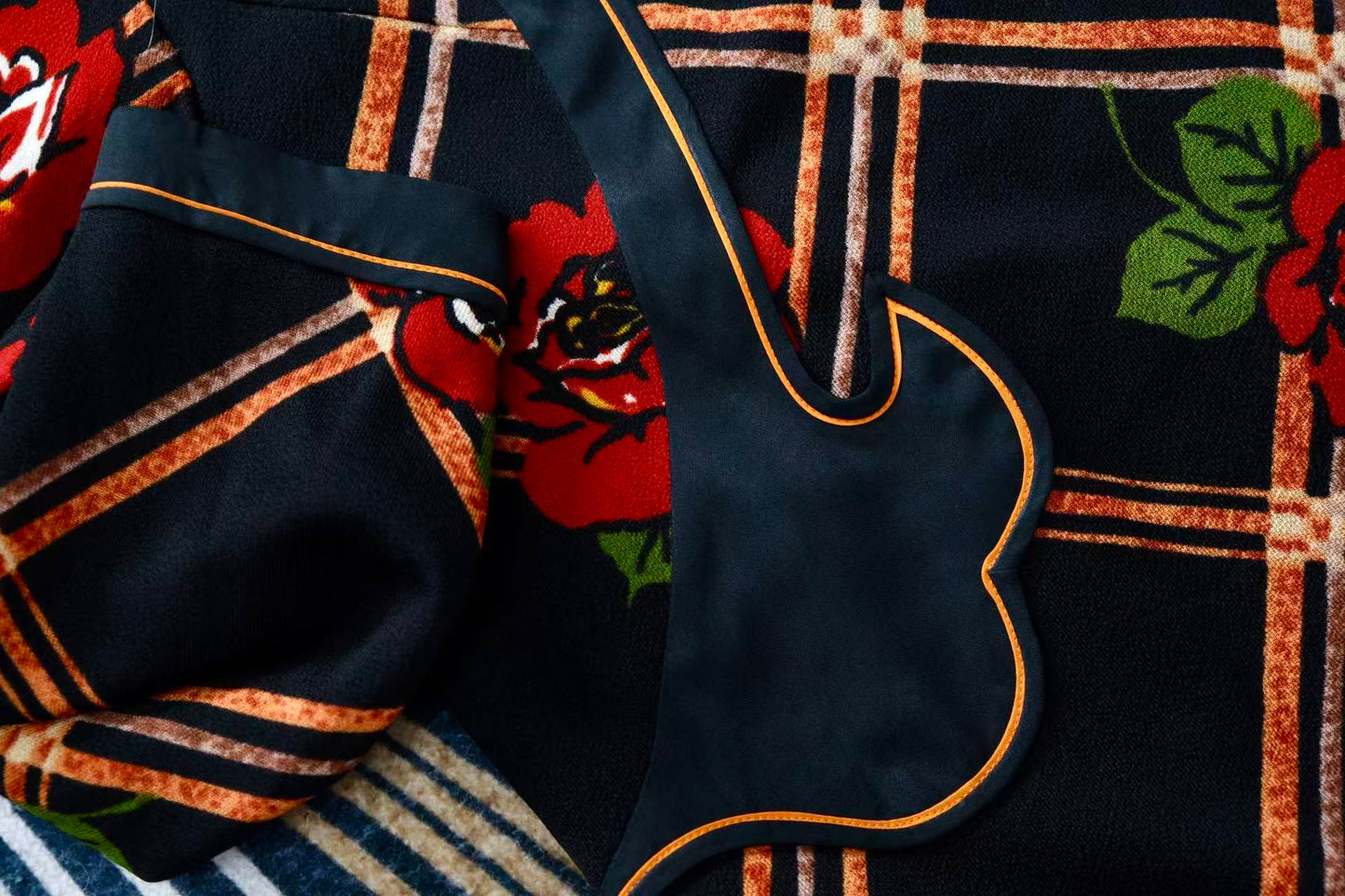
七十年代香港制·琵琶襟如意云头玫瑰旗袍
衣服尺寸:
胸围/腰围/臀围:100/96/108 厘米
衣长:108 厘米
细节描述:
经纬间的东方美学
此件旗袍以玄黑为底,其上交织着赭黄与棕褐的菱形格纹,如经纬般勾勒出秩序之美。格纹间,朱红玫瑰盛放,花瓣层叠如胭脂晕染,花蕊处点染金粉,绿叶以墨绿与翠绿晕染,叶脉以金线勾勒,仿佛将《红楼梦》中“茜纱窗下,我本无缘;黄土垄中,卿何薄命”的凄艳,凝于衣袂。
香江旧梦的衣褶
上世纪七十年代的香港,东西文化碰撞激荡,旗袍作为东方女性的“第二层皮肤”,既承袭传统,又暗含革新。此件旗袍的琵琶襟,取“犹抱琵琶半遮面”之含蓄,襟缘以如意云头纹收束——云头纹源自商周青铜器,至清代成为吉祥符号,《长物志》载“云纹者,祥瑞之征也”,此处以金线盘绕成螺旋状,既是对传统的致敬,亦暗合七十年代香港“东方之珠”的崛起气象。
稀缺性:时光淬炼的孤品
古董旗袍的珍贵,在于其不可复制性。此件旗袍的玫瑰纹样,非机器印花,而是手工描绘后以传统染色工艺固色,每一朵玫瑰的形态皆略有差异,正如《天工开物》所言“物物而不物于物”,匠人以手抵心,赋予衣料生命。
七十年代香港旗袍业虽盛,然如此精工者,多为世家定制,流传至今者寥寥。它不仅是衣物,更是一段历史的切片——见证了香江从渔村到国际都市的蜕变,承载了东方女性对美的执着追求。正如张爱玲所言“旗袍是迷惘的,它不知道自己是该属于过去,还是该属于现在”,而这件旗袍,恰在时光的褶皱里,找到了属于自己的永恒。
A 1970s Hong Kong-Made Pipa-Opening Qipao with Ruyi Cloud and Roses
Measurements / Size Guide:
Bust / Waist / Hips: 100/96/108 cm
Total Length: 108 cm
Detailed Description:
[I. Eastern Aesthetics Within Warp and Weft] This Qipao deploys a deep midnight black as its foundation, across which alternates a geometric lattice of ochre yellow and tan brown, charting a pristine sense of order through its warp and weft. Nestled within these geometric bounds, brilliant crimson roses open with wild abandon. The petals layer upon one another like cosmetics delicately washed onto porcelain, their pistils highlighted with gold powder. The foliage introduces gradient washes of forest and jade green, with every leaf vein contoured by metallic gold threads—as if condensing the breathtaking, melancholy opulence found in the classic Chinese novel Dream of the Red Chamber right into the sweeping lines of the hem.
[II. Sartorial Folds of a Vanished Victoria Harbour] During the 1970s, Hong Kong operated as a fierce crucible of East-West cultural collision, and the Qipao emerged as a "second skin" for Chinese women—faithfully archiving ancestral heritage while harboring quiet revolutions. The asymmetrical layout of this piece implements the classical Pipajin (Pipa-lute style opening), capturing the timeless poetic allure of "partially hiding one’s face behind a lute." The opening's edge is anchored by a traditional Ruyi cloud-head motif (Ruyi Yuntou). Traced back to Shang and Zhou Dynasty bronzeware, the cloud motif evolved into a supreme imperial symbol of auspiciousness by the Qing Dynasty; as noted in the Ming Dynasty text Treatise on Superfluous Things (Chang Wu Zhi): "Cloud motifs stand as the ultimate physical manifestation of auspicious omens." Here, the artisan coiled metallic gold cords into tight, continuous spirals to execute the cloud shape—serving both as an elite homage to heritage and a subtle material reflection of Hong Kong's mid-century ascent as the "Pearl of the Orient."
[III. Rarity: An Archival Specimen Tempered by Time] The ultimate value of an antique Qipao resides in its absolute irreplicability. The rose patterns dancing across this textile reject modern industrial flat-bed printing; instead, they were completely drawn by hand before being locked into the fibers via traditional setting dyes. Consequently, every single rose possesses a unique organic signature. It masterfully substantiates the philosophy from the Ming tech-chronicle Tiangong Kaiwu: "Mastering materiality without being enslaved by the machine." The artisan engaged the fabric through raw devotion, breathing a pulse into the raw yardage.
Although Hong Kong's Qipao trade was highly commercialized during the 1970s, custom creations executed with this degree of virtuosity were restricted exclusively to bespoke commissions by elite aristocratic houses, leaving an incredibly minuscule survival rate today. This garment is far more than apparel; it is a pristine material cross-section of social history—chronicling Hong Kong’s macro-transformation from a humble fishing port into a global financial powerhouse, while archiving the unyielding obsession with beauty held by Eastern women. It beautifully satisfies Eileen Chang's poignant observation: "The Qipao is inherently bewildered; it stands conflicted, unsure whether it belongs to the ancestral past or the modern present." Yet, this specific masterpiece, nestled deep within the folds of passing years, has definitively secured its own eternity.