深圳溯源
Couldn't load pickup availability
衣服尺寸:
胸围/腰围/臀围:100/84/100 厘米
衣长:100 厘米
细节描述:
【形制与纹样:织锦中的东方美学】
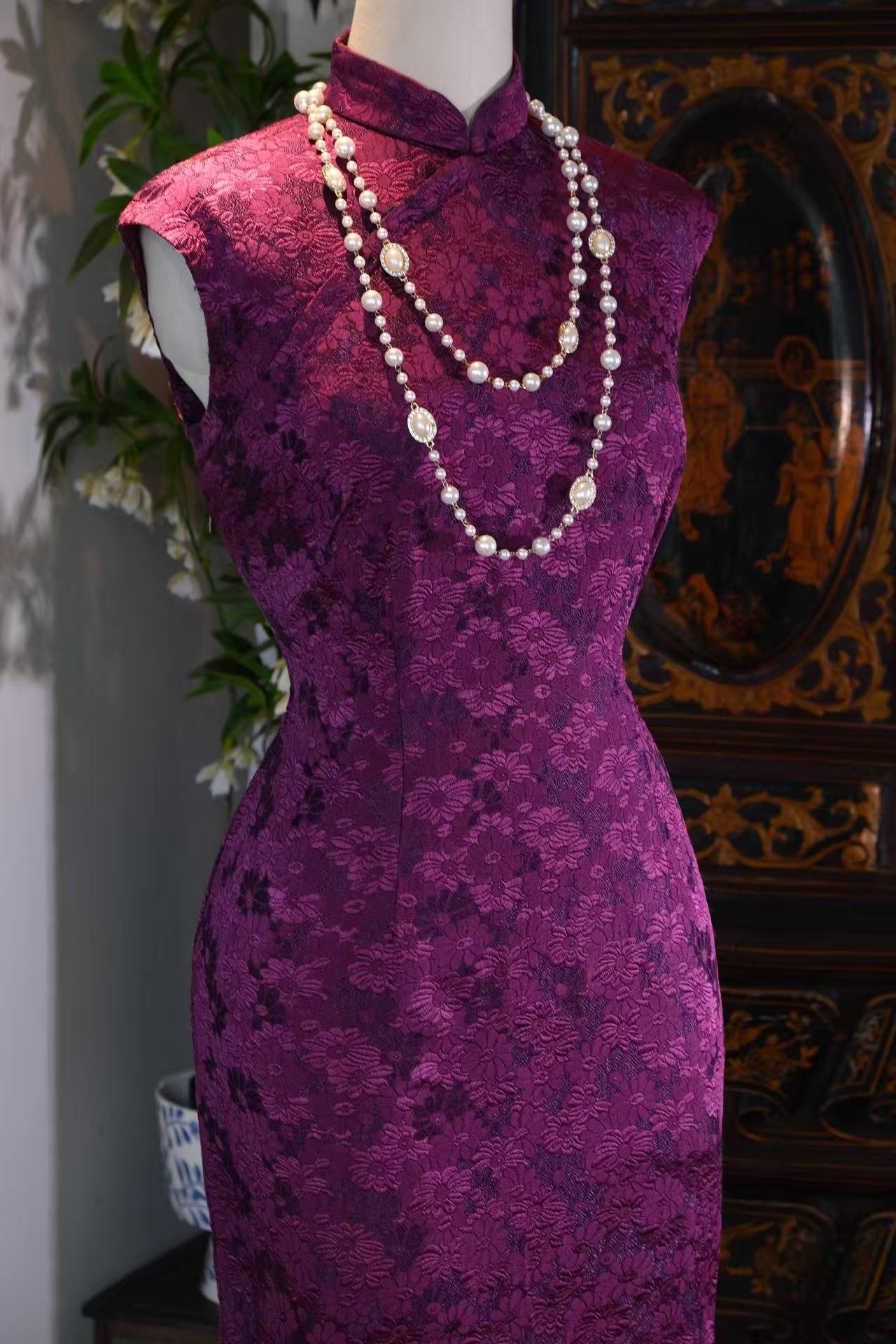
此件旗袍为上世纪六十年代台湾产古董,其面料采用传统提花工艺,以深紫为底,浮凸的菊花纹样如浮雕般铺陈。菊花在中国文化中素有“隐逸”“高洁”之喻,自陶渊明“采菊东篱下”后,便成为文人精神的象征;而提花技艺源于汉代织机革新,《天工开物》载“凡花楼机,通身过经”,需匠人依图样逐梭挑织,方能使花纹立体鲜活。此衣纹样疏密有致,既承袭了明清织锦的繁复精致,又融入六十年代简约审美,暗合《长物志》“宁古无时,宁朴无巧”的造物哲学。
【时代印记:海峡彼岸的服饰记忆】
六十年代的台湾,正处于文化交融的特殊时期。彼时旗袍作为中华服饰文化的载体,在台湾延续着优雅风骨,同时吸纳西方剪裁理念——此衣收腰设计贴合人体曲线,立领高度适中,既保留传统韵味,又彰显现代女性的独立气质。它或许曾见证过某位女士在台北老茶馆里的闲谈,或是在眷村庭院中晾晒时的微风拂动,每一道褶皱都藏着时光的温度。正如张爱玲所言:“衣服是一种言语,随身带着一种袖珍戏剧”,这件旗袍便是那个时代女性生活美学的缩影。
【稀缺性与艺术价值:不可复制的时光标本】
如今,此类六十年代台湾产提花旗袍已属罕见。一方面,提花工艺因手工成本高、耗时长,逐渐被机器印花取代;另一方面,历经半个多世纪保存至今的古董衣,往往伴有岁月留下的自然包浆与细微痕迹,这些“不完美”恰恰是其历史价值的佐证。从学术研究角度看,它是研究两岸服饰文化交流、六十年代社会风尚的实物史料;从收藏维度论,其工艺难度与文化意涵,使其成为兼具艺术性与文献性的珍品。
【结语:穿在身上的文化史诗】
当我们凝视这件旗袍,看到的不仅是一件衣物,更是一段流动的历史。它以丝线为笔,以纹样为墨,书写着东方美学的传承与创新;它以针脚为脉,以布料为肤,承载着特定时代的情感与记忆。正如《诗经》所云“岂曰无衣?与子同袍”,这件旗袍跨越时空,邀请我们一同触摸那份属于过去的优雅与尊严。
Measurements / Size Guide:
Bust / Waist / Hips: 100/84/100 cm
Total Length: 100 cm
Detailed Description:
This archival qipao, manufactured in 1960s Taiwan, serves as a masterly testament to the enduring technical lexicon of classic jacquard weaving. Utilizing an intense, midnight-purple ground as its canvas, the textile features high-relief chrysanthemum motifs that surface across the pile with a dense, sculptural quality.
Within the classical Chinese literary canon, the chrysanthemum (juhua) represents the ultimate pinnacle of yinyi (scholarly seclusion) and unblemished moral rectitude. Ever since the Eastern Jin Dynasty poet Tao Yuanming famously mused on "gathering chrysanthemums beneath the eastern fence," the flora has functioned as an ideological sanctuary for the intelligentsia.
The technical lineage of this patterned textile runs incredibly deep. Jacquard-type drawloom innovation dates back to the Han Dynasty weavers; as Song Yingxing later documented in his Ming Dynasty encyclopedic treatise Tiangong Kaiwu (The Exploitation of the Works of Nature): "On the intricate flower-tower loom, the pattern-guide controls every single warp thread." The master artisan had to manually manipulate the harness cords thread-by-thread, shuttle-by-shuttle, to coax out a three-dimensional motif from a flat grid.
The composition of this piece balances dense floral matrices with breathing room, successfully inheriting the heavy, complex grandeur of Ming and Qing Dynasty brocades (zhijin) while adapting to the streamlined, graphic discipline of 1960s design. This structural calculation beautifully honors the ancient design philosophy articulated in the late-Ming treatise Changwu Zhi (Treatise on Superfluous Things): "Prefer the antique over the contemporary; prioritize organic simplicity over superficial cleverness."
The 1960s stood as an era of intense, delicate cultural convergence in Taiwan. During this mid-century chapter, the qipao functioned as a primary material vessel for ancestral Chinese identity, maintaining its classical refinement while actively absorbing post-war Western pattern-drafting methodologies:
The Anatomy of the Silhouette: The pattern construction features an incredibly high, tailored waistline that relies on precise three-dimensional darting to follow the natural ergonomics of the body.
The Mandarin Collar: The rigid mandarin neckline is engineered to a moderate, functional height—preserving traditional dignity while granting the neck freedom of movement, a direct reflection of the emerging autonomy and public visibility of mid-century women.
One can easily imagine this garment floating through the ambient light of a nostalgic Taipei teahouse, or catching the afternoon breeze over a courtyard clothesline in a military dependents' village (juancun). Every microscopic crease locked within these fibers retains the thermal temperature of history. As Eileen Chang brilliantly penned in her seminal essay A Chronicle of Changing Clothes, "To those who cannot speak, clothing is a form of speech; it carries with it a pocket-sized drama." This dress is precisely that—a condensed, wearable theater of mid-century domestic aesthetics.
In the contemporary market, 1960s Taiwanese-manufactured jacquard qipaos of this caliber have entered the realm of absolute scarcity due to distinct socioeconomic shifts:
The Loss of Technical Infrastructure: Authentic complex jacquard yardage required immense labor costs and prolonged loom-setup times. As the post-war era progressed, these slow, deliberate methods were rapidly wiped out by high-speed, flat-bed industrial screen printing.
The Material Patina of Age: Having survived over half a century of environmental exposure, authentic vintage garments acquire a natural, inimitable material patina (baojiang) along with minor, honest traces of time. Far from being structural defects, these subtle imperfections serve as the ultimate physical verification of their historical provenance.
Dual Value Metrics: From the perspective of costume sociology and textile scholarship, this piece functions as primary physical evidence documenting cross-strait material exchange and the shifting social status of post-war women. From a connoisseurship dimension, its configuration complexity and profound cultural references elevate it from an article of dress into a museum-grade archival document.
To gaze into this qipao is to look directly into a fluid, shifting segment of history. With silk threads serving as its ink and jacquard geometry as its brush, the garment writes an epic poem celebrating the inheritance and modernization of Eastern dress philosophy.
As The Book of Songs (Shijing) beautifully asks: "Who says you have no clothes? I share my magnificent robe with you." This 1960s textile cuts directly through the fog of time, extending a silent, tactile invitation to touch the immaculate elegance and human dignity of a golden generation.