深圳溯源
Couldn't load pickup availability
衣服尺寸:
胸围/腰围/臀围:86/66/98 厘米
衣长:110 厘米
细节描述:
【视觉叙事:几何与花卉的晕染诗篇】
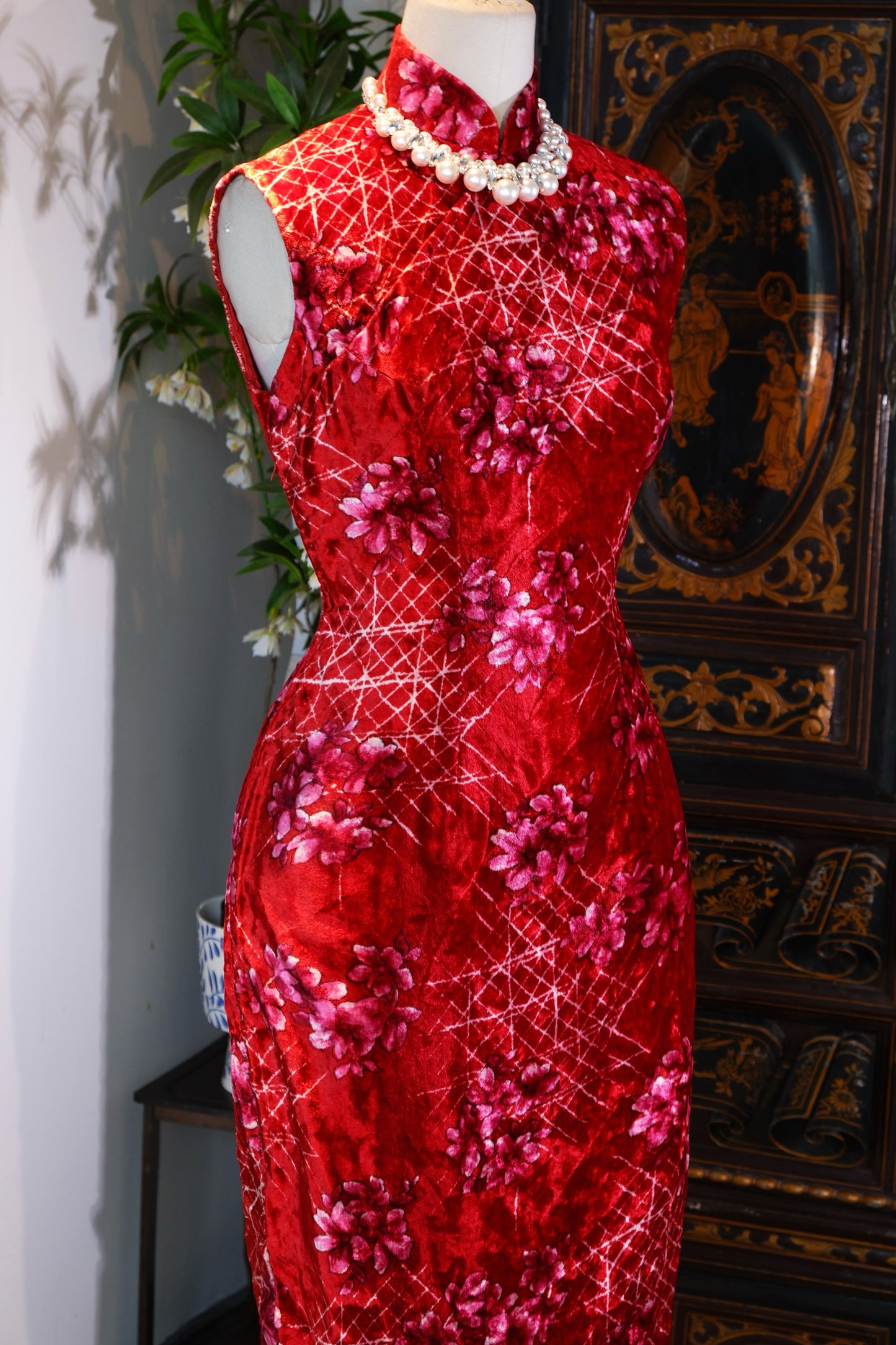
这是一袭诞生于上世纪六十年代的香港产古董旗袍,它以正红丝绒为纸,以光影为墨,书写了一段关于“摩登与传统”的绝美对话。
视线触及衣身,首先被那极具张力的正红色丝绒所捕获。这种面料在光线下呈现出如红宝石般深邃而流动的质感,既有宫廷的华贵,又带着六十年代特有的热烈与张扬。
最令人心折的,是其图案设计。这并非传统的具象刺绣,而是一种融合了现代主义审美的晕染印花工艺。
- 几何骨架: 银白色的线条交织成不规则的菱形网格,如同抽象的窗棂,又似都市夜晚交错的霓虹光影。这种几何构图打破了传统旗袍的沉闷,赋予了衣物一种建筑般的立体感和秩序感。
- 花卉灵魂: 在这理性的几何网格之上,盛开着大朵大朵的洋红与深粉花卉。花瓣边缘采用了类似水彩画的晕染技法,色彩从中心向四周渗透、模糊,仿佛花朵在丝绒上自然生长、呼吸。这种“虚实相生”的处理,恰如中国画论中所谓的“气韵生动”,让静止的布料拥有了流动的生命力。
【历史回响:香江裁缝的黄金时代】
这件旗袍不仅是一件衣物,更是六十年代香港服装史的活化石。
那是张爱玲笔下“乱世中的安稳”逐渐沉淀为商业繁荣的年代。彼时的香港,中西文化剧烈碰撞又完美融合。西方的立体剪裁(Darts)开始被熟练地运用到中式旗袍中,使得腰身收得极细,胸省与腰省的转移更加精准,勾勒出女性曼妙而挺拔的S型曲线——这在图中模特身上展现得淋漓尽致。
这件旗袍出自当时的香港名师之手,它见证了那个“前店后厂”的辉煌岁月。那时的师傅们,手里握着的是东方的丝绸与西方的剪刀,心中装的是对美的极致追求。它是那个时代名媛淑女出席晚宴、或是去夜总会跳舞时的战袍,承载着那个黄金时代的香风鬓影。
【学术注脚:稀缺性与艺术价值】
从服饰社会学的角度审视,这件作品具有极高的研究价值与收藏级稀缺性。
1. 面料的不可再生性: 六十年代的进口丝绒与现在的化纤混纺截然不同。老丝绒经过半个多世纪的氧化,色泽反而更加醇厚沉稳,这种“时间的包浆”是任何现代工业印染无法复刻的。
2. 设计的过渡性特征: 它处于传统平面裁剪向现代立体裁剪完全成熟的过渡期。其无袖设计(Sleeveless)在当时是为了配合西式披肩或珠宝展示的大胆尝试,展现了当时女性追求解放、展示身体自信的先锋意识。
3. 审美独特性: 正如沈从文先生在《中国古代服饰研究》中所言,服饰是“穿在身上的历史”。这件旗袍跳脱了常见的龙凤、牡丹俗套,选择了更具现代感的几何花卉,体现了六十年代受波普艺术(Pop Art)影响下的东方时尚觉醒。
【结语】
《诗经》有云:“岂曰无衣?与子同袍。”但这件旗袍,更像是一首无声的诗,一曲凝固的歌。
它不仅属于过去,更属于现在。当你穿上它,你穿上的不仅仅是六十年前的时尚,更是一种从容不迫的优雅,一段关于美、关于时间、关于东西方文化交融的永恒记忆。
Measurements / Size Guide:
Bust / Waist / Hips: 86/66/98 cm
Total Length: 110 cm
Detailed Description:
Within the matrix of antique costume curation, a textile artifact serves as an explicit visual recording of shifting social values. This exceptional 1960s Hong Kong-produced古董 qipao utilizes a foundational matrix of pure crimson velvet as a canvas and ambient light as ink, mapping out a highly sophisticated dialogue between traditional Eastern dignity and mid-century Western modernization.
The immediate visual triumph of the garment rests within the deep, dramatic tension of its rich crimson velvet pile. This high-register textile catches and absorbs light sequentially, creating a deep, ruby-like surface refraction that carries historical prestige while flashing the unapologetic heat and confidence unique to post-war 1960s styling.
The pattern composition abandons predictable, traditional folk embroidery entirely, choosing instead a complex bleed-dye print process (yunran yinhua) heavily influenced by high-modernist fine art:
The Geometric Skeleton: A network of silver-white lines cross-hatches the ground into an irregular matrix of diamond grids. Mirroring abstract structural lattices or the neon cross-sections of a mid-century cityscape, this sharp geometric framework shatters the visual flatness typical of older regional cuts, granting the surface a disciplined, architectural sense of structural order.
The Botanical Soul: Bursting forth from this rational geometric grid are expansive magenta and deep pink blossoms. The petal margins are executed using a complex, fluid watercolor bleeding technique—where the dye gradients diffuse organically outward from a saturated center. This deliberate interplay between razor-sharp lines and bleeding color fields perfectly manifests the ancestral art philosophy of "the solid nurturing the void" (xu-shi xiangsheng), granting a fluid, breathing pulse to a static textile plane.
This gown stands as an unshakeable material witness to the absolute golden era of Hong Kong bespoke tailoring (gang-gong banxing).
During this transformative decade, the rapid expansion of global commerce converged with elite artisanal migrations. Master tailors expertly integrated radical Western three-dimensional anatomical draping—specifically complex bust and waist dart manipulation (shengdao)—directly into the traditional flat pattern blueprint.
The resulting layout forces the waistline to pinch inward with absolute millimeter precision while lifting the bust and mapping the hip contour into a commanding, erect S-curve silhouette. This tailored framework allowed the wearer to claim a powerful, modern, and independent body consciousness without relinquishing traditional Eastern poise.
Holding Eastern silks in one hand and Western dressmaking shears in the other, these master craftsmen engineered elite evening wear tailored for high-society banquets, galas, or glamorous evenings within the metropolitan night circuits of a booming Hong Kong.
From an academic perspective within costume history and textile sociology, this specimen commands immense archival value based on three strict technical parameters:
The Chronological Integrity of the Velvet Matrix: The vintage imported heavy velvet of this era operates in a completely different material class from modern, high-speed synthetic polyester iterations. Decades of gradual, natural atmospheric aging have mellowed the dye saturation, stripping away any aggressive synthetic sheen to replace it with a soft, deep internal patina—a tangible "gilding of time" that contemporary industrial mills cannot replicate.
The Transitional Geometry of the Pattern Layout: The silhouette captures a critical evolutionary step in modern fashion history. The bold, sleeveless (wuxiu) layout was structurally engineered to accommodate Western evening wraps, fur stoles, and haute luxury jewelry displays—documenting a progressive, vanguard shift where cosmopolitan women actively weaponized fashion to celebrate physical self-assurance and personal liberation.
The Pop Art Convergence: As the legendary scholar Shen Congwen detailed in Research on Ancient Chinese Costumes, apparel operates fundamentally as "history worn upon the body." By bypassing cliché regional symbols like the dragon, phoenix, or flat symmetry in favor of abstract, modernist geometric florals, this qipao explicitly records the aesthetic infiltration of Western Pop Art into the consciousness of twentieth-century Eastern fashion designers.
This crimson velvet masterpiece transcends the boundaries of standard apparel; it exists as a silent, material poem—a complex melody frozen permanently in time.
It refuses to remain locked in the archive. To step into this silhouette is to bridge a sixty-year historical gap, transitioning from a mere observer of style into the active guardian of its continuing narrative. It wraps the modern connoisseur in an unshakeable, cross-cultural elegance, making a definitive personal statement where historic craftsmanship and contemporary independence live in absolute harmony.
Suyuan Silk Archive — Preserving the soul of historic textiles, documenting the lineage of master craft.