深圳溯源
Couldn't load pickup availability
衣服尺寸:
胸围/腰围/臀围:92/88/108 厘米
衣长:104 厘米
细节描述:
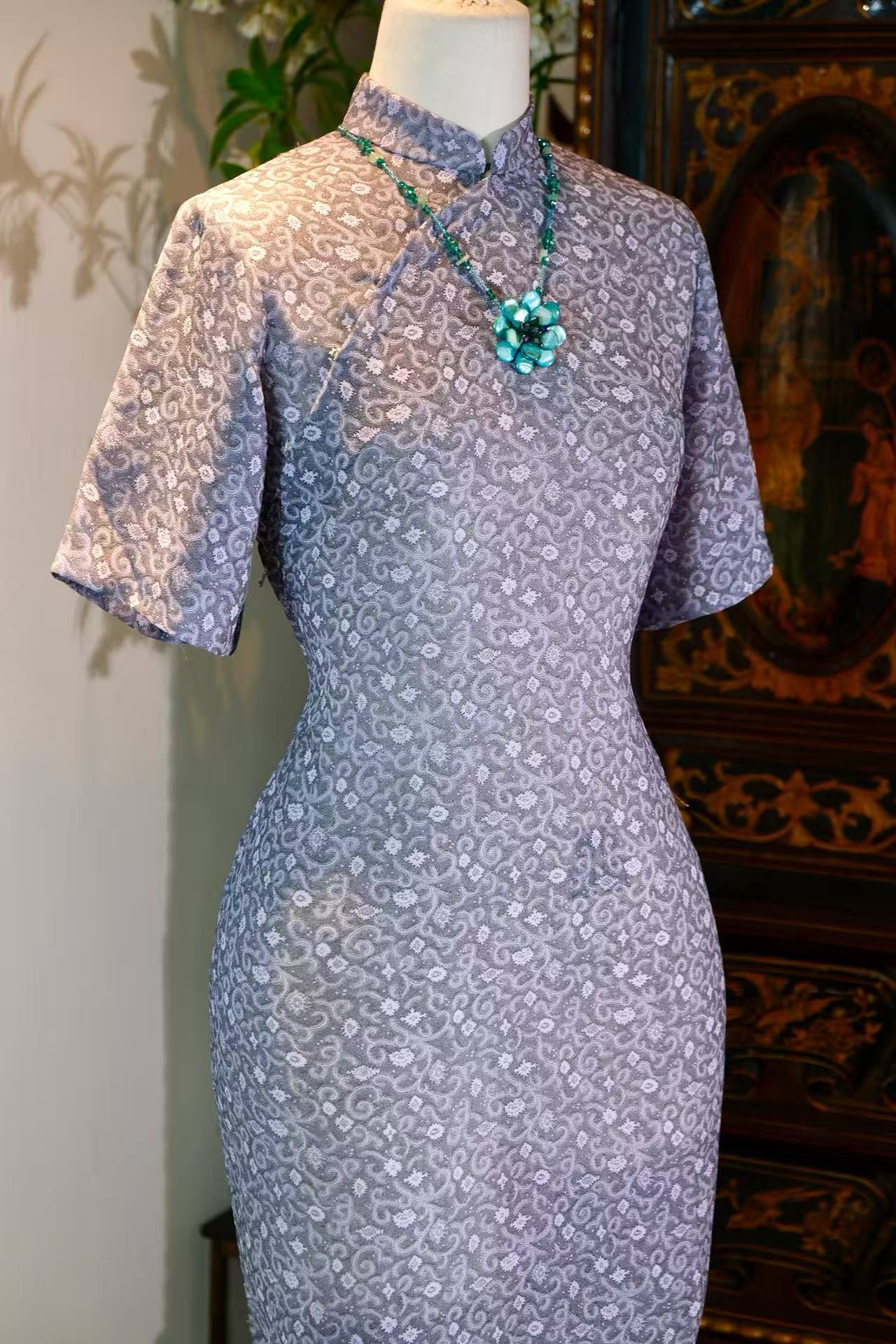
此件旗袍的纹样,是卷草缠枝与小碎花的精妙共生。卷草以婉转的“S”形曲线为骨,如《长物志》所言“纹取其雅”,枝叶缠绕间暗藏“生生不息”的吉祥寓意;细密的白色小花缀于其间,远观如雾霭轻笼,近看则花影绰约,恰似宋代院体画“小景花卉”的微缩再现。这种将古典纹样微型化、密集化的设计,正是六十年代台湾纺织业对“传统现代化”的独特探索——既承袭东方美学的含蓄,又暗合现代设计的秩序感。
上世纪六十年代的台湾,旗袍已褪去上海时期的海派奢华,转向“海岛生活美学”的务实表达。此件旗袍的立领高度适中,既保留传统礼仪感,又适应亚热带气候;收腰曲线柔和,裙摆微收,契合当时台湾女性“日常与社交兼顾”的需求。面料选用台湾本土生产的人造丝混纺,光泽柔和如月华,印证了《台湾纺织史》中“六十年代人造纤维取代真丝成为主流”的记载。衣身无滚边、无花扣,以极简的斜襟暗扣收束,恰是那个时代“去繁就简”审美转向的物证——在物质渐丰的岁月里,台湾女性开始追求“藏于细节的精致”,而非表面的华丽。
此件旗袍的稀缺性,在于其“三重不可复制性”:纹样为台湾某已倒闭纺织厂的独家设计,灰紫底配银白纹的色彩搭配,现存实物不足十件;剪裁采用“无省道一片式”工艺(腰身靠面料弹性自然贴合),需手工归拔定型,如今台湾仅剩两位老师傅掌握此技;面料的人造丝混纺配方(含30%棉、70%人造丝),因环保政策早已停产,其“透气如棉、垂坠如丝”的质感成为绝响。
此件旗袍的艺术风格,恰如艺术史家高居翰所言“东方美学的现代转译”:灰紫色调取自宋代汝窑“天青釉”的冷韵,却以现代印染技术呈现;卷草纹的“动势”与旗袍廓形的“静势”形成张力,暗合《周易》“动静有常”的哲学。它既非完全的复古,亦非激进的西化,而是六十年代台湾知识分子“在传统中寻找现代性”的衣着装束表达——正如余光中在《听听那冷雨》中所写:“那旗袍的褶皱里,藏着整个时代的体温。”
Measurements / Size Guide:
Bust / Waist / Hips: 92/88/108 cm
Total Length: 104 cm
Detailed Description:
[I. Motif & Aesthetics: A Micro-Landscape of Classic Tendrils] The pattern of this Qipao is a masterclass in the symbiotic harmony of scrolling tendrils (Juancao) and delicate ditsy florals. The tendrils utilize a graceful "S" curve as their bone, invoking the refined taste praised in the Treatise on Superfluous Things (Chang Wu Zhi): "patterns should be chosen for their elegance." The intertwining stems silently carry the auspicious Eastern blessing of "endless vitality," while the dense white florets interspersed within look like a gentle mist from afar and intricate floral shadows up close—a miniature recreation of the "small-scenery bird-and-flower paintings" from the Song Dynasty Imperial Art Academy. This precise miniaturization and dense compression of classical motifs represent 1960s Taiwan's unique textile exploration of "modernizing tradition"—preserving Eastern understatement while embracing the clean order of modern design.
[II. Cultural Context: The Pragmatic Island Aesthetic of the 1960s] In 1960s Taiwan, the Qipao shed the ostentatious luxury of its earlier Shanghainese (Haipai) era, shifting toward a pragmatic expression of "island lifestyle aesthetics." This piece features a moderate mandarin collar that maintains traditional decorum while remaining perfectly suited for a subtropical climate. The cinched waist curves softly, and the hem narrows slightly, catering to the dual needs of 1960s Taiwanese women for both daily wear and social elegance. The fabric—a locally produced rayon-cotton blend—exudes a luster as soft as moonlight, reflecting the historical records in the History of Taiwanese Textiles that "synthetic fibers replaced pure silk as the mainstream in the 1960s." Free of piping or frog buttons, the garment closes with a minimalist diagonal opening (Xiejin) secured by hidden snaps. This stands as pristine physical evidence of the era’s aesthetic shift toward "simplicity over complexity." In an age of emerging prosperity, Taiwanese women began to pursue a "refinement hidden in details" rather than overt opulence.
[III. Rarity: The Irreplaceable Triple Dimensions] The rarity of this Qipao rests upon three irreplaceable dimensions:
Design Rarity: The print was an exclusive design from a long-defunct Taiwanese textile mill. Surviving specimens of this dusty purple base paired with silver-white motifs number fewer than ten worldwide.
Tailoring Rarity: The garment utilizes the "dartless, one-piece" (Wu Sheng Dao) tailoring method, where the waist contours naturally to the body entirely through the artisanal process of manual iron-shaping and stretching (Gui-Ba). Today, only a couple of master tailors in Taiwan still possess this dying skill.
Fabric Rarity: Due to modern environmental regulations, this specific mid-century blend (30% cotton, 70% rayon) has long been out of production. Its unique tactile signature—"breathable as cotton, draped like silk"—has become a lost echo.
[IV. Artistic Philosophy: The Modern Translation of Eastern Elegance] The artistic style of this Qipao beautifully embodies what art historian James Cahill termed the "modern translation of Eastern aesthetics." The dusty purple hue draws from the cool, serene rhythm of Song Dynasty Ru ware's "celadon glaze," yet is realized through modern printing techniques. The kinetic energy of the scrolling tendrils stands in perfect tension with the static silhouette of the Qipao, aligning seamlessly with the cosmic philosophy of the I Ching (Book of Changes): "movement and stillness have their constants." It is neither an act of pure retro-copying nor radical Westernization, but a sartorial manifesto of 1960s Taiwanese intellectuals "seeking modernity within tradition." As the poet Yu Guangzhong beautifully penned in Listening to the Cold Rain: "Within the folds of that Qipao, lies the temperature of an entire era."