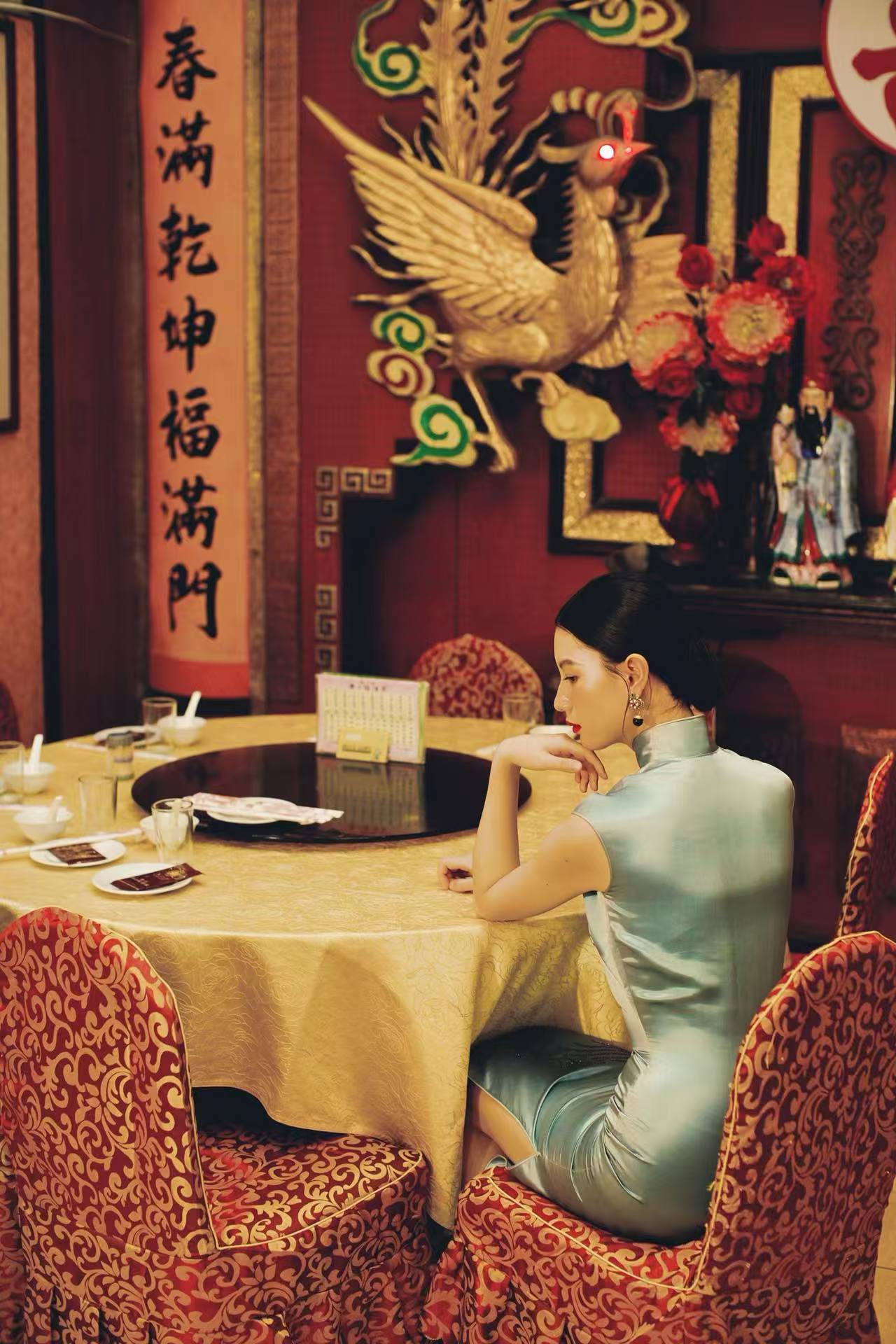
冰蓝珠绣龙纹旗袍:六十年代香江岁月的霓裳绝唱
衣服尺寸:
胸围/腰围/臀围/衣长:88/60/94/125 厘米
细节描述:
这件上世纪六十年代的冰蓝色祥云龙纹旗袍,不仅是一件衣物,更是一段凝固的香江岁月。它融合了潮汕珠绣的精湛技艺与香港海派文化的摩登审美,是那个黄金时代女性独立与优雅的缩影。
霓裳羽衣:冰蓝底色上的祥云龙纹
- 色彩美学:冰蓝如洗,温润如玉
此袍最摄人心魄之处,在于其面料呈现出的独特“冰蓝色”。这种色调不同于传统的正蓝或藏青,它带有一种冷冽而通透的高级感,宛如雨后初晴的天空,又似深海中静谧的寒冰。在六十年代的语境下,这种色彩的选择极具现代性,既保留了东方女性的含蓄内敛,又透出一股清冷孤傲的现代气息。丝绸的光泽在霓虹灯影下流转,将穿着者的肤色衬托得白皙胜雪。
- 纹样解析:祥云龙纹,气韵生动
衣身上的图案是整件作品的灵魂所在。
- 龙纹形态: 并非传统宫廷服饰中那种张牙舞爪、威严不可侵犯的“坐龙”,而是采用了更为灵动、飘逸的行龙姿态。龙身蜿蜒曲折,顺着女性的身体曲线游走,从胸襟延伸至裙摆,打破了旗袍原本的平面感,赋予了衣物强烈的流动性和生命力。
- 工艺技法: 这是典型的潮汕珠片刺绣工艺。工匠们使用细小的玻璃珠和亮片,通过手工一针一线地缝缀在丝绸底料上。这种技法在光线下会产生璀璨的折射效果,使得龙鳞仿佛熠熠生辉,具有极强的立体感和浮雕感。
- 祥云点缀: 龙身周围缭绕着朵朵祥云,云纹线条柔和流畅,与刚劲的龙身形成“刚柔并济”的视觉平衡。这不仅是装饰,更是中国传统文化中“云从龙”意象的完美诠释,寓意着吉祥如意、步步高升。
岁月流金:古董衣背后的香江旧梦
- 时代背景:六十年代的摩登与坚守
上世纪六十年代的香港,正处于东西方文化剧烈碰撞与融合的时期。一方面,西方时尚思潮涌入,迷你裙开始流行;另一方面,传统华人社会依然坚守着对礼仪和端庄的追求。这件旗袍正是这一时代的产物——它在剪裁上吸收了西式立体裁剪的优点(如更贴合人体曲线的省道设计),但在装饰工艺上却坚持使用了最繁复的传统潮汕珠绣。它是那个时代香港名媛淑女的战袍,见证了她们在社交场合中的风采。
- 匠心独运:濒临失传的非遗技艺
潮汕珠绣以其“平、齐、细、密、匀、顺、和、光”的特点闻名于世。在那个没有电脑绣花机的年代,这样一件满工珠绣的旗袍,往往需要一位经验丰富的绣娘耗费数月甚至半年的时间才能完成。每一颗珠子的位置、每一根丝线的走向,都凝聚着匠人的心血与时光。如今,这种纯手工的珠绣技艺已日渐式微,使得这件保存完好的古董旗袍更显珍贵。它不仅是一件服装,更是一件承载着历史温度与人文精神的艺术品。
【Ice Blue Sequin-Embroidered Dragon Motif Qipao: A Masterpiece from Hong Kong's 1960s Golden Era】
Measurements / Size Guide:
Bust / Waist / Hips / Total Length: 88/60/94/125 cm
Detailed Description:
This 1960s ice blue auspicious cloud and dragon motif qipao is far more than an item of clothing; it stands as a frozen fragment of mid-century Hong Kong. Seamlessly blending the pinnacle of Chaoshan sequin embroidery with the modern sensibility of Hong Kong's Haipai (Shanghai-style) culture, it perfectly captures the elegance and independence of women during that golden era.
【The Splendid Gown: Auspicious Clouds and Dragon Motif Over an Ice Blue Ground】
1. Color Aesthetics: Translucent Ice Blue, Warm and Clear as Jade
The most breathtaking element of this garment is its unique "ice blue" palette. Departing from traditional royal blues or deep navies, this particular shade carries a cool, crisp, and translucent quality. It evokes the clarity of the sky just after rain or the tranquil depth of glacial ice. In the design context of the 1960s, selecting this color was intensely modern—preserving the interior restraint of Eastern character while projecting a cool, independent, and contemporary aura. Under the shifting glow of city neon lights, the natural luster of the silk base beautifully complements and illuminates the wearer's skin tone to appear white as snow.
2. Motif Decoding: Auspicious Clouds and Dragon Motif, Filled with Vitality
The embroidery covering the dress serves as the true soul of this piece.
-
The Dragon Silhouette: Rather than copying the fierce, rigid, and formally seated imperial "sitting dragon" found on historic dynastic court robes, this design adopts a more fluid, soaring "wandering dragon" (xinglong) posture. The dragon's body undulates gracefully, tracing the natural curves of the female silhouette as it sweeps down from the chest to the hemline. This breaks the flat planes of traditional textile, granting the entire garment a powerful sense of movement and organic life.
-
Craftsmanship and Technique: This showcases classic Chaoshan sequin and bead embroidery. Artisans hand-stitched minute glass beads and shimmering facets onto the silk ground, thread by thread. This technique creates a spectacular, multi-dimensional refraction under light, causing the dragon's scales to gleam with a sculptural, embossed relief effect.
-
Auspicious Cloud Accompaniments: The dragon is framed by clusters of drifting auspicious clouds. The soft, fluid lines of the cloud motifs create a perfect visual harmony of "strength meeting softness" against the powerful silhouette of the dragon. Beyond pure decoration, this serves as a complete realization of the classical Chinese idiom "clouds follow the dragon" (yun cong long), symbolizing good fortune, harmony, and elegant advancement.
【The Golden Years: A Mid-Century Hong Kong Dream Behind the Antique Dress】
1. Context of the Era: Modernity and Cultural Preservation
In 1960s Hong Kong, East and West collided and fused at an unprecedented pace. On one hand, Western fashion movements swept the region and mini-skirts began to capture the youth market; on the other hand, traditional Chinese society simultaneously held firm to its standards of decorum, etiquette, and refined poise. This qipao is a brilliant product of that exact cultural intersection—in construction, it embraces the benefits of Western three-dimensional tailoring (featuring precise darting to closely contour the body); yet, in decoration, it remains fiercely dedicated to the most intricate, labor-intensive traditional Chaoshan hand embroidery. It was the ultimate attire for the era's socialites, serving as a witness to their poise on the global stage.
2. Master Workmanship: An Intangible Cultural Heritage on the Brink of Discontinuity
Chaoshan bead and sequin embroidery is celebrated worldwide for its exacting standards of precision, dense alignment, fluidity, and harmonious luster. In an era long before computerized embroidery machines, a fully embroidered piece of this caliber required a highly experienced artisan several months—sometimes up to half a year—of undivided labor to complete. The exact placement of every bead and the tension of every silk thread hold the weight of an artisan's dedicated time. Today, as these manual embroidery techniques become increasingly rare, this immaculately preserved antique qipao stands as an absolute curatorial treasure. It is no longer mere apparel; it is a wearable piece of fine art holding the warmth of history.