深圳溯源
Couldn't load pickup availability
一、衣上图腾:当法老的金箔遇上东方的丝缕
这件珊瑚红真丝天鹅绒连衣裙,以“异域为骨,东方为魂”的姿态,
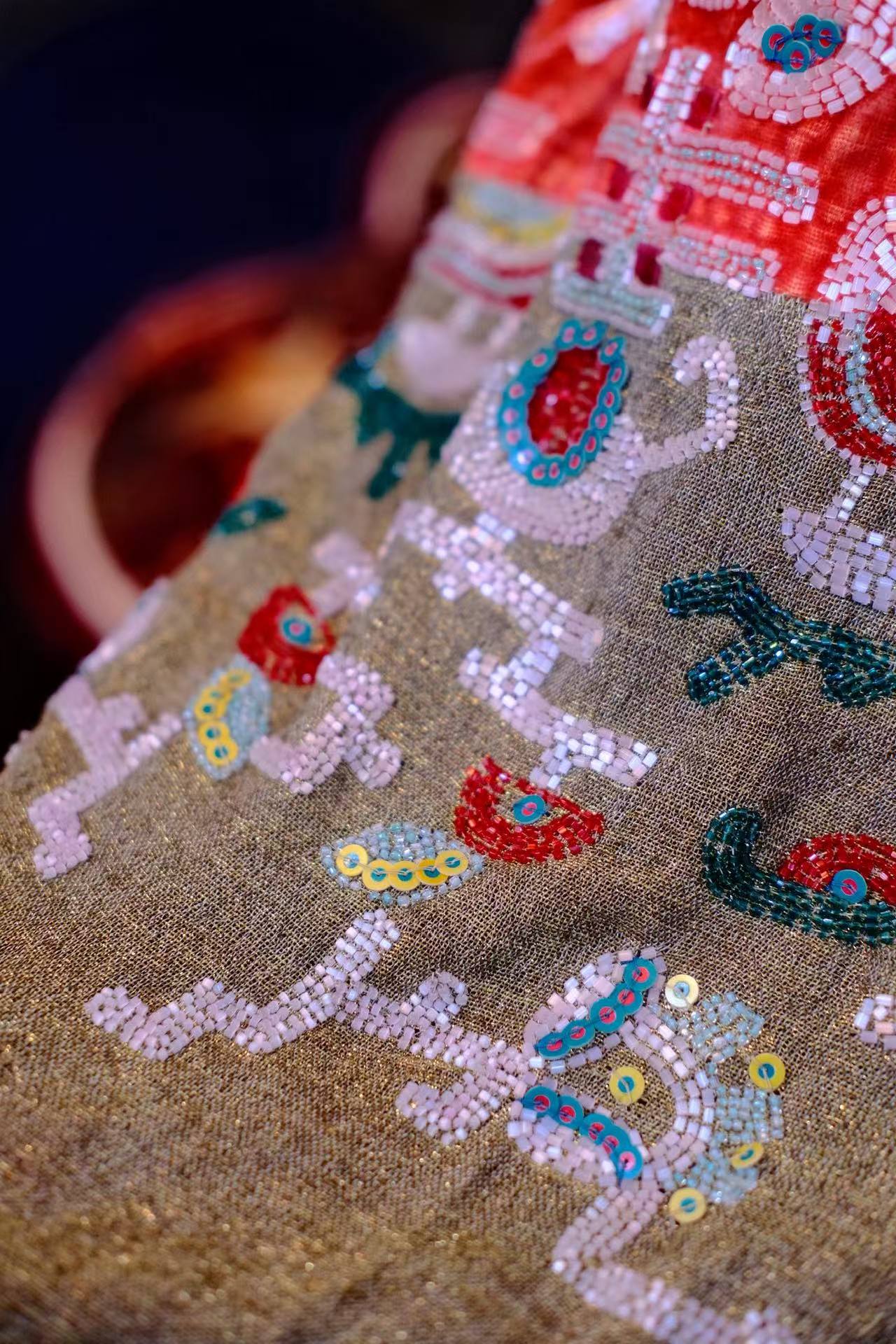
裙摆的织金下摆与珠绣图案,更是“跨文化对话”的杰作:
二、百年旧梦:从温哥华唐人街到尼罗河舞会
此裙的主人,正是前文所述加拿大“老钱”家族的闺秀。二十年代,
三、艺术孤品:装饰艺术的“东方变奏”
从艺术史视角,此裙是“装饰艺术运动”的东方回响。
四、稀缺性:跨文化的“衣冠孤本”
此裙的珍稀,在于它是“跨文化时尚”的活化石。
五、结语:穿在身上的尼罗河
当指尖拂过裙摆的珠绣神鸟,仿佛能听见百年前尼罗河的水声——
This breathtaking coral-pink silk velvet dress functions as an extraordinary historical monument where exotic, global curiosity and classical Eastern technical literacy are completely fused. It captures the global "Egyptomania" craze that swept through elite transnational circles during the early 1930s (the twentieth year of the Republic), transforming ancient pharaonic iconography into a deeply romantic material poem.
The structural foundation of this long dress balances an exquisite material dialogue between European textile innovation, ancient archaeological symbolism, and heritage Chinese craftsmanship:
The Luminous Geometry of Lamé: The deep V-neckline features hand-woven French Lamé lace, engineered with premium metallic gold threads into a flawless honeycomb structure. This structural metallic element captures changing studio light like sunbursts shattering across the surface of the Nile.
The Beaded Eye of the Pharaoh: Along the collar and central bodice seam, master artisans executed meticulous tambour beading. Utilizing sharp, pink square rhinestones as the geometric focal points framed by intense yellow and blue circular seed beads, the embroidery mimics the hypnotic, inlaid gemstones of a pharaonic death mask, casting a mysterious, brilliant reflection across the plush velvet ground.
The Topography of Woven Gold and Glass: The lower hemline integrates a luxurious woven gold brocade (Zhijin) border beneath a dense field of glass-beaded Egyptian totems. Abstract sun discs, symmetrical palm fronds, and stylized sacred birds are rendered in vivid pink, red, and green sequins. This layout faithfully preserves the bold, geometric "Art Deco" framework popularized by the discovery of King Tutankhamun's tomb, while subtly re-ordering the wildness of Egyptian iconography through the balanced harmony of traditional Eastern design principles.
The custodian of this magnificent archive was the daughter of a prominent, "Old Money" Canadian-Chinese merchant family based in the Pacific Northwest.
Following Howard Carter’s historic excavation of the Valley of the Kings, the global imagination was completely captivated by archaeological romance. In high-society epicenters stretching from Shanghai to Vancouver, pharaonic design details became the ultimate signature of avant-garde modernity.
Family records indicate this gown was a showcase piece during the elite "Oriental Night" winter galas hosted in Montreal and Toronto. The fiery coral-pink silk velvet provided an uncompromising structural armor against the harsh Canadian winter, while the plunging V-neckline and fluid drape brilliantly channelled the liberated, athletic silhouette of the Western Flapper era. As the glittering beads caught the light of grand ballroom chandeliers, the dress rippled with the kinetic energy of a shifting river tide, instantly commanding the international social stage.
From the perspective of material culture and global art history, this long dress stands as a definitive, rare champion of the Art Deco movement:
| Design Component | Ancient Egyptian Source | Eastern Architectural Reinterpretation |
| Sacred Vulture/Falcon | Protection, Sovereign Authority | Luanfeng Heming (Simultaneous cry of the phoenixes symbolizing marital harmony) |
| Symmetrical Palm Fronds | Triumph, Fertility, Nile Topography | Songhe Yannian (Pine and crane motifs representing continuous longevity) |
| Abstract Sun Disc | The Solar Deity Ra, Eternal Life | Traditional Huiwen (Meander/Key patterns suggesting infinite continuity) |
By mapping ancient Mediterranean and African architectural symbols directly onto classical Chinese motifs, the garment completely bypassed simple stylistic copying. Instead, it executed a sophisticated, tri-cultural design translation that allowed the wearer to project global cultural literacy while remaining deeply grounded in ancestral heritage.
The extreme rarity of this dress resides in its survival as a fully intact, cross-cultural artifact; fewer than ten premium, Egyptian-revival dresses from the Republic era are known to exist globally today. It represents a resource-heavy synthesis of three completely distinct, vanished artisanal ecosystems:
The Silk Velvet Ground: Woven by historical silk bureaus in the Jiangnan region utilizing an advanced "silk-as-bone, velvet-as-flesh" technique, creating a structural wool-blend silk pile that yields an incredibly dense hand-feel and a muted, luxurious matte luster.
The Lamé Lace: Hand-engineered by specialized lace-makers in Northern France who manipulated genuine metallic filaments to behave like pliable textile yarns.
The Tambour Beading: Executed by old-world needlewomen who utilized microscopic chain-stitches to anchor heavy glass and rhinestone fragments onto sheer silk backings without causing the surrounding fabrication to sag or distort.
Running one's fingers across the cold, geometric glass beads of the sacred birds offers a direct physical connection to a spectacular transoceanic journey of self-expression. Within its seams, the gown encapsulates the mysteries of the Valley of the Kings, the deep, historical nostalgia of Vancouver's early merchant class, and the uncompromising modernity of the twentieth-century transnational woman.
It stands as the absolute zenith of exotic diasporic style: wrapping the bitter, windswept winters of the Canadian frontier in a warm, coral-pink embrace; resurrecting pharaonic gold through the precision of French Lamé; and deploying the timeless luxury of custom silk velvet to permanently record a family's international triumph, romance, and enduring dignity.