溯源
Couldn't load pickup availability
“当20年代的喧嚣与反叛如潮水般退去,30年代的时尚在动荡与萧条中,开出了最温柔、最富有质感的花。”
1930年代的巴黎,是一个极具矛盾与张力的时代。经济的阴霾与二战的阴云笼罩,但人们并未放弃对美的向往。相反,时尚从“爵士时代”的放纵狂欢中彻底沉静下来,开始转向对女性自然曲线、温婉质感以及精神慰藉的极致追求。这件诞生于30年代末期的法国手工蕾丝时装裙,便是那个“逃避主义”与“新古典主义”美学交汇的黄金产物。
它不仅是一袭华服,更是一部穿在身上的艺术史。
一、 廓形之美:从“直筒束缚”到“新古典主义”的柔媚回归
20年代的“Flapper”风格曾刻意抹去女性的身体曲线,用直筒、低腰的版型追求一种中性的叛逆。而到了30年代末,以玛德琳·维奥内(Madeleine Vionnet)等大师为首的法国时装界,彻底告别了僵硬的束身衣。
这件长裙采用了极为经典的自然腰线剪裁。设计师巧妙地将腰线精准地落在人体的最窄处,通过精妙的省道(darts)和版型设计,让面料顺应女性的胸、腰、臀曲线自然垂坠。这种“不紧勒却尽显身姿”的剪裁,深受古希腊新古典主义(Neoclassical)美学的影响,宛如希腊神话中走出的女神(Goddess Gowns),在乱世中散发着神性而优雅的光辉。
裙摆微微散开,呈微A字型,行走间如流水般荡漾,完美诠释了法式时尚“毫不费力的高级感”(Chic Décontracté)。
二、 工艺之魅:法式手工蕾丝与“贝壳边”的温柔心机
在面料的选择上,这件作品展现了30年代法国高级定制(Haute Couture)的精湛工艺。
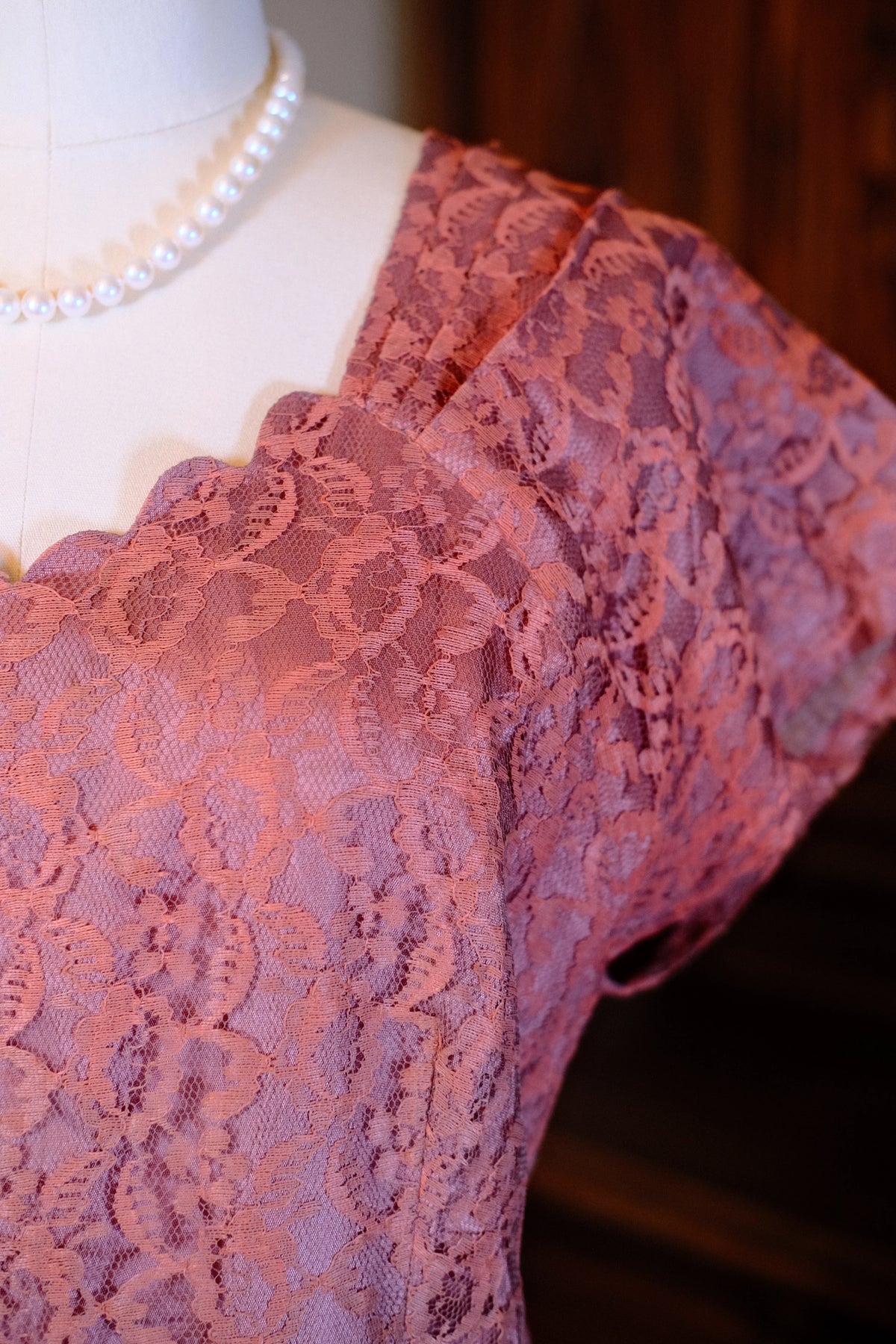
1. 法国手工花卉蕾丝:通身采用极为细腻的浅烟粉色(Dusty Rose)手工蕾丝。这种蕾丝并非机械印花,而是采用传统梭织或针绣工艺,在极细的网眼布(Netting)上勾勒出精美的花卉与藤蔓图案。这种半透明的质地,在视觉上制造出一种“犹抱琵琶半遮面”的朦胧美。
2. 领口的匠心:整件衣服的视觉焦点在于其标志性的扇贝形波浪领(Scalloped Edge)。这种设计打破了传统领口的沉闷,如同海浪拍打礁石后留下的温柔痕迹,极具浪漫主义气息。领口的弧度与胸前精致的蕾丝褶皱相得益彰,既保护了30年代末趋于保守的端庄感,又增添了几分女性的娇柔与妩媚。
三、 色彩之韵:浅烟粉色的“大萧条慰藉色”
这件裙子独特的色彩,是30年代末期非常具有代表性的浅烟粉色。
在经济大萧条时期,人们不再倾向于用高饱和度、张扬的色彩来宣告自我,而是开始偏爱柔和、低饱和度的莫兰迪色系。这种带有灰调的粉色,宛如清晨或黄昏时分的晚霞,既能衬托出穿着者白皙的肤色,又自带一种温润如玉的质感。它像是一剂温柔的良药,抚慰着那个动荡时代人们焦躁不安的情绪,传递着一种“岁月静好”的静谧力量。
四、 细节之诗:复古珍珠与时代风华
模特颈间搭配的一串温润的珍珠项链,是点睛之笔。
在30年代,无论是好莱坞银幕上的葛丽泰·嘉宝、琼·克劳馥,还是巴黎上流社会的名媛,珍珠都是她们不离身的“灵魂配饰”。珍珠的莹白光泽,能够完美中和蕾丝面料的复杂,为整体造型注入一股知性、温婉的书卷气。一袭烟粉色蕾丝裙,一挂莹润珍珠,完美勾勒出30年代末女性“柔中带刚、低调奢华”的风骨。
结语:
这件30年代末的法国手工蕾丝裙,是历史长河中一朵不朽的玫瑰。它没有刻意迎合潮流,而是用最温柔的剪裁、最细腻的蕾丝和最温婉的色彩,将那个时代对美、对和平、对女性自然曲线的极致推崇,一针一线地缝入了时光。穿上它,仿佛能穿越近百年的风霜,置身于巴黎左岸的午后咖啡馆,或是一场盛大的慈善晚宴,感受那份永不褪色的法式优雅。
"When the clamor and rebellion of the 1920s receded like the tide, the fashion of the 1930s blossomed amidst turbulence and depression, producing its most tender and tactile flowers."
Paris in the late 1930s was an era of profound contradiction and tension. Shrouded in the shadows of economic gloom and the gathering clouds of World War II, humanity nevertheless refused to forsake its yearning for beauty. On the contrary, fashion retreated entirely from the unbridled revelry of the "Jazz Age," shifting toward an ultimate pursuit of the natural female curve, gentle tactility, and spiritual solace. Born in the twilight years of the 1930s, this French handmade lace gown stands as a golden artifact where escapism and neoclassical aesthetics converged.
It transcends mere attire to become an art history text worn upon the body.
The "flapper" style of the 1920s deliberately erased the female bodily form, employing straight, drop-waist silhouettes in pursuit of a neutral rebellion. By the late 1930s, however, the French fashion world—spearheaded by master couturiers such as Madeleine Vionnet—had decisively broken away from rigid corsetry.
This long dress adopts the exceptionally classic natural waistline cut. The designer skillfully dropped the waistline precisely onto the narrowest part of the wearer's frame, utilizing exquisite darting (darts) and pattern-making to allow the fabric to drape naturally in accordance with the curves of the bust, waist, and hips. This "unconstricting yet perfectly contouring" tailoring was deeply influenced by ancient Greek neoclassical aesthetics, resembling goddess gowns (Goddess Gowns) stepping straight out of Greek mythology, radiating divine and elegant radiance amidst a troubled world.
The skirt hem flares softly into a micro-A-line silhouette, rippling like running water with every step to perfectly articulate the effortless luxury (Chic Décontracté) of French style.
In its selection of materials, this creation showcases the exquisite craftsmanship of late-1930s French haute couture.
French Handmade Floral Lace: The entire garment is enveloped in exceptionally delicate dusty rose (Dusty Rose) handmade lace. Eschewing machine printing, this lace utilizes traditional weaving or needlework techniques to trace exquisite floral and vine motifs across ultra-fine netting (Netting). This translucent tactility visually constructs a hazy, "half-veiled, half-revealed" beauty.
The Ingenuity of the Neckline: The visual focal point of the piece resides in its signature scalloped edge (Scalloped Edge) collar. This design shatters the monotony of traditional necklines, resembling the gentle trace left by waves kissing the shore, brimming with romanticism. The curvature of the neckline harmonizes exquisitely with the delicate lace gathers across the bodice, preserving the conservative decorum trending toward the late 1930s while injecting a layer of feminine tenderness and allure.
The unique chromatic palette of this dress is highly representative of the late 1930s.
During the economic Great Depression, society turned away from high-saturation, ostentatious tones to declare identity, favoring soft, desaturated Morandi palettes instead. This grayish pink, reminiscent of morning mist or sunset afterglow, flatters fair complexions while carrying a warm, jade-like tactility. It acts as a gentle palliative, soothing the anxious and unsettled spirits of a turbulent era while conveying the serene power of "years passing in quiet tranquility."
The lustrous strand of pearls draped across the model's neck serves as the finishing stroke.
Throughout the 1930s, whether adorning Hollywood silver-screen icons like Greta Garbo and Joan Crawford or socialites of Parisian high society, pearls remained an indispensable "soul accessory." The pearlescent sheen of the pearls effortlessly neutralizes the complexity of the lace fabric, imbuing the overall silhouette with an intellectual, gentle, scholarly poise. A dusty rose lace gown paired with a string of lustrous pearls perfectly outlines the resilient yet understated luxury characterizing the late-1930s woman.
This late-1930s French handmade lace gown stands as an immortal rose across the river of time. Without pandering to fleeting trends, it deploys the gentlest tailoring, the most delicate lace, and the most tender hues to stitch the era's supreme reverence for beauty, peace, and the natural female curve directly into the fabric of time. Slipping into it feels akin to traversing nearly a century of trials to find oneself resting within a Left Bank café in Paris or attending a grand charity gala, experiencing that eternal, unfading French elegance.