深圳溯源
Couldn't load pickup availability
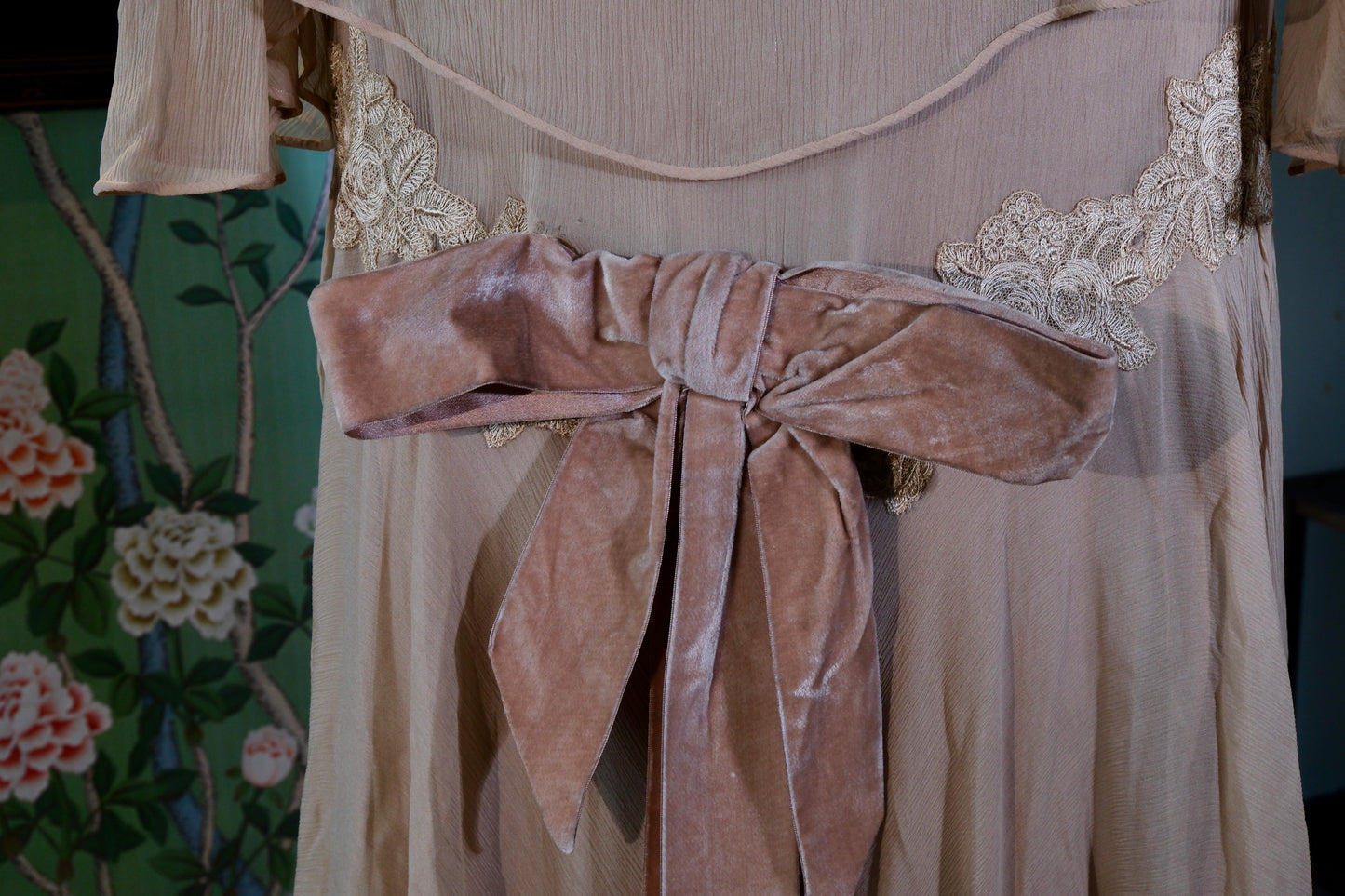
这套烟霞色的真丝薄纱套装裙,静默地悬于时光深处,
一、图案考:蕾丝上的故国花信
裙身上的法式蕾丝,并非简单的舶来装饰,
二、百年旧梦:从温哥华唐人街到蒙特利尔舞会
这套裙装的主人,是二十世纪初移民加拿大的华商之女。彼时,
三、稀缺性:离散华人的“衣冠孤本”
此裙的珍稀,在于它是“离散华人时尚”的活化石。
四、结语:穿在身上的太平洋
当指尖拂过裙摆的波浪褶边,仿佛能触摸到百年前太平洋的波涛——
Suspended silently within the deepest folds of material history, this mist-and-sunset-hued (Yanxia) silk tulle ensemble belongs neither to the neon-drenched luxury of old Shanghai’s Paramount ballroom nor to the serene hand-embroidery frames of legacy Suzhou needlewomen. Instead, it emerged from the private dressing chambers of a prominent Canadian "Old Money" merchant family during the 1920s. Within its intricate warp and weft, the bitter winter winds of the Canadian wilderness interlace with the historic prosperity of the Pacific Rim, preserving a profound, dreamlike manifestation of ancestral heritage woven by early Chinese diasporic communities in a distant land.
The exquisite French lace applied across the body of the gown transcends mere imported ornamentation; it operates as an avant-garde blueprint of cross-cultural symbolic translation.
The winding, continuous botanical rose vines tracing the neckline and cuffs are engineered with densely layered petals, their delicate leaf veins meticulously traced in ultra-fine metallic silver thread. This technique casts a shifting, translucent shadow across the underlying sheer tulle canvas—evoking the serene, poetic composition of classical monochrome ink paintings. This masterful synthesis—deploying elite Western lace-making technologies to manifest traditional Eastern organic expressions—stands as a powerful material reflection of the early immigrant experience: preserving a proud cultural baseline while navigating a new geographical reality.
The custodian of this rare textile artifact was the daughter of an elite Chinese merchant house that established its footprint in Canada during the turn of the twentieth century.
By the 1920s, following the completion of the Canadian Pacific Railway, the historic Chinatowns of Vancouver and Victoria had evolved into sophisticated, self-sustaining socio-economic epicenters. A select group of pioneering Chinese merchant families successfully accumulated substantial commercial capital, elevating them into an influential, highly literate merchant-class status.
Faced with the rigid, discriminatory legalities of the era's Exclusion Act, these families consciously chose to project their status through an attitude of dignified, understated luxury (Yijin Shangjiong). During the height of the prestigious Montreal debutante social seasons, women of these merchant houses stepped onto the international stage in brilliant hybrid vestments, commanding the ballroom with absolute poise and refined cultural authority.
The extraordinary historical value of this long dress resides in its status as a pristine, living fossil of "Diasporic Chinese Fashion"—a rare material category that completely bypasses the standard stylistic trajectories of mainland Republic-era silhouettes. The garment beautifully balances three distinct cultural genes:
The Eastern Foundation: Pure, premium fluid silk grounds that reference imperial material heritage.
The Western Outerwear Tech: Intricate French lace engineering that aligns the silhouette with the elite international design vocabulary of the Roaring Twenties.
The Canadian Pragmatic Architecture: The strategic integration of substantial, structural interior linings specifically engineered to safeguard the physical posture against severe North American winter climates without compromising the diaphanous lightness of the outer tulle layers.
As documented in early sociological archives of overseas communities, the attire of this pioneering generation functioned as "wearable nostalgia"—meticulously calibrated to command respect within strict Western high-society etiquette while silently safeguarding ancestral identity within its structural margins.
Running one's fingers across the undulating wave-shaped pleated hems of this antique gown offers an intimate, physical connection to the transoceanic crossings of a century ago. It records both the historic struggles of early labor movements and the absolute resilience of merchant families carving out empires in a foreign landscape.
This silhouette stands as the absolute zenith of diasporic material aesthetics: wrapping the bitter snows of the Canadian frontier in a warm, mist-hued silk embrace; resurrecting ancestral botanical memories through the precision of French lace; and utilizing the fluid luxury of premium silk to permanently declare the triumph, dignity, and quiet endurance of a pioneering legacy.