深圳溯源
Couldn't load pickup availability
衣服尺寸:
胸围/腰围/臀围:106/98/112 厘米
衣长:105 厘米
细节描述:
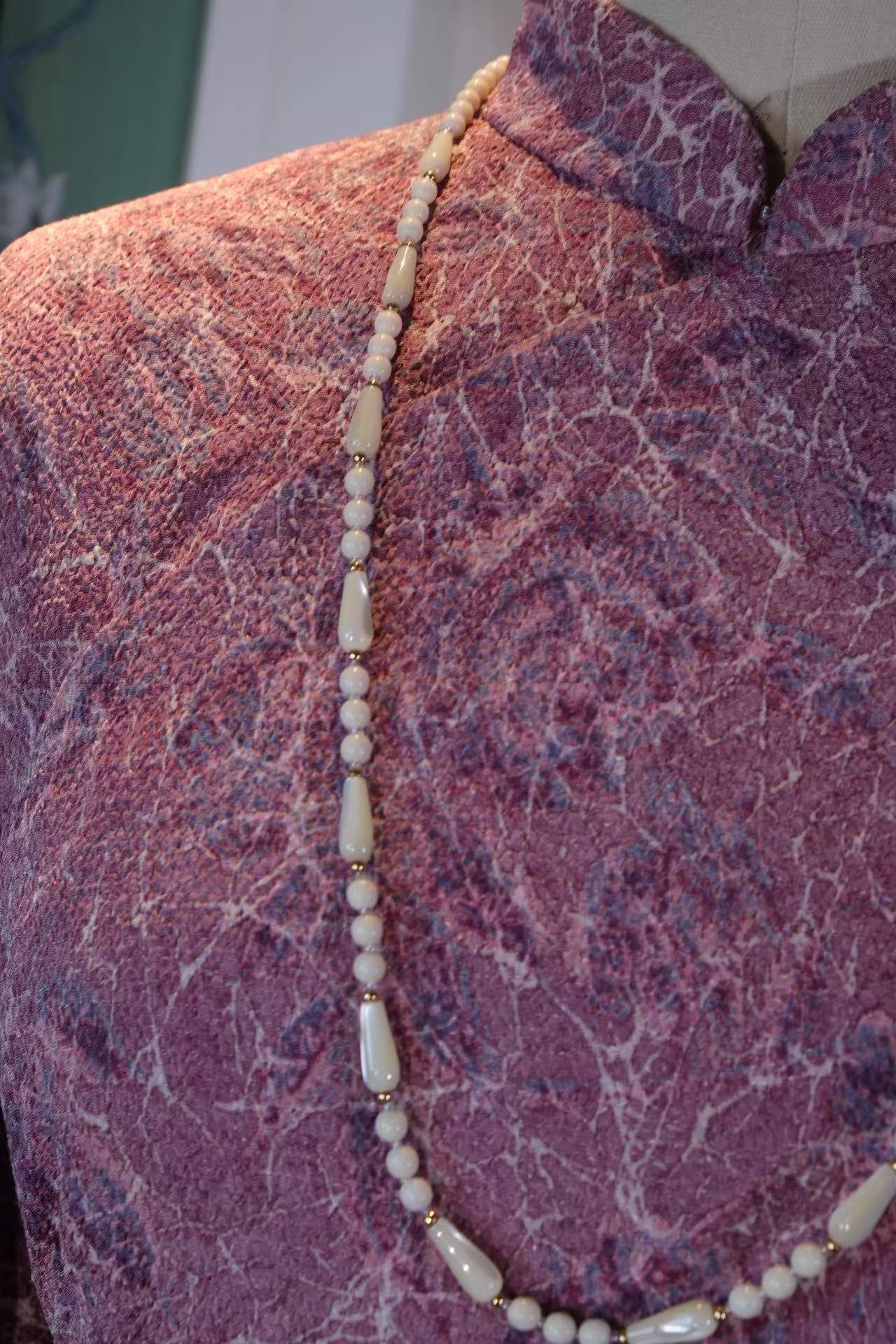
一、纹样与面料:樱花粉上的“大理石”浮雕
这件旗袍最引人入胜之处,在于其独特的面料处理工艺。它并非普通的平面印花,而是一种具有立体触感的提花或压纹织物。
- 色彩基调:整体呈现出一种温润的樱花粉色。这种粉色调并不艳俗,而是带着岁月的沉淀感,类似于古籍中形容美人的“桃之夭夭,灼灼其华”,但又被时光柔化了一层朦胧的滤镜。
- 肌理图案:面料表面布满了类似大理石纹路或冰裂纹的白色线条,这些线条在粉色的底色上交织,如同破碎的镜面,又似干涸河床的自然裂痕。在这些裂纹之间,隐约浮现出深紫罗兰色或暗紫色的花卉团案(看似牡丹或芍药的抽象化表达)。
- 视觉效果:这种设计巧妙地利用了视错觉。远看是繁花似锦的富贵气象,近看则是如岩石般坚硬的纹理。这种“刚柔并济”的视觉效果,打破了传统旗袍丝绸的光滑刻板印象,赋予了衣物一种雕塑般的质感。
二、形制与剪裁:六十年代的摩登风尚
从服装史的角度来看,这件旗袍精准地定格了20世纪60年代香港旗袍的黄金演变期。
- 低领与短袖:不同于30年代的高领长袖,这件旗袍采用了更为开放的低立领和宽大的短袖设计。这是受西方服饰审美影响的结果,旨在展现女性颈部与手臂的线条美,适应当时日益活跃的社交生活和亚热带气候。
- 西式立体剪裁:注意观察腰部的收省和胸部的立体造型。此时的香港旗袍已经大量引入了西式的装袖和省道技术,使得衣服像第二层皮肤一样贴合身体曲线,完美勾勒出女性的S型身段。这是一种自信、独立且充满现代感的女性形象。
三、文化意涵与稀缺性:衣香鬓影中的绝唱
“旗袍不仅是衣服,它是穿在身上的历史。”
这件古董衣不仅仅是一件御寒蔽体的织物,它是那个特殊时代的见证者。
- 引经据典:张爱玲曾在《更衣记》中写道:“对于不会说话的人,衣服是一种语言,随身带着的是袖珍戏剧。”这件旗袍就是那出戏剧的主角。它让人联想到60年代王家卫电影《花样年华》中的苏丽珍,那种在逼仄空间中依然保持体面与优雅的东方韵味。
- 艺术风格:它融合了东方的含蓄与西方的奔放。这种中西合璧的风格,正是海派文化与港式时尚碰撞出的火花。
- 稀缺性:随着工业化成衣的普及,这种需要复杂织造工艺、且保存如此完好的 vintage 提花旗袍已属凤毛麟角。市面上常见的多为后期仿制品,很难复刻出这种经过半个世纪氧化后特有的色泽与手感。
总结:
这件樱花粉大理石肌理旗袍,是一件可穿着的艺术品。它不仅展示了六十年代香港女装工艺的巅峰水平,更承载了一段关于优雅、关于变迁的流动历史。对于收藏家而言,它填补了战后亚洲时尚史的一块重要拼图;对于穿着者而言,它则是一份穿越时空的独特馈赠。
Measurements / Size Guide:
Bust / Waist / Hips: 106/98/112 cm
Total Length: 105 cm
Detailed Description:
The most captivating attribute of this qipao resides in its highly unique fabric engineering and structural finish. It entirely rejects basic, flat surface printing, opting instead for a textured jacquard weave or embossed textile matrix that commands an intensely tactile, high-relief dimensional topography.
Chromatographic Base: The primary palette relies on a warm, highly poised Cherry-Blossom Pink. This specific roseate calibration completely avoids loud, vulgar magentas, projecting instead a profound sense of temporal precipitation—reminiscent of the classical description of feminine beauty from ancient anthologies: "The peach trees are young and elegant, brilliant are their flowers," yet gently softened through a hazy, romantic historical filter.
Structural Texturing: The textile surface is densely populated by white linear networks mimicking organic marble veining or antique ice-crackle glazes (Bingliewen). These lines interlace across the pink grounding chassis like a shattered mirror or the natural fissures of a desiccated riverbed. Nested within these structural fractures are dimly emerging, deep violet or dark purple abstract floral roundels—conceptually decoded as stylized expressions of the heritage peony or herbaceous peony (Shaoyao).
Optical Mechanics: The design masterfully leverages a sophisticated visual illusion. From a distance, it projects the opulence of a garden in full bloom; upon close inspection, it reveals a texture as unyielding as stone. This calculated synthesis of structural rigidity and organic softness shatters the traditional, smooth flatness native to classical silk qipaos, endowing the garment with a sculpted, architectural presence.
Appraised through the analytical lens of costume history, this qipao serves as an impeccable material specimen capturing the definitive transitional zenith of the 1960s Hong Kong apparel apparatus.
Low Standing Collar and Short Sleeves: Shifting away from the towering collars and elongated sleeves diagnostic of the 1930s, this garment implements a highly liberated low standing collar and a wider, abbreviated short-sleeve pattern. This structural modification was conditioned by Western fashion aesthetics, engineered to articulate the anatomical lines of the neck and arms while beautifully accommodating the sub-tropical climate and the increasingly dynamic social mobility of the mid-century metropolitan woman.
Western Three-Dimensional Ergonomic Patterning: Evaluating the execution of the bodice reduction and waist shaping, the piece showcases the intensive assimilation of Western set-in sleeves and structural darting methodologies (Darts). These interventions compel the fabric to adhere to the anatomy like a second skin, flawlessly mapping the biological S-curve of the female form—a physical manifestation of a self-assured, autonomous, and intensely modern feminine identity.
"The qipao is far more than a garment; it is history rendered in textile."
This antique specimen transcends its utility as an article of clothing to operate as a vital primary physical document of a highly specific socio-cultural epoch.
Textual Lineage: Eileen Chang famously recorded in The Record of Changing Clothes: "To those who cannot speak, clothes are a language; what one carries with them is a pocket drama." This qipao performs precisely as the protagonist of that silent material drama. It instantly conjures the image of Su Li-zhen from Wong Kar-wai's iconic 1960s cinematic masterpiece In the Mood for Love—capturing that untarnished Eastern poise and dignity preserved flawlessly within the most claustrophobic urban spaces.
Aesthetic Paradigm: The garment reconciles Eastern understated restraint with Western expressive freedom. This harmonious cross-pollination of vectors represents the definitive spark ignited when Shanghai heritage (Haipai) collided with the nascent urban modernity of Hong Kong.
Absolute Scarcity: Following the total triumph of industrialized mass production, vintage jacquard qipaos that require such complex weaving maneuvers—and survive in such pristine conservation states—have dwindled to a nominal yield. The overwhelming majority of specimens encountered in contemporary marketplaces are modern retro-facsimiles, which fundamentally fail to replicate the authentic patina, desaturated chromatographic depth, and supple handle produced by over half a century of natural environmental aging.
This cherry-blossom pink marble-textured qipao operates as a wearable masterpiece of fine art. It simultaneously documents the peak technical capabilities of the 1960s Hong Kong apparel guild and serves as a fluid, physical archive of elegance and cultural transformation. For the archivist and connoisseur, it fills a crucial structural mosaic piece within the post-war history of East Asian fashion; for its rightful keeper, it remains an extraordinary, cross-temporal gift of unyielding grace.