流光碎影里的东方绮梦:60年代港产法式蕾丝水晶礼服裙
【器物综述】
此件藏品诞生于20世纪60年代的香港——那个被誉为“东方巴黎”的黄金时代。彼时,东西方文化在香江之畔剧烈碰撞又温柔交融,诞生了独属于那个时代的“港式高定”美学。这件樱花粉连衣裙,便是这一时期中西合璧工艺的集大成者。它既保留了法式时装的结构感,又注入了苏绣般细腻的东方手作灵魂。
【工艺考据:指尖上的繁花】
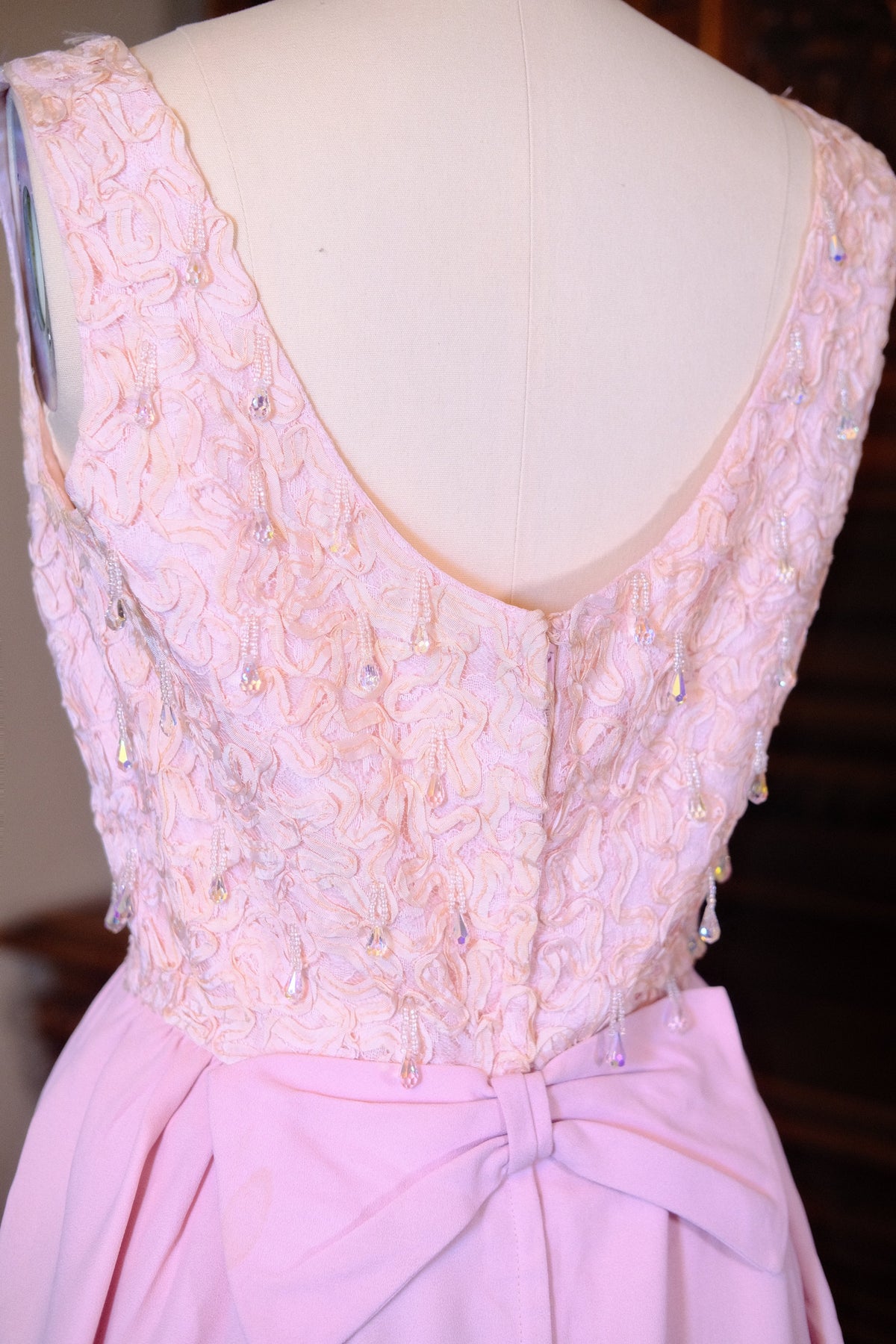
* 面料与肌理: 上身采用极为罕见的法国进口蕾丝为底,其独特之处在于采用了“丝带绣”与“盘带绣”相结合的技法。工匠将同色系的丝绸缎带在网眼蕾丝上盘绕、堆叠,形成如云朵般蓬松、如藤蔓般蜿蜒的立体肌理。这种工艺在《天工开物》中虽无直接记载,却暗合了传统织造中“锦上添花”的极致追求,触感温润如玉,视觉上则呈现出一种“乱花渐欲迷人眼”的朦胧美感。
* 流苏与水晶: 最为点睛之笔,在于那散落其间的流苏水晶坠饰。每一颗水滴形水晶皆由手工穿引米珠串联而成,垂坠于立体花纹之间。这种设计灵感或许源自清代宫廷服饰中的“禁步”或“流苏”,但在60年代被改良为更具现代感的装饰。当穿着者步履轻移,水晶随之摇曳,光影折射间,仿佛“大珠小珠落玉盘”,赋予了静止的织物以灵动的生命力。
【版型与剪裁:优雅的黄金比例】
* 廓形: 裙身遵循了50年代末至60年代初经典的“New Look”余韵,强调收腰与大裙摆的对比。上身紧身胸衣式剪裁(Bodice),勾勒出女性挺拔而含蓄的身姿;下身则是宽大的A字伞裙,面料挺括,垂坠感极佳,行走间自带风仪。
* 背部细节: 转身之际,方可见其真正的惊艳。深U型露背设计,大胆而不失端庄,展露出背部优美的线条。腰后那一枚巨大的同色系蝴蝶结,不仅是视觉重心,更是60年代少女情怀与贵妇气质并存的象征。它让人联想到《诗经》中“巧笑倩兮,美目盼兮”的灵动,又带着奥黛丽·赫本式的优雅俏皮。
【色彩美学:樱花粉的温柔叙事】
这种粉色,非艳俗之红,亦非苍白之粉,而是恰到好处的“樱花粉”或称“藕荷色”。在中国传统色谱中,它接近“桃夭”之色,“桃之夭夭,灼灼其华”,象征着生命的盛放与美好。在60年代的波普艺术浪潮中,这种柔和的色彩成为一种反叛喧嚣的宁静力量,它温柔地包裹着穿着者,诉说着那个年代特有的浪漫与矜持。
【结语】
这件古董裙,是时间的幸存者。它见证了香港制衣业最辉煌的岁月,记录了无数不知名女工在灯下穿针引线的专注。如今,当我们再次凝视它,看到的不仅是精湛的技艺,更是一种“衣以载道”的文化传承。它静静地立在那里,如同一位从旧时光走来的佳人,低眉顺眼间,尽是风华绝代。
Eastern Dreams in Shimmering Shadows: A 1960s Hong Kong French-Lace Crystal Evening Gown
【 Garment Overview 】
This collectible piece was born in 1960s Hong Kong—the golden era celebrated as the "Paris of the East." During this period, Eastern and Western cultures collided intensely yet merged tenderly along the shores of Hong Kong, giving rise to a unique "Hong Kong Haute Couture" aesthetic. This cherry-blossom pink dress stands as a masterwork synthesizing the East-meets-West craftsmanship of that time. It preserves the architectural structure of French haute couture while infusing it with the meticulous hand-crafted soul of Chinese embroidery.
【 Craftsmanship: Blossoms Upon the Fingertips 】
-
Fabric & Texture: The bodice utilizes an exceptionally rare imported French lace ground, set apart by a technique combining ribbon embroidery (Ribbon Embroidery) and couched soutache work. Artisans coiled and stacked silk satin ribbons of matching tones across the mesh lace, fashioning a relief texture as fluffy as clouds and as winding as vines. Though unrecorded in ancient treatises like Tiangong Kaiwu, this technique echoes the traditional Chinese pursuit of "adding flowers to brocade." Tactilely warm and jade-like, it offers a hazy visual beauty where "dazzling blossoms gradually bewitch the eye."
-
Fringes & Crystals: The defining accent lies in the crystal tassel pendants scattered throughout. Each teardrop crystal is strung by hand using seed beads and suspended amidst the raised floral motifs. This design draws inspiration from the Jinbu (pendant weight) or tassel ornaments of Qing Dynasty court dress, reimagined in the 1960s into a distinctly modern embellishment. As the wearer moves, the crystals sway, reflecting light and shadow like "pearls large and small cascading onto a jade plate," endowing the static fabric with living vitality.
【 Silhouette & Tailoring: Golden Proportions of Grace 】
-
Silhouette: The garment adheres to the classic late "New Look" proportions of the late 1950s to early 1960s, emphasizing the contrast between a nipped waist and a voluminous skirt. A corseted bodice skims the frame to define an upright yet reserved posture; below, the skirt releases into a broad A-line shape with excellent drape and structure, creating an effortless sweep of dignity in motion.
-
Back Detail: Turning around reveals its true splendor: a deep U-shaped open back that is daring yet dignified, exposing the graceful lines of the spine. The prominent matching bow accent at the rear waist serves not only as a visual anchor, but as a emblem of 1960s maidenly romance coexisting with aristocratic poise. It recalls the lively grace in the Classic of Poetry—"artful smiles so charming, beautiful eyes so vivid"—while carrying an Audrey Hepburn-esque playful elegance.
【 Color Aesthetics: The Gentle Narrative of Cherry-Blossom Pink 】
This hue is neither a garish crimson nor a washed-out pale pink, but a perfectly measured "cherry-blossom pink" or "lotus-root shade." In the traditional Chinese color spectrum, it nears the tone of Taoyao ("The peach tree is young and elegant, brilliant are its flowers"), symbolizing the blossoming of life and beauty. Amidst the mid-century Pop Art wave, this soft shade became a quiet force rebelling against noise—gently wrapping the wearer in the romance and restraint unique to that era.
【 Conclusion 】
This vintage dress is a survivor of time. It bore witness to the most glorious years of Hong Kong’s garment industry, recording the quiet devotion of unremembered needlewomen working under oil lamps. Gazing upon it today, we see not merely exquisite mastery, but a cultural heritage carried through cloth. It stands in quiet dignity like a high-born lady stepping out of bygone years—lowering her eyes, yet peerless in grace.