深圳溯源
Couldn't load pickup availability
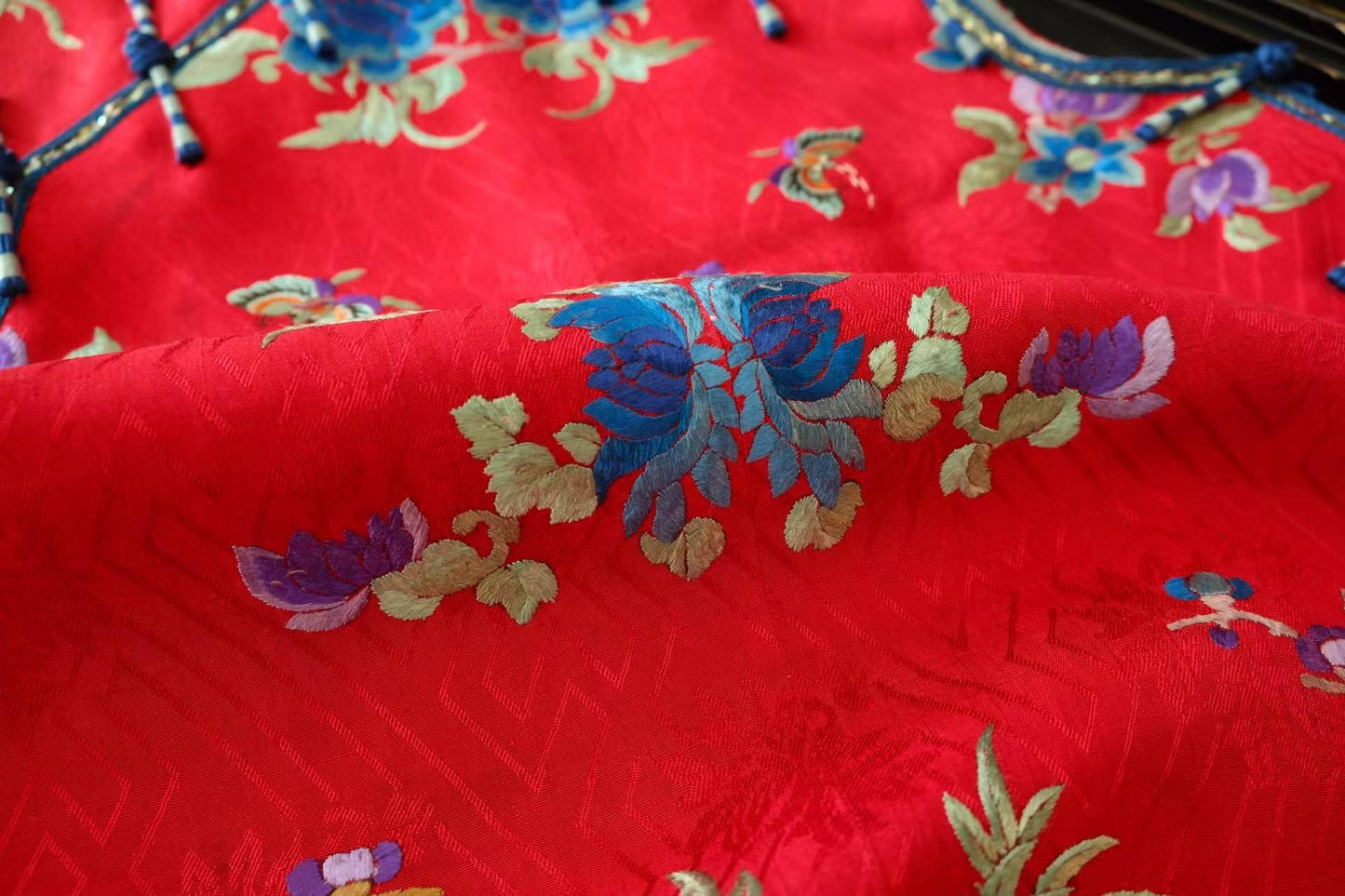
这件清末民初的红缎刺绣马甲,以“蝶恋花”为主题,绣工精湛,
一、形制与工艺:十三太保扣的匠心独运
马甲采用立领、无袖设计,边缘饰以蓝地织金绲边,
面料选用大红色暗纹织锦,底纹隐现回字纹与万字纹,寓意“
二、纹样考据:蝶恋花与闺阁情思的视觉叙事
马甲通体以苏绣技法绣制“蝶恋花”纹样,构图疏密有致,
蝶恋花纹样的文化渊源可追溯至宋代词牌《蝶恋花》,
值得注意的是,蝴蝶形态各异,翅脉以劈丝绣法细分为蓝、白、
三、稀缺性与历史价值:社会变革中的服饰标本
清末民初,随着西方文化的传入,传统服饰面临剧烈冲击。
此外,马甲的红色主调与刺绣工艺,亦反映了当时江南地区“
四、结语:穿越百年的美学对话
这件红缎刺绣蝶恋花马甲,不仅是清末民初女性服饰的瑰宝,
I. Form and Craft: The Ingenuity of the "Thirteen Guardians" Closures This vest, featuring a standing collar and sleeveless design, is framed by a blue-ground gold-woven (zhijin) binding that contrasts sharply with the vibrant red body. Its most extraordinary feature is the "Thirteen Guardians" (Shisan Taibao) button system—thirteen blue-and-white frog buttons arranged in a radiant, symmetrical layout. This innovative design not only adheres to traditional aesthetics but also signifies the wearer’s high social status and refined taste. Each button is meticulously handcrafted with interwoven blue and white silk threads, representing a level of complexity rarely seen in surviving period pieces. The fabric, a crimson brocade with hidden Wan (swastika) and Hui (fret) patterns, symbolizes "endless prosperity," a hallmark of celebratory attire from the Qing Dynasty to the Republic.
II. Motif Analysis: Visual Narratives of "Butterfly Seeking Flowers" Adorned with exquisite Suzhou Embroidery (Suxiu), the vest depicts the "Butterfly and Flower" motif with rich layering. Central to the design are two majestic blue peonies—symbols of "Wealth and Honor"—surrounded by purple magnolias and delicate azure blossoms, with butterflies fluttering amidst the greenery. While the butterfly traditionally signifies "longevity" (maodie), the bold palette of crimson, azure, and violet breaks conventional restraints, manifesting the artisan's creative daring. This motif echoes the poetic sentiment of the Song Dynasty Ci poem Die Lian Hua (Butterflies Lingering over Flowers), such as Ouyang Xiu's lines describing deep, secluded courtyards. The butterflies’ wings are rendered with the "split-thread" (pisi) technique in blue, white, and purple, some even traced with gold threads, rivaling the imperial tapestries found in the Palace Museum.
III. Rarity and Historical Value: A Sartorial Specimen of Social Transition During the transition from the Qing Dynasty to the Republic, the vest served as a precursor to the modern Qipao, blending Manchu structural efficiency with Han feminine softness. While the "Thirteen Guardians" vest is well-documented in literature, physical specimens are exceedingly rare. According to the Complete Collection of Chinese Textiles, Embroidery, and Costume, fewer than twenty such pieces are known to exist in global collections, mostly within major museums. Furthermore, the garment reflects the zenith of "Guige Xiu" (Boudoir Embroidery) in the Jiangnan region, where ladies of noble families infused poetic imagery into their needlework, making this vest a "painting in silk" and a silent witness to unrecorded feminine stories.
IV. Conclusion: A Centennial Aesthetic Dialogue This red satin embroidered vest is more than a treasure of early 20th-century fashion; it is a window into traditional craftsmanship and social culture. The ingenuity of the thirteen closures, the poetic allure of the butterfly motifs, and the fusion of brocade and embroidery construct a historical scroll where "clothing carries the Dao." To gaze upon this century-old relic is to touch the warmth of the threads and the enduring wisdom of the women who came before.