深圳溯源
Couldn't load pickup availability
衣服尺寸:
胸围/腰围/臀围:106/92/112 厘米
衣长:110 厘米
细节描述:
这件上世纪六十年代香港产的古董旗袍,以意大利进口刺绣蕾丝为肌理,将东方剪裁的含蓄与西方材质的通透熔铸于一袭蓝衣之中。它并非寻常织物,而是一段被针线封存的时代诗章——在冷战阴影与消费主义初萌的夹缝中,香港女性以衣为笔,书写着属于自己的现代性宣言。
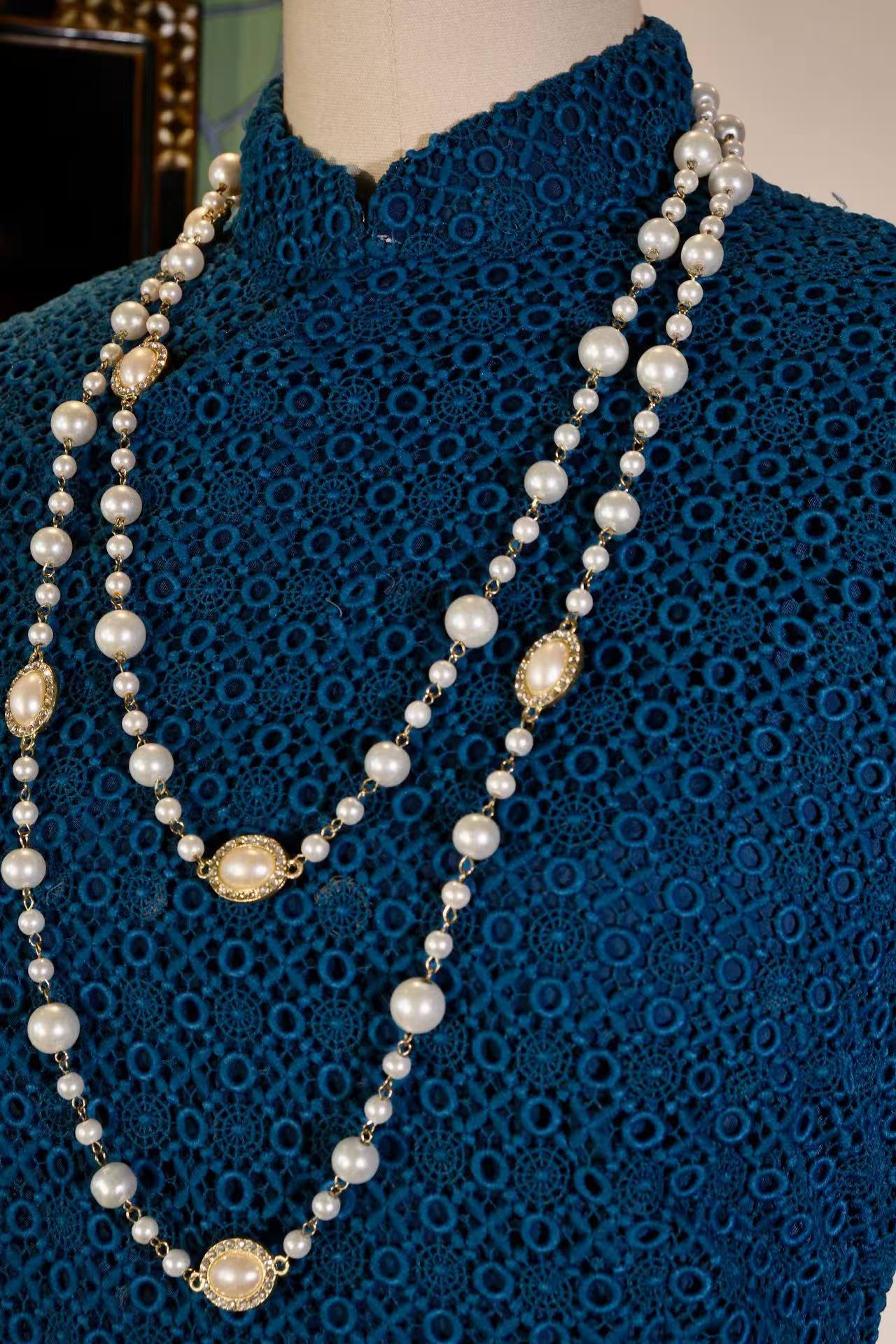
其图案非绘非绣,乃由整块蓝色镂空蕾丝构成,表面密布规则圆形孔洞,如窗棂、似蜂巢,又若星图般静谧有序。这种几何韵律摒弃了传统旗袍的龙凤牡丹,转而以“形式即内容”的现代主义语言,传递出六十年代对理性与秩序的美学追求。下摆处以更密集的蕾丝花边收束,如墨色收尾于宣纸边缘,既稳住视觉重心,又暗合“留白”之东方哲思。整体无具象纹样,却以纯粹的肌理节奏,构建出一种“无声胜有声”的视觉诗意。
此衣诞生于1960年代的香港,彼时东西方文化如潮水交汇,意大利精密蕾丝经由远洋货轮抵达维多利亚港,再由本地裁缝以“港工”技法缝制——立领承古意,无袖显新风,侧开衩藏步履之轻盈,修身剪裁勾勒出女性身体的自信轮廓。它不仅是衣物,更是那个时代都市女性在传统与现代之间游刃有余的自我表达。正如张爱玲所言:“衣服是一种语言,随身带着一种袖珍戏剧。”这件旗袍所承载的,正是那个年代女性在西装革履与长衫马褂之间,选择以蕾丝为铠甲、以剪裁为剑刃的优雅反抗。
从艺术史角度观之,此衣可视为“装饰艺术运动”(Art Deco)在远东的变体——其几何纹样呼应了20世纪30年代欧美对机械美学的崇拜,而其材质与剪裁则融入了东方“虚实相生”的哲学。稀缺性不仅在于其年代久远,更在于它见证了“全球时尚本土化”的早期实践:意大利面料、香港工艺、中国形制,三者缺一不可,共同铸就了这件不可复制的文化混血儿。
今日重睹此衣,仿佛听见六十年代香港的夜风拂过霓虹灯牌,看见一位女子身着此袍步入舞厅或办公室——她不依附于任何单一文化,而是以衣为媒,在世界的缝隙中走出自己的路。这不仅是服装史的标本,更是女性主体性觉醒的温柔证物。
Measurements / Size Guide:
Bust / Waist / Hips: 106/92/112 cm
Total Length: 110 cm
Detailed Description:
This antique qipao, produced in Hong Kong during the 1960s of the last century, utilizes embroidered lace imported from Italy as its foundational texture. It fuses the containment of Eastern pattern drafting with the translucent quality of Western materials into a single silhouette of blue apparel. It operates far beyond the utility of ordinary textiles; it stands as a chapter of epochal poetry sealed by needles and threads—in the narrow crevice between the shadow of the Cold War and the early germination of consumerism, Hong Kong women used clothing as their pen to draft their own definitive manifesto of modernity.
Its patterning is neither painted nor embroidered, but is instead composed entirely of a single piece of blue openwork lace. The surface is densely populated with regular, circular perforations resembling window lattices, honeycombs, or the quiet order of a star chart. This geometric rhythm completely throws off the dragons, phoenixes, and peonies of conventional qipaos, turning instead to the modernist linguistic approach of "form is content" to convey the 1960s aesthetic pursuit of rationality and order. The hemline is bound with a more concentrated lace trim, resembling a brushstroke of dark ink terminating at the edge of Xuan paper—simultaneously anchoring the visual center of gravity while subtly aligning with the Eastern philosophy of "negative space" (Liubai). The composition contains zero representational motifs, yet through pure tactile rhythm, it constructs a visual poetry where "silence speaks louder than words."
This garment was materialized in 1960s Hong Kong, a timeline when Eastern and Western cultures intersected like surging tides. Precision Italian lace arrived at Victoria Harbour via ocean-going cargo vessels, which local tailors then stitched utilizing elite "Hong Kong craftsmanship" techniques—the standing collar carries ancient intent, the sleeveless configuration manifests a new style, the side slits conceal the lightness of her steps, and the form-fitting cut contours the confident silhouette of the female body. It functions not merely as an article of clothing, but as the self-expression of contemporary metropolitan women navigating effortlessly between tradition and modernity. As Eileen Chang noted: "Clothes are a language; what one carries with them is a pocket drama." What this qipao carries is precisely the elegant rebellion of women during that decade who, positioned between Western suits and traditional robes, chose lace as their armor and tailoring as their blade.
Viewed from the perspective of art history, this garment can be regarded as a Far Eastern variant of the Art Deco movement—its geometric patterning echoes the 1930s Euro-American adoration of machine aesthetics, while its materiality and draftsmanship blend seamlessly into the Eastern philosophy of "the mutual generation of solid and void spaces." Its scarcity is anchored not only by its historical age, but more profoundly by its status as a material witness to the early practice of "the localization of global fashion": Italian textile, Hong Kong craftsmanship, and Chinese silhouette—three elements that cannot lack one another, together casting this irreproducible cultural hybrid.
Gazing upon this garment today, one can almost hear the midnight wind of 1960s Hong Kong brushing past neon signboards, catching a glimpse of a woman stepping into a ballroom or an office corporate suite framed in this qipao—she does not depend on any singular culture, but uses clothing as her medium to walk her own path within the fissures of the world. This stands not only as a physical specimen of costume history, but as a gentle testament to the awakening of female subjectivity.