溯源
Couldn't load pickup availability
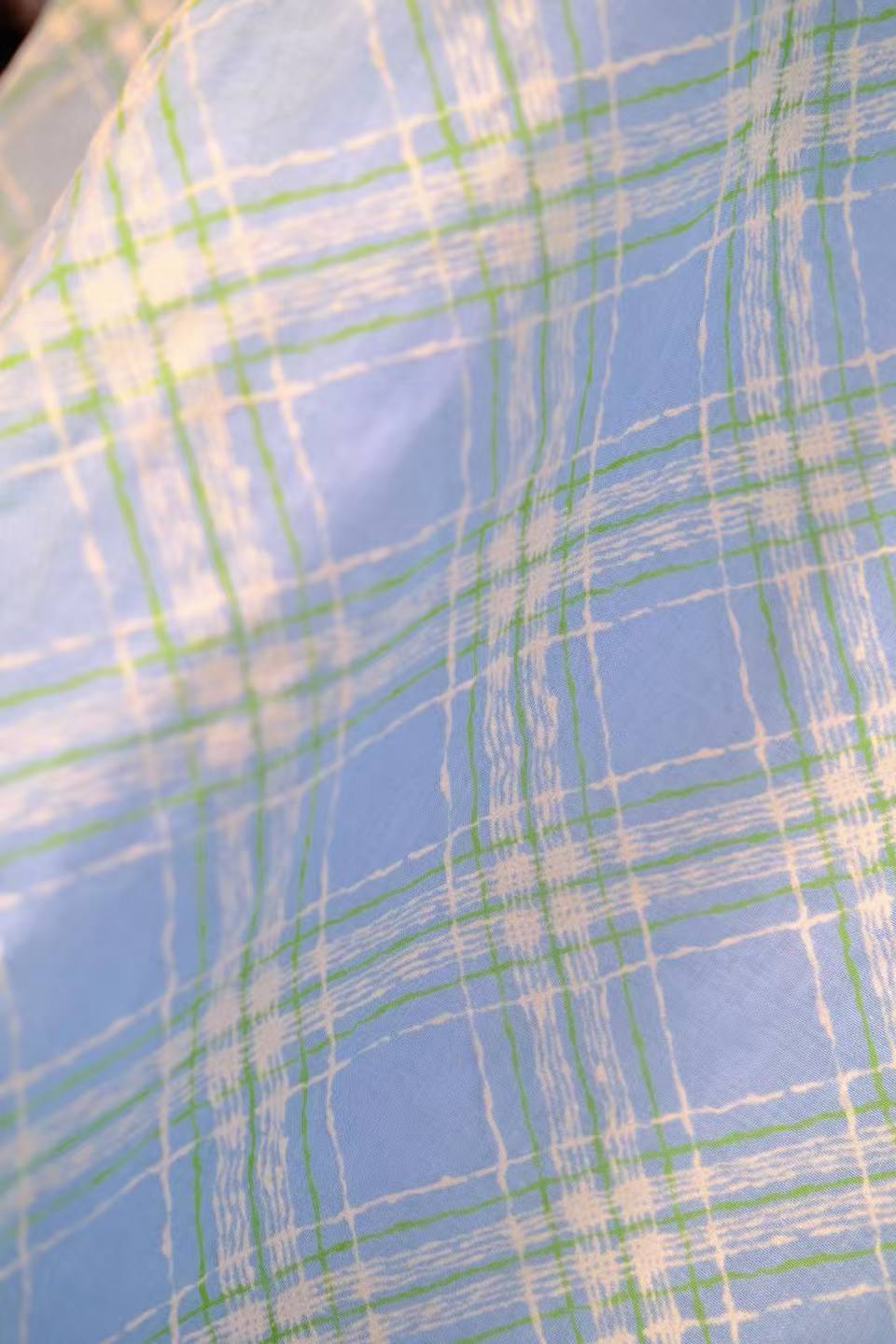
这件诞生于上世纪六十年代的婴儿蓝纯棉洋装,宛如一首凝固在织物上的夏日短诗。其视觉核心在于裙身那独具匠心的格纹图案——这并非寻常呆板的几何排列,而是一种带有手绘质感的“雨丝格”。
- 色彩美学: 底色是极为纯正的“婴儿蓝”,这种低饱和度的蓝色在色彩心理学中象征着宁静与纯真。交织其中的并非深沉的墨线,而是如嫩芽般的浅草绿与纯净的乳白。
- 纹理细节: 请注意观察那些白色的线条,它们并非工业印染般边缘锐利,而是呈现出一种类似水彩晕染或竹编肌理的断续感。这种设计巧妙地打破了格纹的严肃性,赋予了面料一种呼吸感和流动感,仿佛微风拂过水面泛起的涟漪。
- 工艺点缀: 腰间那一圈细密的白色蕾丝珠边装饰,如同一条精致的腰带,不仅勾勒出六十年代特有的高腰剪裁比例,更为这份随性增添了一丝名媛般的矜持与优雅。领口的荷叶边立领设计,更是那个年代少女感的极致表达。
若要读懂这件衣裳,便需回望那个被称为“东方好莱坞”的香江黄金时代。
上世纪五六十年代,香港正处于东西方文化剧烈碰撞与融合的熔炉之中。彼时的香港制衣业,正处于从传统中式裁缝向现代时装工业转型的巅峰期。这件洋装便是这一历史进程的活化石。它虽采用西式洋装的廓形——无袖高领、收腰大摆,但在面料的选择与处理上,却保留了东方人对棉麻质地的偏爱,讲究透气与亲肤,以适应亚热带潮湿闷热的气候。
这种“西式剪裁,东方风骨”的设计语言,正是当时香港上流社会社交着装的典型缩影。它见证了那个时代女性走出家门,在舞会、下午茶与职场之间自如切换的身影。
作为研究者,凝视这件裙装,我不禁想起张爱玲在《更衣记》中的那句名言:“对于不会说话的人,衣服是一种语言,随身带着的袖珍戏剧。”
这件六十年代的蓝裙,正是那出“袖珍戏剧”的最佳道具。
- 关于青春: 它的配色让人联想到《红楼梦》中软烟罗的色泽,“雨过天青”般淡雅。虽然它是西式的格纹,但其透出的那种“轻软”与“洁净”,与东方文学中对少女“冰清玉洁”的审美不谋而合。
- 关于稀缺: 在那个合成纤维(如的确良)尚未完全统治市场的年代,如此高支数的纯棉面料,且经过复杂的水洗做旧工艺处理(呈现出自然的柔软度而非生硬感),实属奢侈。它是那个年代“老钱风”的低调体现——不靠亮片皮草炫耀财富,而靠对面料触感的极致挑剔来彰显品味。
从服装史的角度审视,这件洋装具有极高的样本价值:
1. 过渡时期的审美标本: 它处于迪奥“New Look”大裙摆风潮的尾声与迷你裙革命的前夜。它保留了50年代末的优雅端庄(及踝长度、强调腰线),又预示着60年代中期即将爆发的波普艺术色彩(清新的撞色格纹)。这种承上启下的风格,在现存古董衣中并不多见。
2. 绝版的工艺温度: 注意看领口与拉链处的走线,那是机械化大生产普及前,经验丰富的裁缝师傅留下的手作痕迹。如今的快时尚衣物,千篇一律,毫无性格;而这件衣服上的每一处褶皱,都记录着六十年前某位工匠的温度。
3. 保存完好的奇迹: 纯棉织物极难保存,易褪色、易脆化。但这件裙子历经六十载岁月,色泽依然如初雪般清新,格纹依然清晰,这本身就是一个关于“惜物”的奇迹。
这不仅是一件衣服,这是一段被封存的蔚蓝时光。穿上它,你穿上的不只是六十年代的时尚,更是那个车马很慢、书信很远、连裙摆都摇曳着优雅与从容的年代。它是博物馆级的藏品,也是你衣橱里最温柔的传世之宝。
Crafted in the 1960s, this baby-blue pure cotton dress is like a summer poem frozen in fabric. Its visual centerpiece lies in the ingeniously designed plaid pattern—far from a rigid geometric grid, it features a hand-drawn quality reminiscent of "drizzle-like checks."
Color Aesthetics: The base hue is an exceptionally pure "baby blue," a low-saturation shade that symbolizes tranquility and innocence in color psychology. Interwoven within are not heavy, dark lines, but strokes of tender sprout-green and pure off-white.
Textural Details: A closer look at the white lines reveals that they lack the harsh, sharp edges of industrial printing. Instead, they exhibit an intermittent texture reminiscent of watercolor bleeding or bamboo weaving. This subtle detail breaks the formality of traditional plaid, granting the fabric a sense of breathability and fluid motion, like gentle breezes rippling across water.
Craftsmanship & Embellishments: Around the waist, a delicate band of white lace and beaded edging acts as a refined belt. It not only defines the high-waisted silhouette quintessential to 1960s tailoring, but also imparts a touch of aristocratic poise and elegance to its casual charm. The ruffled stand collar at the neckline stands as the ultimate expression of mid-century maidenly charm.
To truly understand this garment, one must look back at the golden era of Hong Kong—then celebrated as the "Hollywood of the East."
During the 1950s and 1960s, Hong Kong served as a melting pot where Eastern and Western cultures collided and coalesced. The local garment industry was at the peak of its transition from traditional Chinese tailoring to modern fashion manufacturing. This dress serves as a living fossil of that historical evolution. While adopting a Western silhouette—sleeveless with a high collar, fitted waist, and flared skirt—its material selection and treatment preserve the Eastern preference for natural cotton and linen. It prioritizes breathability and skin-friendly comfort, tailored specifically to endure the humid, subtropical climate.
This design language of "Western Tailoring, Eastern Spirit" perfectly encapsulated the social dress code of Hong Kong’s high society at the time. It bears witness to an era when women stepped out into the public sphere, moving effortlessly between ballroom dances, afternoon teas, and the workplace.
As a scholar gazing upon this dress, I am inevitably reminded of Eileen Chang’s famous quote in A Chronicle of Changing Clothes: "To those who cannot speak, clothes are a language—a pocket drama carried on one's person."
This 1960s blue dress serves as the finest prop for that "pocket drama."
On Youth: Its color scheme evokes the delicate "Ruan Yan Luo" (Soft Smoke Silk) described in Dream of the Red Chamber—subtle and elegant like "sky-blue after rain." Though a Western-style plaid, the fabric's soft lightness and pure cleanliness seamlessly align with the Eastern literary aesthetic of maidenly purity.
On Rarity: In an era before synthetic fibers (such as Dacron) dominated the market, a pure cotton fabric of such high thread count—treated with a sophisticated washing and aging process to achieve natural softness rather than stiff roughness—was a true luxury. It exemplifies the understated "Old Money" style of that period: asserting taste not through flashy sequins or furs, but through an exacting obsession with tactile elegance.
From the perspective of fashion history, this dress holds extraordinary archival and sample value:
A Stylistic Specimen of a Transitional Era: It sits at the tail end of Dior’s "New Look" full-skirt trend and on the eve of the mid-1960s Mod and Miniskirt revolution. Retaining the dignified elegance of the late 1950s (ankle-length hem, emphasized waistline), it simultaneously heralds the vibrant Pop Art colors soon to explode in the mid-1960s (fresh, contrasting plaid). Such a bridging style is exceptionally rare among surviving vintage garments.
Irreproducible Artisanal Warmth: Inspect the stitching along the neckline and zipper—these are the handcrafted traces left by experienced master tailors prior to the widespread rise of mass industrial manufacturing. Modern fast fashion produces uniform, characterless garments; every fold on this piece, however, retains the warmth and dedication of an artisan from sixty years ago.
A Miraculous Preservation: Pure cotton textiles are notoriously difficult to preserve, as they easily fade and become brittle over time. Yet, after six decades, the colors of this dress remain as fresh as new-fallen snow, and the checks stay crisp and clear. This in itself is a marvel born of meticulous care.
This is more than just a dress; it is a preserved segment of cerulean history. To wear it is to slip into more than just 1960s fashion—it is to reconnect with an era when travel was unhurried, letters traveled slowly, and even the sway of a skirt exuded poise and grace. It stands both as a museum-grade collectible and as the most gentle, enduring heirloom in your wardrobe.