溯源
Couldn't load pickup availability
这套时装裙堪称20世纪60年代东西方服饰文化交融的典范,其工艺之精湛、设计之巧思,令人叹为观止。
一、时代背景与风格定位:六十年代的“太空时代”与东方韵味
20世纪60年代是时尚史上的转折点,以玛丽·奎恩特为代表的“摇摆伦敦”风格引领了年轻化、几何化的潮流,同时,随着太空竞赛的开启,“未来主义”面料如PVC、金属光泽织物大行其道。然而,这套裙装并未完全盲从西方的激进前卫,而是保留了一种优雅的过渡期特质——既有现代主义的利落剪裁,又延续了高级定制的奢华质感。
它不仅仅是一件衣服,更是一段历史的切片,记录了那个年代香港作为“东方巴黎”在转口贸易与轻工业制造上的辉煌时刻,以及意大利纺织业在全球供应链中的顶端地位。
二、面料解析:光影交错的奢华叙事
1. 意大利进口织金欧根纱
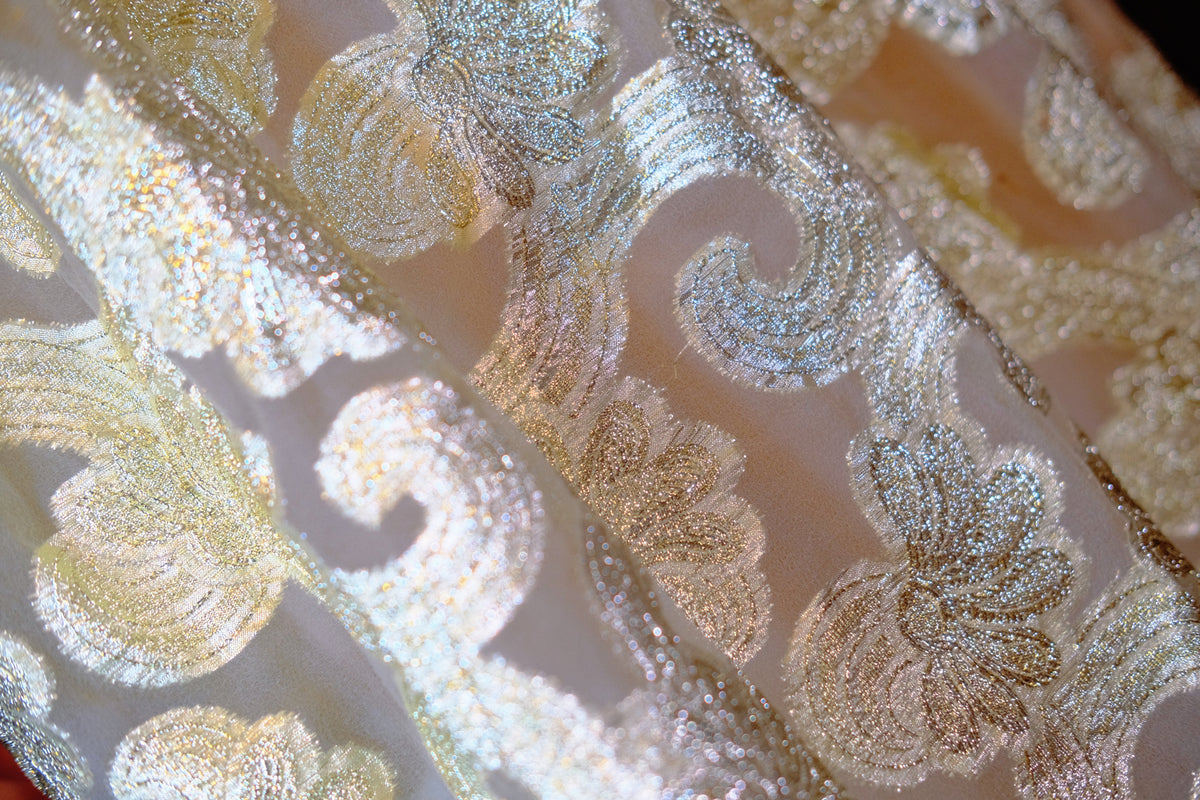
裙身主体采用了极为珍贵的织金欧根纱。欧根纱本身质地透明、硬挺,能撑起廓形而不失轻盈。而这件衣服的特殊之处在于“织金”工艺。不同于普通的印花或后整理烫金,这种金线是直接织入经纬之中的。在微距镜头下(如图5、6、7),我们可以清晰地看到金银丝线交织出的巴洛克式卷草纹样。这种纹样让人联想到中国传统的“云气纹”或西方的“阿拉伯蔓藤花纹”,在光线下呈现出一种流动的、液态金属般的质感。正如《天工开物》中所载:“凡织金必用真金箔……”,虽此处大概率为现代金属纤维,但其追求的“金光灿烂”之视觉效果,古今一脉相承。
2. 织金针织拼接
上身胸背部采用了密实的织金针织面料。针织物具有极好的弹性与贴合度,与下半身硬挺飘逸的欧根纱形成了强烈的材质对比(Texture Contrast)。这种“上紧下松”、“上实下虚”的处理手法,不仅符合人体工学,修饰身形,更在视觉上构建了丰富的层次感。金色的针织部分如同铠甲般护住心口,闪烁着细密而内敛的光芒,宛如夜空中的星河。
三、版型与工艺:中西合璧的剪裁智慧
1. V领与高腰线的运用
V字领口的设计拉长了颈部线条,展现出一种端庄的性感,这是60年代女装摆脱50年代极度束腰束缚后的解放象征。高腰线的设计(Empire Waist的变体)则巧妙地提高了视觉重心,使得下半身的裙摆显得更加修长垂坠。
2. 灯笼袖与收口
袖子部分采用了极具宫廷感的灯笼袖设计,但在手腕处做了收紧处理。这种袖型既复古又浪漫,欧根纱的透视感让手臂若隐若现,增添了几分朦胧美。袖口的金色滚边细节,显示了当时香港制衣业极高的做工水准——即便是在不起眼的边缘,也绝不敷衍。
3. 百褶裙摆的律动
裙摆并非简单的A字散开,而是做了细密的工字褶或箱型褶处理。这种打褶方式增加了裙子的体积感和立体感,行走间,金色的纹样随着褶皱的开合而闪烁,如同波光粼粼的水面。
四、配饰与整体意境:旧时光的优雅注脚
模特佩戴的网纱花朵头饰和珍珠项链,是典型的50年代末至60年代初的名媛装扮。网纱头饰带有一种神秘而隆重的仪式感,仿佛是为了出席一场盛大的晚宴或婚礼。珍珠的温润中和了金线的锐利,使得整体造型贵气而不俗艳。
This fashion dress stands as a classic specimen of East-meets-West garment culture in the 1960s. Its exquisite craftsmanship and ingenious design are truly breathtaking.
The 1960s represented a key turning point in fashion history. Pioneered by designers like Mary Quant, the "Swinging London" youth movement ushered in geometric and youthful silhouettes, while the onset of the Space Race popularized futuristic materials like PVC and metallic fabrics. Yet, this gown did not blindly follow Western radical avant-gardism; instead, it preserved an elegant transitional quality—combining the clean-lined tailoring of modernism with the opulent tactile quality of haute couture.
It is more than a garment—it is a living historical slice recording Hong Kong's golden era as the "Paris of the East" in entrepôt trade and light manufacturing, as well as the Italian textile industry's pinnacle position in global supply chains.
Imported Italian Metallic Organza
The main body of the skirt utilizes exceptionally precious metallic organza (Lurex Organza). Organza by nature is crisp and sheer, supporting voluminous silhouettes while maintaining weightless floatation. The defining feature of this piece lies in its metallic weave structure (Zhijin). Departing from ordinary surface printing or foil stamping, the metallic threads are directly integrated into the warp and weft. Under a macro lens, one can clearly observe the Baroque acanthus scroll patterns woven from interweaving gold and silver threads. Recalling both traditional Chinese cloud motifs and Western arabesque tendrils, it presents a fluid, liquid-metal luster under changing light. As Song Yingxing recorded in Tiangong Kaiwu: "Wherever gold is woven, genuine leaf is used..." While modern metallic fibers are used here, the timeless pursuit of radiant, golden splendor remains unchanged across centuries.
Metallic Knit Panelling
The bodice features a dense metallic knit fabric across the chest and back. Knitwear offers excellent elasticity and contouring, creating a striking texture contrast against the crisp, sweeping organza below. This structural approach—fitted above and relaxed below, solid above and translucent below—not only conforms ergonomically to enhance the silhouette, but builds rich visual dimensionality. The golden knit section protects the chest like armor, shimmering with a fine, restrained radiance akin to a galaxy in the night sky.
V-Neckline and High Waistline Placement
The V-neckline elongates the neck contour to reveal a dignified sensuality—a symbol of liberation as 1960s womenswear shed the extreme tight-lacing of the 1950s. The high-waist construction (a variant of the Empire waist) cleverly elevates the visual center of gravity, allowing the skirt to appear remarkably slender and flowing.
Lantern Sleeves & Fitted Cuffs
The sleeves adopt a regal lantern-sleeve structure that tapers closely at the wrist. Both retro and romantic, the translucent organza leaves the arms softly veiled, adding a dreamlike aesthetic. The metallic piping framing the cuffs displays the supreme standard of Hong Kong's apparel industry at the time—refining even the smallest edges without compromise.
Rhythm of the Pleated Skirt
The skirt releases not through a simple A-line flare, but through fine box pleating. This technique adds architectural volume and weight; as the wearer moves, the gold motifs shimmer through the opening and closing of the pleats like sunlight across rippling water.
The model's veiled floral headpiece and pearl necklace evoke the iconic high-society attire of the late 1950s and early 1960s. The netted headpiece imparts a sense of ceremonial grandeur, as if destined for a formal banquet or wedding. Meanwhile, the gentle warmth of the pearls softens the sharp sparkle of the metallic threads, ensuring the ensemble remains opulent without stepping into garishness.