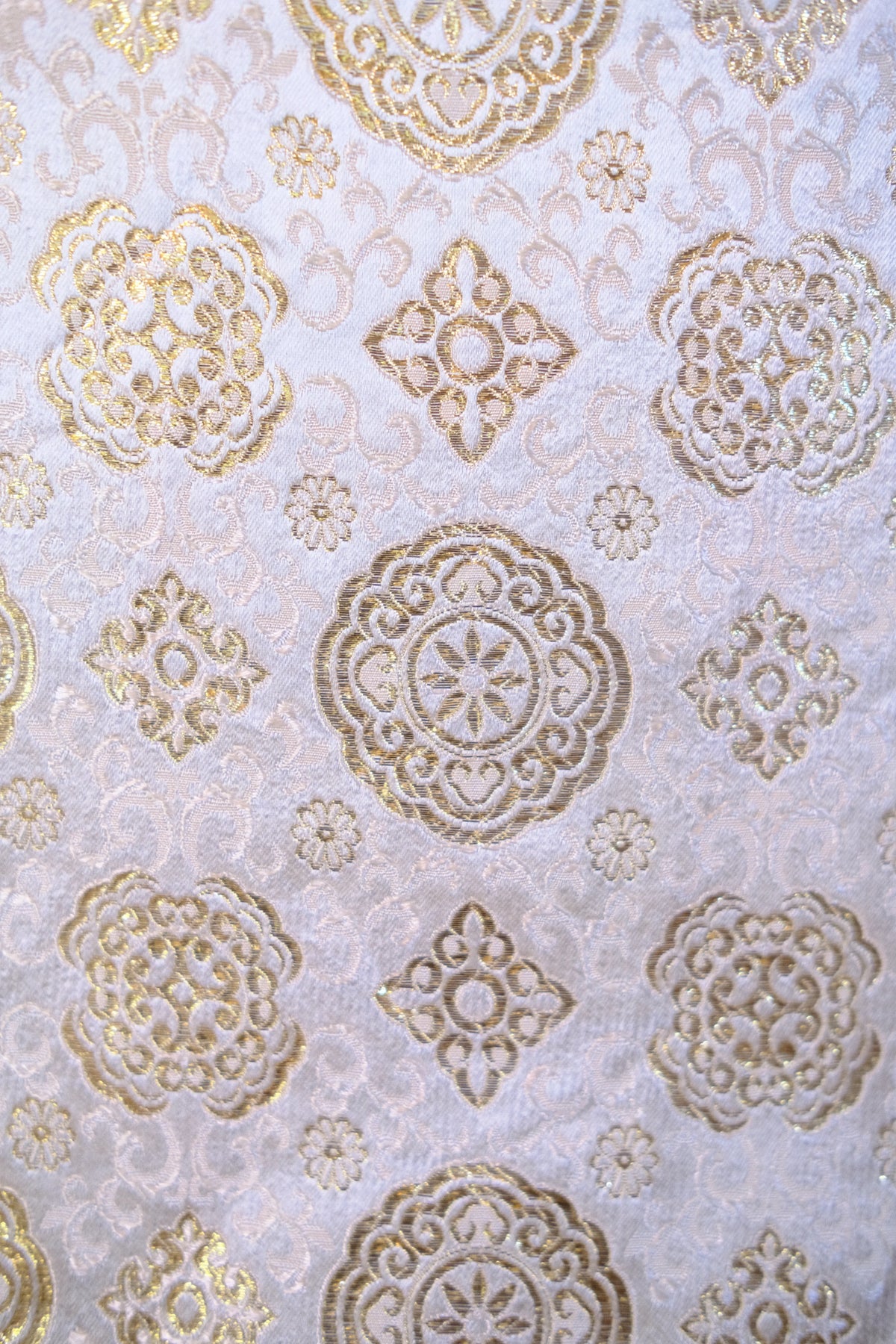
An Elegant Inscription: A Dream of Hong Kong, Woven in Gold and Silver
Time never defeats beauty, nor does it allow classic stitches to fade. Originating from 1960s Hong Kong, this Qipao stands as a lavish encounter between woven gold and silver. With a pristine white base resembling snow and golden threads gleaming like light, it transcends mere attire to become a physical footnote to the golden era of old Hong Kong—the "Paris of the East."
Curation Archive: Master Artisanship Forged Over Decades
-
Era & Dating: 1960s (Hong Kong's Golden Age / Post-Shanghai Style Evolution Period).
-
Origin: Hong Kong Made. At the time, Hong Kong gathered elite Shanghai-exile tailors (known as the Red Band Tailors) alongside exceptional local artistry, marking the pinnacle of East-West aesthetic collision.
-
Fabric & Craftsmanship: Premium dual-color gold and silver woven brocade (Brocade). Utilizing traditional jacquard weaving, golden and silver threads are intricately interlaced across a pristine white ground.
-
Motif Analysis: Classic "Baoxiang flowers" (Baoxiang Flowers) and "interlocking lotus vines" (Interlocking Lotus Vines). The Baoxiang flower represents an idealized floral motif from Tang Dynasty Buddhist art, symbolizing purity and decorum.
-
Silhouette Characteristics:
-
Three-Dimensional Tailoring: Adopts the Western-influenced 3D tailoring (3D Tailoring) highly revered in Hong Kong at the time, utilizing exceptionally refined darting (Darts) to flawlessly contour the wearer's shoulders, neck, waist, and hips.
-
Retro Bell Sleeves: Departing from the slim, tapered sleeves of the 1950s, the 1960s silhouette was deeply influenced by the lingering resonance of Dior's New Look. The cuffs flare into subtle bell shapes (Bell Sleeves), lending an agile, elegant, and intensely theatrical classical air.
Poetic Appreciation: "Woven Gold" Splendor Through a Literary Lens
I. Gold Threads Weave the Baoxiang Flower, Pristine Jade Reflects Morning Glow
The fabric of this Qipao is exceptionally exquisite. Utilizing a classic "all-over floral" (All-Over Floral) layout against a luminous, unblemished white ground reminiscent of rice paper, golden threads outline substantial Baoxiang blossoms. The Baoxiang flower—a mythical bloom combining the magnificence of the peony with the purity of the lotus—symbolizes perfection and solemnity. Interspersed among the gold threads are interlocking lotus vines and four-petal geometries, signifying endless continuity and life. As light shifts across the surface, the golden motifs gleam brilliantly, evoking the sensation of wearing the palaces of the Tang Dynasty alongside the neon glow of Victoria Harbour.
II. Bell Sleeves Conceal Elegance, Shanghai Legacy Meets Modernity
The sleeves serve as the very soul of this Qipao. The cuffs flare out into a graceful bell shape, instantly calling to mind the flying apsaras of Tang Dynasty murals while bearing the lively fluidity of Western evening gowns. Highly sought after by elite socialites in 1960s Hong Kong, this design shattered the inherent constraints of traditional Qipaos; with every movement, it balances the decorous poise of a distinguished lady with the unfettered chic of a modern woman.
III. Ingenious "Hong Kong Craft"
Inside the garment, one witnesses the flawless synthesis of traditional shaping techniques—pushing, gathering, and ironing (Shaping and Pressing)—with Western structural tailoring. It achieves a natural, sublime contouring of the female form without relying on excessive dart manipulation.
Epilogue
This is far more than a passable antique; it is a preserved slice of history. Slipping into it is to experience a cross-time rendezvous with the peerless elegance of the 1960s. Ideal for high-end galas, Chinese wedding ceremonies, or private museum-grade collections.