深圳溯源
Couldn't load pickup availability
衣服尺寸:
胸围/腰围/臀围/衣长:94/94/106/108 厘米
细节描述:
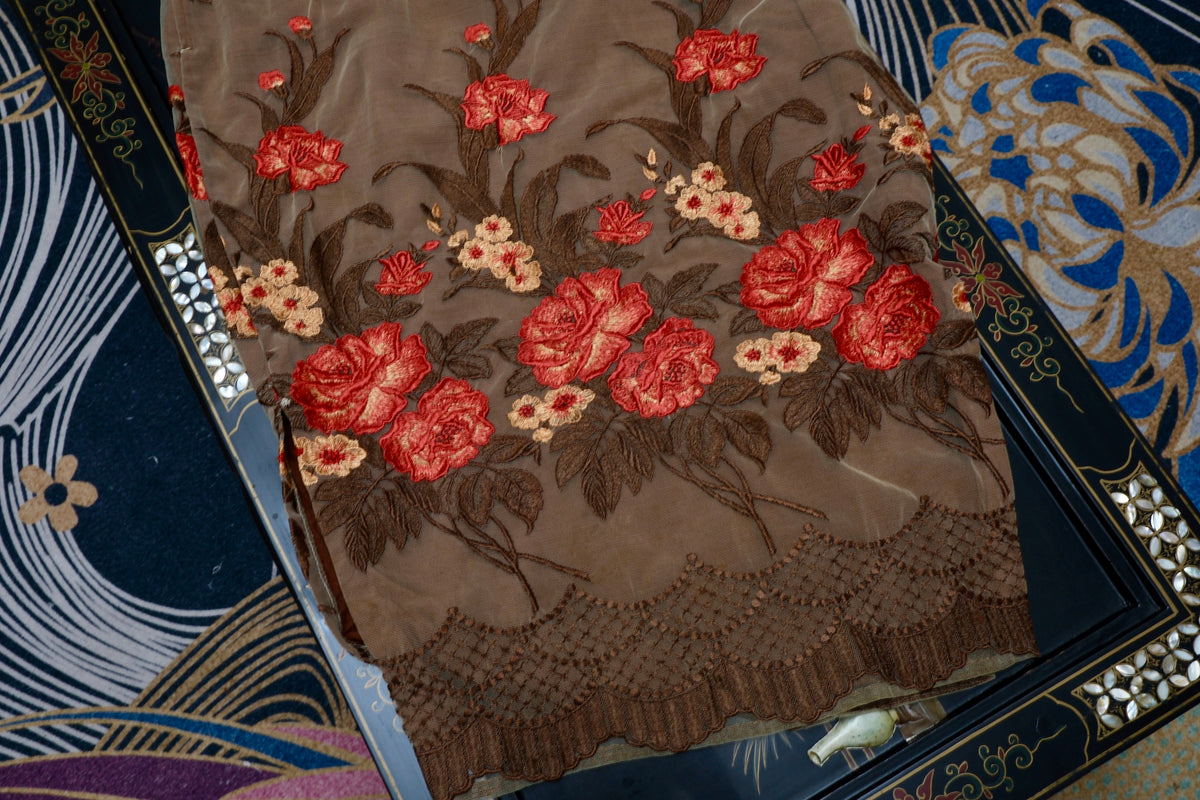
【器物描述:薄雾中的繁花】
这件旗袍宛如一首凝固的南洋诗篇。其面料选用极具时代特征的灰褐色透明网纱,色泽如暮色中的烟雨,自带一种朦胧的复古滤镜。最为惊艳的是其通身铺陈的刺绣花卉——那并非传统中式平面的折枝梅兰,而是带有浓郁西洋油画质感的立体玫瑰与蔷薇。
工匠运用了意大利进口机器进行高密度刺绣,丝线在网纱上层层堆叠,构建出花瓣的起伏与光影。深红、胭脂与米白交织,花叶则以深褐色的丝线勾勒脉络,呈现出一种近乎标本般的精致与永恒感。袖口处拼接的同色系钩针蕾丝,如波浪般轻盈卷曲,不仅呼应了整体色调,更在举手投足间流露出一丝慵懒的南洋风情。这种“透”与“实”的对比,将女性肌肤的含蓄美展现得淋漓尽致。
【历史溯源:钟情的印记与时代的迁徙】
衣领内侧那枚泛黄的“钟情绸缎庄 CHUNG CHING MERCERY”标签,是解开这件衣裳身世之谜的钥匙。
上世纪五十年代,是一个大迁徙与大融合的时代。随着局势变动,大量江浙裁缝与纺织业者南下香港、台湾及南洋各地。“钟情”二字,既是对旧日上海滩繁华的眷恋,也是在异乡重建生活的期许。这件产自台湾、由“钟情”出品,却使用意大利进口机器刺绣的旗袍,正是那个特殊年代的混血儿。
它见证了战后台湾纺织业的崛起,也记录了西方工业文明(意大利绣花机)如何介入东方传统服饰的制作流程。它不再仅仅是手工的温度,更是工业化初期对“效率”与“精美”并存的追求。这种特定的历史组合——南洋的审美趣味、台湾的制造基地、西方的技术加持、以及老上海的品牌灵魂,使其成为了一件不可复制的历史文物。
【艺术风格与稀缺性:西风东渐的绝唱】
张爱玲曾在《更衣记》中写道:“对于不会说话的人,衣服是一种语言,随身带着的是袖珍戏剧。”这件旗袍,演的便是一出《花样年华》前奏的戏码。
从服装史的角度审视,它是极其罕见的“中西合璧”样本。
其一,稀缺的材质工艺。五十年代的网纱面料保存至今极易脆化破损,而这件藏品品相完好,且意大利机绣的立体感在现代廉价电脑刺绣面前显得尤为珍贵,那种丝线的润泽感是化纤无法比拟的。
其二,独特的审美范式。它脱离了传统旗袍的端庄素雅,拥抱了当时流行的“洋气”。这种大面积、高饱和度、写实风格的西式花卉刺绣在传统旗袍中并不多见,它反映了当时都市女性渴望摩登、追求个性解放的心理投射。
这不仅仅是一件衣服,它是那个流金岁月的切片。它告诉我们,美,是在动荡中依然坚持精致的权利;时尚,是跨越重洋后依然能生根发芽的生命力。收藏此衣,便是收藏了一段关于“钟情”的往事,一段永不褪色的南洋旧梦。
Measurements / Size Guide:
Bust / Waist / Hips / Total Length: 94/94/106/108 cm
Detailed Description:
This qipao unfolds like a poem from the Nanyang archives. The garment is constructed from a taupe-grey transparent mesh—a fabric emblematic of its mid-century period—carrying a soft, atmospheric tone reminiscent of mist at dusk.
The visual anchor of the piece resides in its comprehensive, all-over floral embroidery. Moving away from two-dimensional traditional Chinese sprays of plum or orchid, the motifs feature three-dimensional roses and wild briars rendered with the rich textural weight of Western oil paintings.
Machine-Stitched Dimensionality: The embroidery was executed using imported Italian machinery, building up dense, layered silk threads directly over the delicate mesh substrate to articulate the sculptural contour and lighting of individual petals.
Color Narrative: Crimson, rouge, and cream-white silk threads intertwine across the surface, framed by deep brown outlines that define the veins of each leaf with specimen-like precision.
Textile Contrast: Crocheted lace in a matching taupe tone edging the sleeves mirrors the overall palette, adding a light, undulating rhythm. The contrast between the sheer mesh backing and the dense, solid embroidery creates a subtle dialogue between revealed and veiled skin.
Fastened inside the neckline, a yellowed woven label bearing the inscription "Chung Ching Mercery" (钟情绸缎庄) provides the key provenance for this piece.
The 1950s marked an era of significant migration and cultural integration across East and Southeast Asia. Following political shifts on the mainland, master tailors and textile merchants from the Jiangnan region moved south toward Hong Kong, Taiwan, and Southeast Asian commercial hubs. The name Chung Ching ("Deep Affection") signaled both a nostalgic homage to mid-century Shanghai's sartorial legacy and an intention to rebuild bespoke traditions in new surroundings.
Originating in Taiwan under the Chung Ching label yet utilizing imported Italian embroidery machinery, this qipao stands as a hybrid specimen of mid-century material culture:
Industrial Intersection: It documents the post-war development of Taiwan's light manufacturing sector alongside the integration of Western industrial technology (Italian multi-head embroidery machines) into traditional Eastern dressmaking.
Synthesis of Influence: The garment represents a precise convergence of four historical factors: Nanyang aesthetic preferences, Taiwanese production, European machinery, and the stylistic memory of Shanghainese tailoring.
In Reflections on Clothing (更衣记), Eileen Chang observed: "For those who cannot speak, clothes are a language, a pocket theater carried upon the body." This garment acts as a physical script from that trans-regional narrative.
From the perspective of apparel history, the piece holds notable archival value due to two key factors:
Material Preservation: Mid-century delicate mesh fabrics are exceptionally prone to oxidation, embrittlement, and tearing over time. Preserving the structural integrity of thin mesh under the weight of high-density machine embroidery over seventy years requires optimal environmental stewardship.
Stylistic Innovation: The design departs from conservative traditional palettes to embrace a bold, modern cosmopolitanism. Dense, high-saturation, realistic Western floral motifs were rarely deployed so comprehensively on traditional qipao silhouettes, reflecting mid-century urban women's evolving self-expression and engagement with international fashion trends.
This 1950s mesh qipao transcends simple garment function. Preserving its woven Chung Ching Mercery label, dense Italian silk stitching, and taupe mesh canvas, it remains a tangible artifact of migration, industrial adaptation, and enduring mid-century grace.