深圳溯源
Couldn't load pickup availability
衣服尺寸:
胸围/腰围/臀围:82/78/92 厘米
衣长:99 厘米
细节描述:
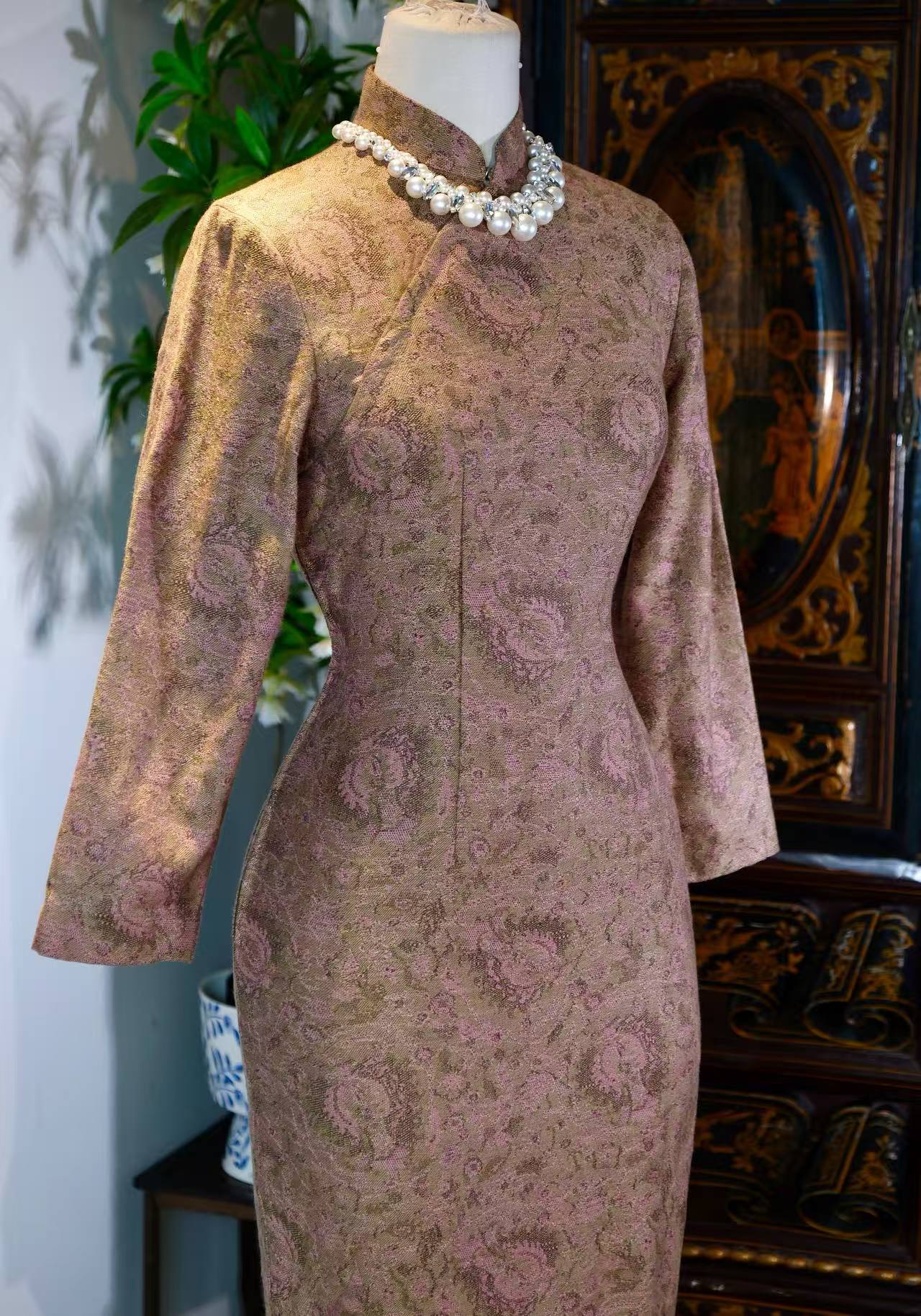
一、纹样:织锦里的时光密码
这件旗袍的肌理,藏着六十年代香港纺织业的黄金密码。面料采用提花工艺,以粉金为底,织就缠枝莲与卷草纹的变体——莲瓣舒展如云,卷草蜿蜒似水,暗合《长物志》中“锦纹宜雅,忌俗艳”的古训。细看纹样,既有苏绣“水路”的留白意境,又融入了西洋装饰艺术的几何韵律,恰似张爱玲笔下“中西合璧的华丽苍凉”,是殖民地文化与岭南传统碰撞出的视觉诗行。
二、故事:缝纫机上的时代切片
1960年代的香港,是旗袍最后的“黄金时代”。彼时上海裁缝南迁,将海派旗袍的修身剪裁与港式实用主义融合,诞生了这种“及膝中袖款”——既保留了民国旗袍的立领,又缩短了裙长以适应亚热带气候。这件旗袍的腰省处理尤为精妙,暗合人体工学的曲线,却无西式服装的刻意雕琢,恰如《考工记》所言:“天有时,地有气,材有美,工有巧,合此四者,然后可以为良。”它或许曾属于某位穿梭于中环写字楼与湾仔茶楼的职场女性,在缝纫机的嗒嗒声中,见证过香港从转口港向金融中心的蜕变。
三、稀缺:时光淬炼的孤品美学
如今,这般品相的六十年代港产旗袍已是凤毛麟角。彼时香港纺织业虽盛,但提花面料多用于出口,内销精品多被家族珍藏。这件旗袍的粉金色泽历经半世纪仍温润如初,提花纹样无一处断线,连内衬的包边都保持着当年的针脚密度,足见当年“红帮裁缝”的功力。正如《天工开物》所强调的“工欲善其事,必先利其器”,其稀缺性不仅在于面料与工艺,更在于它凝固了一个时代的生活方式——那是旗袍从日常服饰走向文化符号的转折点,是“东方巴黎”最后的衣香鬓影。
四、艺术风格:在复古与摩登之间
它的艺术魅力,在于“新旧交融”的平衡感。立领的挺括与裙摆的垂坠,形成刚柔并济的张力;粉金的华贵与纹样的雅致,消解了艳俗的可能。这种风格,恰似六十年代香港电影《花样年华》中张曼玉的旗袍美学——“不是张扬的华丽,而是克制的精致”。当现代设计师仍在追逐“新中式”的潮流时,这件古董旗袍早已用时光证明:真正的经典,从不需要追赶时代,它本身就是时代。
五、结语:穿在身上的历史
这件旗袍,是穿在身上的历史,是织在经纬里的乡愁。它不属于博物馆的玻璃柜,而属于懂得欣赏“旧物之美”的灵魂——当你穿上它,指尖拂过提花的纹路,仿佛能触摸到六十年代香港的晨雾与霓虹,听见缝纫机与留声机交织的岁月回响。这,便是古董衣的魅力:它让过去有了温度,让美有了生命。
Measurements / Size Guide:
Bust / Waist / Hips: 82/78/92 cm
Total Length: 99 cm
Detailed Description:
The texture of this cheongsam (qipao) hides the golden codes of Hong Kong’s 1960s textile industry. The fabric utilizes a jacquard technique with a rosy-gold base, weaving variations of intertwining lotuses and scrolling grass motifs—the lotus petals spread like clouds while the vines meander like water, aligning with the ancient precept from Treatise on Superfluous Things: "Brocade patterns should be elegant; avoid vulgar flamboyance." A close look reveals the "water path" (Shuilu) minimalist spacing of Suzhou embroidery fused with the geometric rhythms of Western Art Deco—a visual poem born from the collision of colonial culture and Lingnan tradition.
The 1960s marked the final "Golden Age" of the cheongsam in Hong Kong. During this time, tailors from Shanghai migrated south, merging the slim-fit tailoring of the Shanghainese style with Hong Kong pragmatism. This gave birth to the "knee-length, middle-sleeve" cut—retaining the standing collar of the Republican era while shortening the hem to suit the subtropical climate. The waist darts are particularly ingenious, contouring to the body's ergonomics without the forced sculpting of Western attire. As noted in The Artificers' Record: "The season has its timing, the earth its vitality, the material its beauty, and the craftsman his skill. When these four combine, a fine object is born." This garment likely belonged to a career woman navigating between Central offices and Wan Chai teahouses, witnessing Hong Kong's metamorphosis from an entrepôt to a financial hub amid the rhythmic clicking of sewing machines.
Today, a 1960s Hong Kong-made cheongsam in such pristine condition is a true rarity. While the city's textile industry flourished back then, high-end jacquard fabrics were mostly for export; domestic boutique pieces were often kept as family heirlooms. The rosy-gold luster of this piece remains as warm as ever after half a century, with no broken threads in the jacquard and a stitching density in the inner lining that still reflects the prowess of the "Hong Bang" tailors. As The Exploitation of the Works of Nature emphasizes: "To do a job well, one must first sharpen one's tools." Its scarcity lies not just in fabric and craft, but in the fact that it solidifies a lifestyle—the turning point where the cheongsam evolved from daily wear into a cultural symbol.
Its artistic charm lies in the balance of "blending the old and the new." The crispness of the standing collar and the drape of the hem create a tension between strength and softness; the opulence of the rosy-gold and the elegance of the motifs dissolve any possibility of gaudiness. This style mirrors the aesthetic of Maggie Cheung’s cheongsams in the 1960s-set film In the Mood for Love—"not an ostentatious luxury, but a restrained sophistication." While modern designers chase the "New Chinese Style" trend, this antique cheongsam has already proven through time: true classics never need to catch up with the era; they are the era.
This cheongsam is history worn on the body, a sense of nostalgia woven into the warp and weft. It does not belong in a museum's glass case, but to a soul that understands the "beauty of old things." When you wear it and your fingertips brush against the jacquard patterns, you can almost touch the morning mist and neon lights of 1960s Hong Kong, hearing the echoes of sewing machines and gramophones. This is the magic of antique clothing: it gives warmth to the past and life to beauty.