黑金夜曲:民国廿年真丝蕾丝Art Deco长裙与蔷薇私语
一、衣上藤蔓:法国蕾丝的“暗夜繁花”
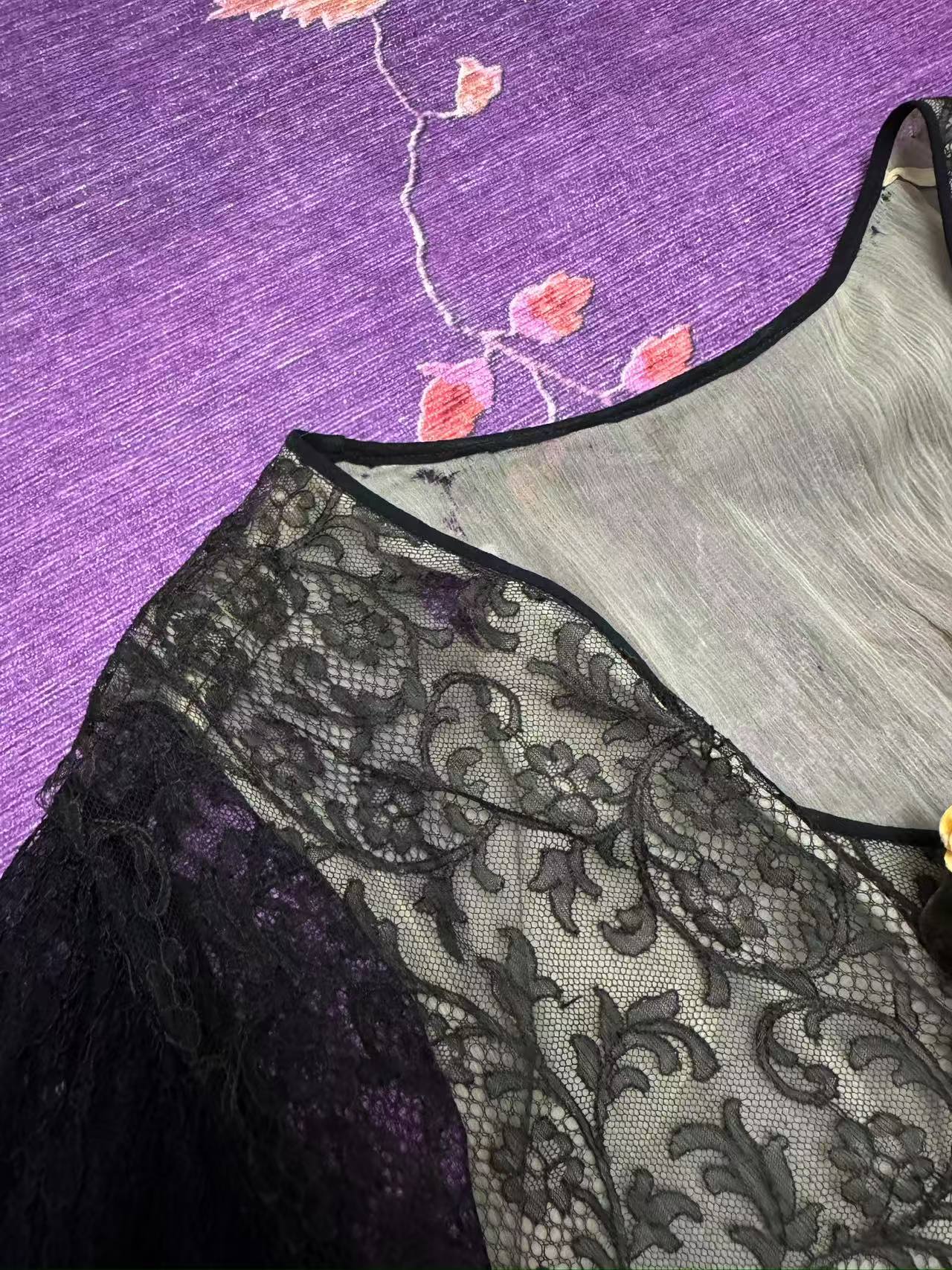
这件民国二十年代的真丝拼接法国蕾丝长裙,以“黑金夜曲”之姿,将Art Deco的几何美学与欧洲蕾丝的浪漫凝于经纬。裙身主体采用墨色真丝绉纱,经纬间流淌着“暗夜流金”的柔光——不同于普通真丝的平滑,绉纱特有的“微皱肌理”如“月光下的水波”,恰合《长物志》“宁涩无滑,宁暗无亮”的造物哲学。
领口、袖口与裙摆的法国蕾丝,以黑色丝线绣成“藤蔓卷草”纹,每一朵花叶都需匠人以“千针万线”的耐心,将蕾丝的通透与真丝的挺括完美融合。蕾丝的针法借鉴了“尚蒂伊蕾丝”的“细网地”工艺,却又以“东方式留白”重构了西方藤蔓的繁复——花叶的卷曲如“暗夜私语”,藤蔓的缠绕如“时光锁链”,恰如《诗经》所言“有美一人,婉如清扬”。
二、腰间水晶:Art Deco的“几何诗行”
腰间的水晶扣饰,是这套长裙的“点睛之笔”。扣饰以“双菱形”几何造型呈现,镶嵌着“月光石”与“碎钻”,每一颗宝石都需匠人以“微镶”工艺固定,形成“一明一暗,一圆一方”的对比。水晶的冷光与蕾丝的暖黑交织,暗合“夜空中最亮的星”的东方意境,却又以“西方式几何”保留了Art Deco的冷艳感。
三、百年旧梦:从温哥华唐人街到蒙特利尔“黑金之夜”
这套长裙的主人,正是前文所述加拿大“老钱”家族的闺秀。二十年代,她或许在蒙特利尔的“黑金之夜”舞会上,以此长裙搭配前文的金属织金旗袍惊艳四座:真丝绉纱的柔光衬得她肤色胜雪,法国蕾丝的细腻如“暗夜繁花”,水晶扣饰的冷光随步伐轻扬如“星河倒挂”。
四、艺术孤品:跨文化的“衣冠孤本”
此长裙的珍稀,在于它是“跨文化时尚”的活化石。全球存世的民国真丝蕾丝长裙不足五十件,而“墨色真丝绉纱+法国藤蔓蕾丝+Art Deco水晶扣饰”的组合,更是孤品中的孤品。真丝绉纱需江南织造局“以丝为骨,以皱为魂”的织造技艺,法国蕾丝则需欧洲工匠“以线为墨,以针为笔”的刺绣功夫,水晶扣饰则需西方珠宝匠“以石为墨,以金为纸”的镶嵌技艺,三者结合,成就了“衣以载道”的跨文化杰作。
五、结语:穿在身上的“黑金夜曲”
当指尖拂过领口的法国蕾丝,仿佛能触摸到百年前蒙特利尔的“黑金之夜”——那是Art Deco的冷艳,是欧洲蕾丝的浪漫,是加拿大“老钱”家族在异域的优雅与坚韧。这套长裙,是“离散美学”的终极表达,是“衣以载道”的跨文化诗篇,更是百年时光里,一位中国女性在东西方文化碰撞中,为自己织就的“黑金夜曲”。
Dark Gold Nocturne: A Republic of China Year 20 (1930s) Silk Lace Art Deco Long Dress and Whispering Roses
I. Vines Upon the Garment: The "Dark Night Blossoms" of French Lace
This silk-spliced French lace long dress from the 1920s and 1930s takes the posture of a "dark gold nocturne," condensing the geometric aesthetics of Art Deco and the romance of European lace within its warp and weft. The main body of the dress utilizes ink-black silk crepe (crêpe de Chine), with a soft glow of "gilt flowing through the dark night" running through its threads. Distinct from the smooth flatness of ordinary silk, the unique "micro-wrinkled texture" of the crepe rises and falls like "water ripples under the moonlight," perfectly aligning with the design philosophy from The Treatise on Superfluous Things (Chang Wu Zhi): "Rather textured than smooth; rather matte than bright."
The French lace along the neckline, cuffs, and hem is embroidered with black silk threads into "trailing vine and scrolling grass" motifs. Each single blossom and leaf requires the artisan's immense patience through "thousands of stitches and lines" to flawlessly merge the transparency of the lace with the crisp structure of the silk. The lace needlework draws inspiration from the "fine mesh ground" (fond chant) technique of Chantilly lace, yet reconstructs the complexity of Western vines through "Eastern-style negative space" (liubai)—the curling of the leaves resembling "dark night whispers," and the intertwining of the vines evoking "chains of time," precisely as The Book of Songs (Shi Jing) describes: "There is a beautiful lady, graceful and clear-eyed."
II. Crystals Around the Waist: The "Geometric Poetry" of Art Deco
The crystal buckle embellishment around the waist is the crowning touch of this long dress. The buckle is presented in a geometric "double-rhombus" (diamond) shape, inlaid with moonstones and diamond chips. Each gemstone requires the artisan's mastery of the micro-pave setting technique to fix them in place, creating a contrast of "one bright and one dim, one round and one square." The cold light of the crystals interweaves with the warm black of the lace, subtly channeling the Eastern poetic imagery of "the brightest star in the night sky," yet retaining the cold glamour of Art Deco through "Western-style geometry."
III. Century-Old Dreams: From Vancouver's Chinatown to Montreal's "Dark Gold Night"
The owner of this long dress was precisely a lady from the aforementioned Canadian "old money" family. In the 1920s and 1930s, she might have stunned the crowd at a "Night of Dark Gold" gala in Montreal, pairing this long dress with the previously mentioned metallic woven-gold dress: the soft luster of the silk crepe making her skin appear as fair as snow, the delicacy of the French lace resembling "dark night blossoms," and the cold light of the crystal buckle shimmering with her steps like an "inverted galaxy."
IV. Artistic Masterpiece: A Cross-Cultural "Unique Fashion Chronicle"
The rarity of this long dress lies in its status as a living fossil of "cross-cultural fashion." Fewer than fifty silk lace long dresses from the Republic of China era survive worldwide, and the combination of "ink-black silk crepe + French trailing vine lace + Art Deco crystal buckle" makes this a unique piece among unique pieces. The silk crepe required the craftsmanship of the Jiangnan Weaving Bureau "using silk as the bone and wrinkles as the soul"; the French lace required the embroidery skills of European artisans "using thread as ink and the needle as a pen"; and the crystal buckle required the setting skills of Western jewelers "using stones as ink and gold as paper." The fusion of these three elements achieves a cross-cultural masterpiece where "the garment carries the culture."
V. Conclusion: "Dark Gold Nocturne" Worn on the Body
When fingertips brush across the French lace of the neckline, it feels as though one can touch the "Night of Dark Gold" of Montreal from a century ago—reflecting the cold glamour of Art Deco, the romance of European lace, and the elegance and resilience of a Canadian "old money" family in a foreign land. This long dress is the ultimate expression of "diaspora aesthetics," a cross-cultural poem where "the garment carries the culture," and a "dark gold nocturne" that a Chinese woman wove for herself amid the collision of Eastern and Western cultures through a century of time.