深圳溯源
Couldn't load pickup availability
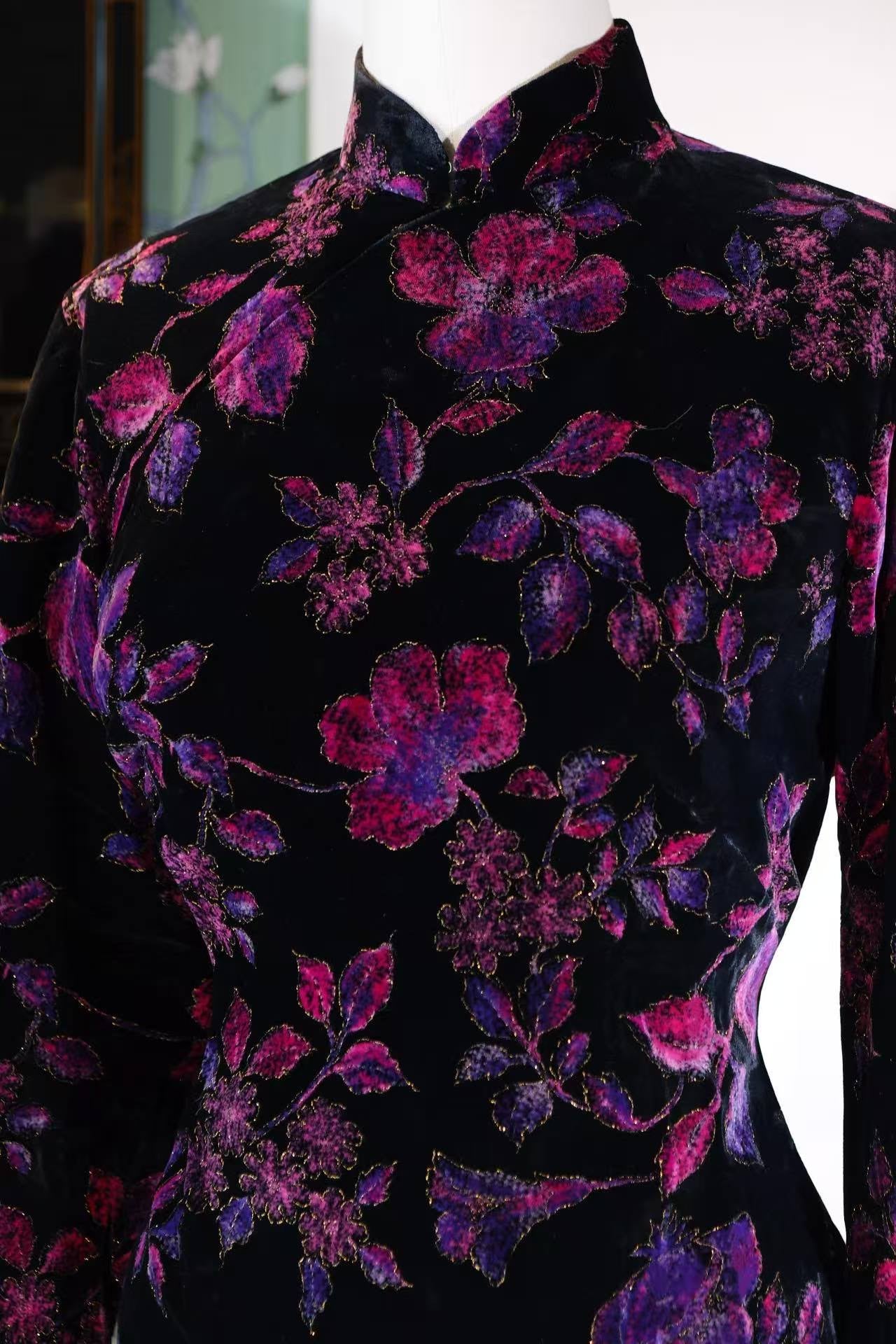
这是一件非常迷人且具有极高收藏价值的六十年代台湾产手绘描金闪
这件旗袍最引人注目的,莫过于其面料上繁复而生动的花卉图案。
- 色彩美学: 底料选用了深邃的黑色丝绒,
- 手绘技法: 正如你所观察到的,图案采用了水彩晕染的技法。
- 描金与闪片: 在水彩底稿之上,工匠用金色的闪片(亮片)勾勒轮廓。
这件旗袍产自上世纪六十年代的台湾,
1. 经济起飞与时尚萌芽
六十年代的台湾正处于经济起飞的初期,社会风气虽然相对保守,
2. 中西合璧的工艺巅峰
六十年代的台湾服装工艺,深受上海裁缝技艺的传承影响,
要理解这件旗袍的稀缺性,我们不妨引用一些经典的文化意象。
- 张爱玲的“衣裳经”
张爱玲曾说:“对于不会说话的人,衣服是一种语言,
- 《红楼梦》的“霓裳羽衣”
曹雪芹在《红楼梦》中描写服饰极尽奢华之能事,如“
这件旗袍属于典型的“复古摩登”风格。
- 纯手工价值: 在工业化大生产的今天,
- 材质老化: 丝绒材质随着时间推移容易倒伏和褪色,
- 历史见证: 它见证了六十年代台湾社会从传统走向现代的过渡期,
这不仅仅是一件衣服,更是一段凝固的时光。当你穿上它,
This is an exceptionally charming and highly collectible antique qipao from 1960s Taiwan. It is a masterpiece that perfectly balances opulence with artistic depth.
The most striking feature of this garment is the complex and vivid floral motif adorning the fabric.
Color Palette: The base is crafted from deep black velvet—a material that symbolized nobility and mystery in the 1960s. Upon this dark canvas, the designer boldly employed a contrasting gradient of magenta and deep purple. These colors preserve traditional Oriental elegance while reflecting the "Modernist" influence sweeping from the West at the time. The magenta symbolizes prosperity and passion, while the deep purple represents grace and depth; their interlacing evokes the image of bougainvillea or roses blooming in the night.
Hand-Painting Technique: As observed, the patterns utilize a watercolor-wash technique. This method allows the edges of the flowers to transition naturally, making the petals and leaves appear as if they are soaked in water. This creates a freehand Shuimo (ink wash) aesthetic that breaks the rigidity of traditional printing.
Gilding and Sequins: Over the watercolor foundation, artisans used golden sequins to outline the contours. This is the "crowning touch." These golden lines shimmer under light, not only enhancing the three-dimensionality of the pattern but also creating a visual effect of "flowing gold in the dark night" against the deep velvet. This process was incredibly labor-intensive, as every sequin had to be hand-sewn, making the original cost of this garment exorbitant.
This qipao originated in Taiwan during the 1960s, a unique historical crossroads.
Economic Takeoff and Fashion Awakening: The 1960s marked the beginning of Taiwan's economic takeoff. While the social atmosphere remained relatively conservative, the pursuit of beauty began to resurface. Women of the time, especially urban socialites, favored the "Modified Qipao." The sleek, form-fitting silhouette of this piece perfectly showcases the feminine curve, serving as a sartorial manifestation of the awakening "New Woman" consciousness.
A Fusion of East and West: The garment craftsmanship in 1960s Taiwan inherited the refined skills of master tailors from Shanghai while absorbing Western fabric-processing techniques. The hand-painted gilding on this qipao represents the pinnacle of Taiwanese handicraft. Moving away from the extreme simplicity of the 1950s, it leaned toward magnificence and sophistication—a style known as "Taiwanese Retro" or "Oriental Modernism."
To understand the scarcity of this piece, we can reference classic cultural metaphors:
Eileen Chang’s "Philosophy of Clothes": Chang once said, "To those who cannot speak, clothes are a language; what one carries with them is a pocket drama." This qipao is precisely such a drama. The black velvet is the profound curtain, the magenta flowers are the vivid protagonists, and the golden sequins are the climactic soundtrack. It tells a modern story of prosperity and female self-expression.
The Splendor of "Dream of the Red Chamber": While this qipao differs from the Qing Dynasty style, its pursuit of material (velvet) and decoration (gilded sequins) echoes the luxurious descriptions in Cao Xueqin's masterpiece. It aspires to an aesthetic realm of "magnificence without vulgarity, and complexity without being burdensome."
This qipao belongs to the quintessential "Retro-Modern" style. It combines the traditional standing collar and diagonal placket with elements of 1960s Western "Op Art"—using strong color contrasts and dynamic reflections to create visual rhythm.
Pure Handmade Value: In today’s era of mass production, the technique of large-scale watercolor painting combined with hand-sewn sequins has nearly been lost. Each such garment is a unique, one-of-a-kind piece.
Exceptional Preservation: Velvet is prone to flattening and fading over time. However, the luster of this piece remains full and the colors vivid, indicating impeccable preservation—a rarity in antique clothing collection.
Historical Witness: It serves as a "living fossil" of the transition period in Taiwanese society from tradition to modernity.
Conclusion: This is more than just a garment; it is a solidified moment in time. When you wear it, you are not just wearing velvet and sequins; you are wearing the most dazzling beam of light from a 1960s night.