紫缎牵牛寿字袄与Art Deco钉珠裙:1920年代的东方雅韵与西风东渐
一、衣上纹样:传统意象与异域风情的对话
1. 上袄:巴黎缎上的吉祥密码
这件紫色上袄以提花巴黎缎为地,缎面织有牵牛花与“寿”字纹。牵牛花取其“牵牛引福”之意,花瓣以深浅紫丝线织就,花蕊处缀以宝蓝细线,仿若晨露未晞;“寿”字纹隐于花叶间,采用变体篆书,线条婉转如云气,暗合《诗经》“如南山之寿”的祝颂。领口、襟缘以米白缎滚边,装饰扣嵌红玛瑙扣头,细节处见“天圆地方”的传统造物观。
2. 筒裙:丝绒上的Art Deco星图
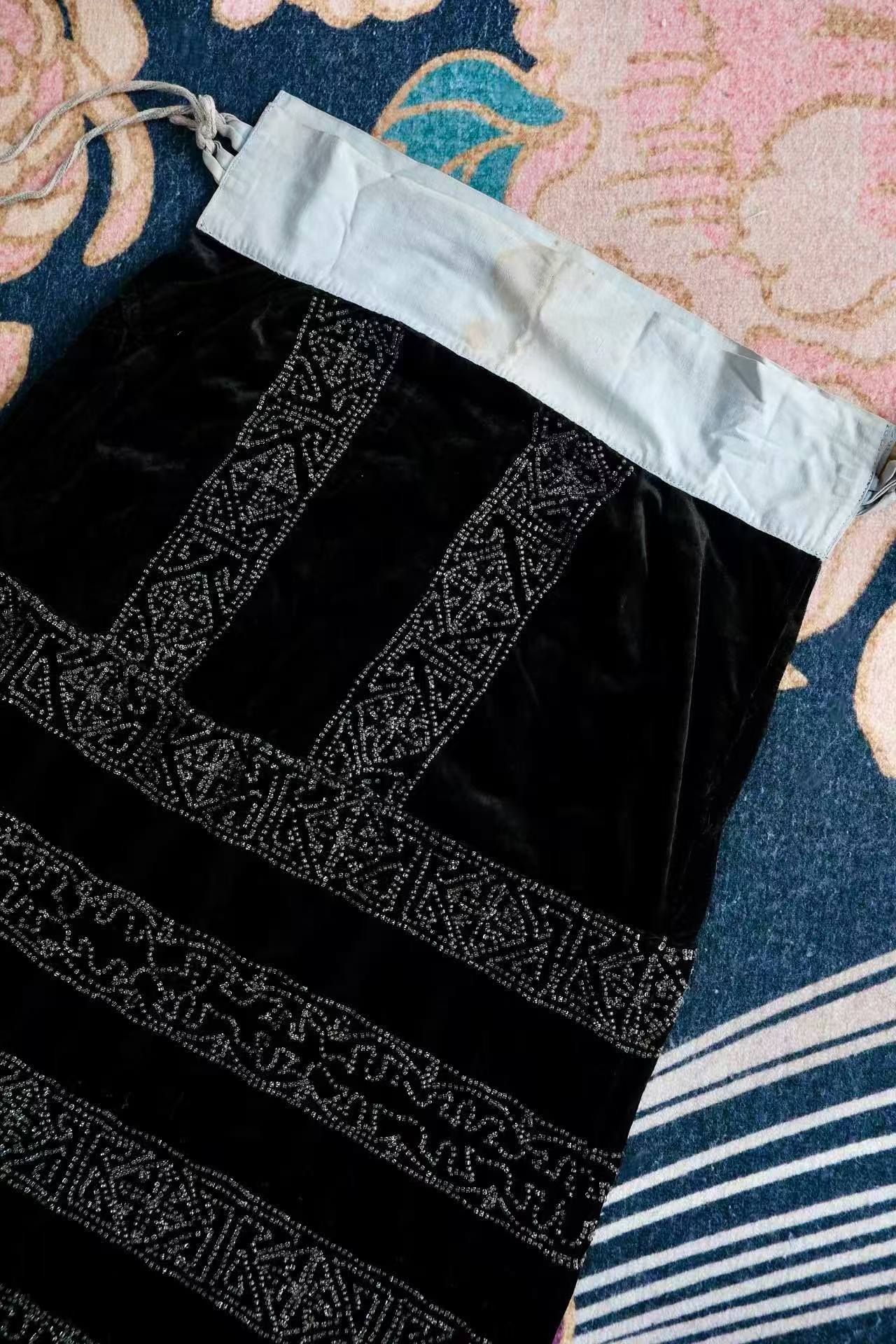
黑丝绒筒裙以横向钉珠条纹分割,珠饰呈几何化的埃及莲纹与太阳纹——1922年图坦卡蒙墓发掘后,埃及元素席卷全球,Art Deco风格将其简化为直线与放射状图案。银白玻璃珠与钢珠交错排列,在光线下如星河流转,裙摆处的莲纹更以渐变珠序模拟花瓣层叠,既保留异域神秘,又暗合东方“步步生莲”的审美。
二、古董衣的故事:1920年代的时尚革命
1. 倒大袖:从“束缚”到“解放”的身体叙事
上袄的“倒大袖”(袖口宽于袖根)是民国初年女性解放的符号。《申报》1921年载:“新式女袄袖口阔如荷瓣,行动时风动衣袂,颇显洒脱。”这种袖型打破清代旗装的紧束,呼应“五四”后女性走出闺阁的社会变革。而巴黎缎的选用,更折射出当时上海“洋货为尚”的消费文化——据《上海通志》记载,1920年代进口欧洲缎料占高档面料市场的六成。
2. 钉珠裙:西风东渐的“摩登”实验
黑丝绒筒裙的Art Deco钉珠,是海派时尚“中西合璧”的极致体现。1925年巴黎国际装饰艺术博览会后,Art Deco风格传入中国,设计师将其与传统马面裙的“襕干”结构结合:横向珠饰条模仿马面裙的襕纹,却以几何图案替代传统花鸟;丝绒材质则来自英国进口,与本土丝绸形成质感碰撞。这种“旧瓶装新酒”的设计,恰如张爱玲所言:“民国时装是传统与现代的调情。”
三、艺术风格与稀缺性:时光淬炼的孤品
1. 风格的“双重性”:传统吉祥与现代抽象
上袄的牵牛花与“寿”字纹,延续了中国“图必有意,意必吉祥”的造物传统;筒裙的Art Deco钉珠,则是现代主义对装饰性的重构。二者的并置,恰如1920年代中国社会的缩影:既眷恋农耕文明的温情,又渴望工业时代的进步。这种“双重性”在服装史上极为罕见,是研究民国文化转型的实物标本。
2. 稀缺性:工艺与时代的双重绝响
巴黎缎的提花工艺需手工织机与纹版配合,1930年代后逐渐被机器印花取代;而Art Deco钉珠裙的手工钉珠,每平方寸需缀珠百余颗,工时成本极高。更难得的是,这套服饰保存完好:缎面无虫蛀,珠饰无脱落,连盘扣的红玛瑙都光泽如初。据《中国近代服装史》统计,1920年代留存至今的完整女装套装不足百件,此套更因“中西合璧”的独特性,成为博物馆级藏品。
结语:穿在身上的历史诗行
这套服饰是1920年代的“时尚宣言”:紫色巴黎缎的贵气,是新兴资产阶级的身份标识;倒大袖的洒脱,是女性觉醒的身体表达;Art Deco钉珠的摩登,是西风东渐的文化印记。当指尖抚过缎面的牵牛花与裙上的珠饰,仿佛触摸到一个时代的呼吸——那是传统与现代碰撞的火花,是东方与西方对话的回响,更是历史留给我们的、穿在身上的诗行。
Purple Satin Morning Glory "Longevity" Jacket & Art Deco Beaded Skirt: 1920s Eastern Grace and Western Influence
I. Patterns: A Dialogue Between Traditional Imagery and Exotic Flair
1. The Jacket: Auspicious Codes on Paris Satin This purple jacket utilizes jacquard-woven Paris Satin as its base, featuring morning glories and "Longevity" (Shou) characters. The morning glory symbolizes "bringing in blessings," with petals woven in varying shades of purple silk and stamens accented with royal blue threads, appearing like morning dew yet undried. The Shou character, hidden among leaves, adopts an archaic seal script style with lines meandering like clouds, echoing the blessings of "longevity like the Southern Mountains" from the Classic of Poetry. The collar and bodice edges are bound in cream satin, adorned with red agate button-heads—a detail reflecting the traditional "Square Earth and Round Heaven" philosophy of creation.
2. The Skirt: An Art Deco Star Map on Velvet The black velvet tube skirt is partitioned by horizontal beaded stripes, featuring stylized Egyptian lotus and sunburst motifs. Following the excavation of King Tutankhamun's tomb in 1922, Egyptian elements swept the globe; the Art Deco style simplified these into linear and radial patterns. Silver glass beads and steel beads are interlaced, shimmering like a flowing galaxy under light. The lotus motifs at the hem use gradient beadwork to simulate layered petals, retaining exotic mystery while aligning with the Eastern aesthetic of "lotuses blooming with every step."
II. Stories of the Garment: The Fashion Revolution of the 1920s
1. "Dao Da Xiu": A Body Narrative from Restriction to Liberation The "inverted bell sleeve" (Dao Da Xiu, where the cuff is wider than the root) is a symbol of female liberation in the early Republican era. The Shun Pao recorded in 1921: "The new-style jackets have cuffs as wide as lotus petals; when moving, the wind stirs the sleeves, appearing remarkably free." This silhouette broke the constriction of Qing Dynasty Manchu attire, echoing the social reforms of women stepping out of the domestic sphere after the May Fourth Movement. The choice of Paris Satin reflects the "Western goods as prestige" consumer culture of old Shanghai—according to the General History of Shanghai, imported European satin accounted for 60% of the high-end fabric market in the 1920s.
2. The Beaded Skirt: A "Modern" Experiment of Western Influence The Art Deco beadwork on black velvet is the ultimate expression of "East-meets-West" in Shanghai fashion. Following the 1925 International Exhibition of Decorative Arts in Paris, the Art Deco style entered China. Designers combined it with the "Lan Gan" (border) structure of traditional Mamian skirts: the horizontal beaded stripes mimic the traditional borders but replace flowers and birds with geometric patterns. The velvet material, imported from Britain, creates a textural collision with local silk. As Eileen Chang remarked: "Republican fashion is a flirtation between tradition and modernity."
III. Artistic Style and Scarcity: Unique Specimens Tempered by Time
1. Dualism of Style: Traditional Auspice and Modern Abstraction The morning glories and Shou characters on the jacket continue the Chinese tradition of "patterns must have meaning, and meaning must be auspicious." Conversely, the Art Deco beadwork on the skirt represents a modernist reconstruction of decorativeness. Their juxtaposition is a microcosm of 1920s Chinese society: longing for the warmth of agrarian civilization while yearning for the progress of the industrial age. This "dualism" is extremely rare in costume history, serving as a physical specimen for the study of cultural transformation.
2. Scarcity: A Dual Swan Song of Craft and Era The jacquard process of Paris Satin required manual looms and pattern plates, which were gradually replaced by machine printing after the 1930s. The manual beadwork on the skirt, requiring over a hundred beads per square inch, involved extremely high labor costs. More remarkably, this set is perfectly preserved: the satin shows no moth damage, no beads are missing, and even the red agate buttons retain their original luster. According to The History of Modern Chinese Costume, fewer than a hundred complete female ensembles from the 1920s survive today; this set, with its unique "Sino-Western fusion," is a museum-grade collectible.
Conclusion: Poetic Lines Worn on the Body
This ensemble is a "fashion manifesto" of the 1920s: the nobility of purple Paris Satin marks the identity of the rising bourgeoisie; the freedom of the bell sleeves expresses the awakening of the female body; and the modernity of Art Deco beadwork leaves a cultural mark of Western influence. When fingertips brush over the morning glories and the beads, one can almost feel the pulse of an era—the spark of tradition colliding with modernity, the echo of the dialogue between East and West, and a poem left by history to be worn upon the body.