三十年代烧花丝绒旗袍:海派摩登中的“绮纹”叙事
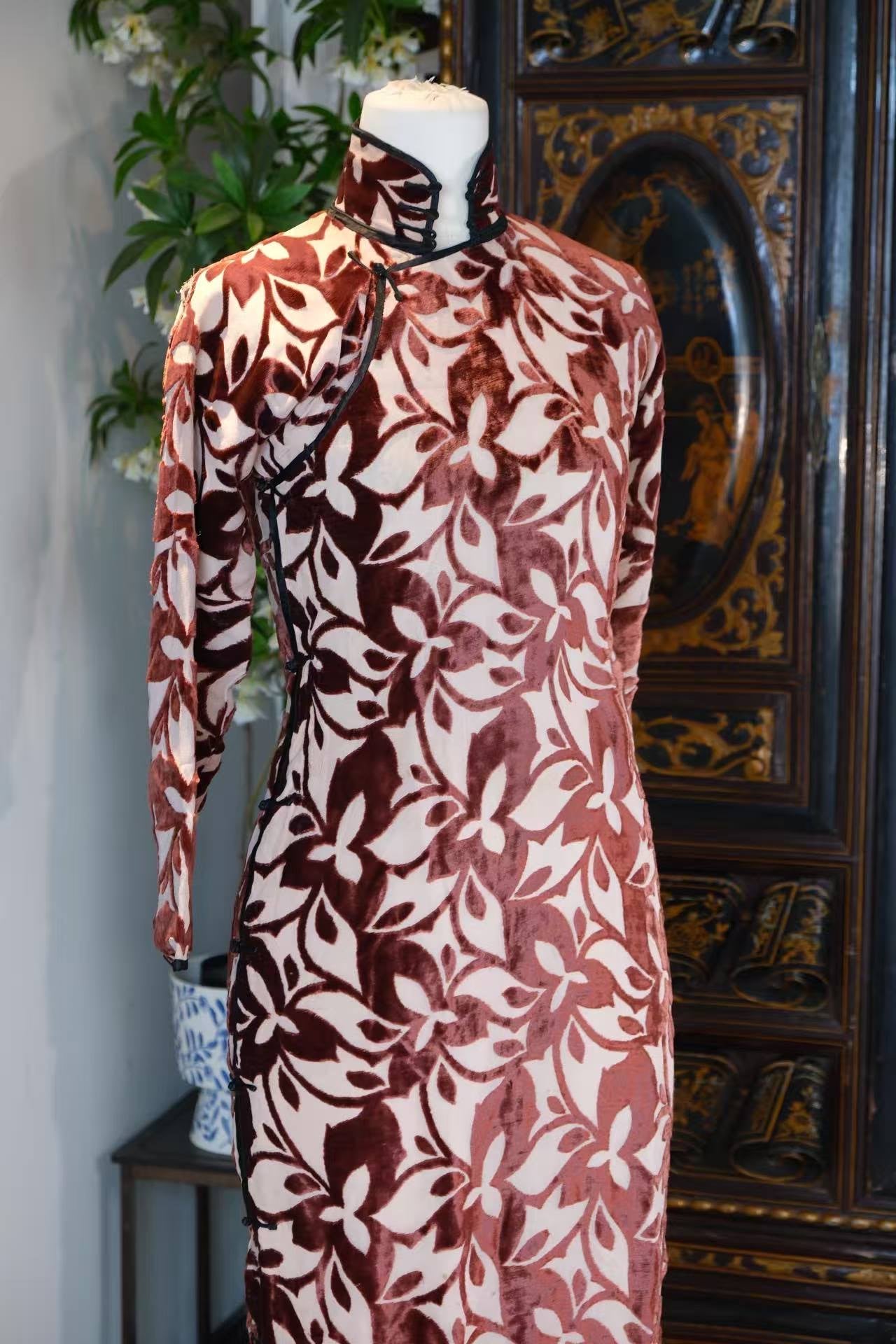
这件上世纪三十年代中期的烧花丝绒旗袍,以棕红与米白构成主色调,恰应《礼记·玉藻》所载“衣正色,裳间色”的传统色彩美学。丝绒基底为“正色”,烧花工艺形成的透雕花纹为“间色”,通过绒面与镂空的虚实相生,在视觉上重构了“衣裳分色”的古典范式。其立领高度契合1930年代中期旗袍“领高及颔”的风尚,开衩处暗藏盘扣,袖口及襟边以黑绒锁边,既延续了满族旗装的利落线条,又通过烧花工艺注入江南织造的婉约气韵。
旗袍通体以蔓生花卉为纹样,主花形近似《诗经·周南·关雎》中的“荇菜”,花瓣舒展如蝶翼,叶脉以曲线勾勒,无对称之拘,存写生之态。烧花丝绒(亦称“雕花丝绒”)工艺源自欧洲,却在海派工坊中被赋予东方意蕴:工匠以化学腐蚀或机械雕琢在绒面上形成镂空,使花纹如“剪影”般浮于底料之上,恰似宋代词人周邦彦所描写的“叶上初阳干宿雨,水面清圆,一一风荷举”的意境。
此图案与上海博物馆藏“粉色地烧花丝绒旗袍”(1930s)异曲同工,但本件作品的花枝排列更显疏密节奏——花簇集中于胸腰处,向下渐疏,暗合《文心雕龙》“密则神凝,疏则气畅”的美学原则。这种“摩登花纹”(Modern Pattern)是1930年代上海染织业的独创,既区别于传统“折枝花卉”的规整,又消解了西方Art Deco风格的几何僵硬感,成为海派文化“中西合璧”的视觉符号。
1930年代的上海,旗袍不仅是服饰,更是都市文化的载体。作家张爱玲在《更衣记》中曾写道:“一九三五年的女子,穿着蓝绸旗袍,上面印着繁密的花纹,像一池春水里的倒影。”这件烧花丝绒旗袍的“繁密花纹”,恰是海派摩登生活的隐喻:棕红色调暗合南京路永安公司橱窗的霓虹,米白底色如外滩建筑的石灰墙,而流动的花枝则仿佛《良友》画报中摩登女郎的卷发波浪。它见证了旗袍从“民族服饰”向“国际时尚”的转型,也记录了上海作为“东方巴黎”的文化野心——在丝绒的经纬之间,东方的诗意与西方的工艺,完成了最优雅的一次握手。
此件旗袍的收藏价值,不仅在于其工艺的稀罕,更在于它是一段“可穿戴的历史”。当我们在博物馆的玻璃柜中凝视它时,仿佛能听见1930年代百乐门的爵士乐,闻到和平饭店的香水味,触摸到那个“黄金时代”跳动的脉搏——而这,正是古董旗袍超越服饰本身的艺术魅力。
1930s Shanghai Modern: The "Qiwen" Narrative in Burnt-out Velvet Qipao
The Interplay of Void and Substance This mid-1930s burnt-out velvet (Devoré) qipao, rendered in brownish-red and creamy white, echoes the traditional color theory from the Book of Rites (Li Ji): "Primary colors for the upper garment, intermediary colors for the lower." Here, the solid velvet serves as the "primary," while the etched patterns create an "intermediary" translucency. Through the interplay of void and substance, the garment reconstructs the classical dress paradigm. Its silhouette—featuring the iconic "jaw-grazing" high collar of the mid-1930s—is finished with black velvet piping and hidden frog buttons, blending the sharp lines of Manchu tradition with the rhythmic grace of Jiangnan weaving.
"Modern Patterns": The Etched Silhouette The garment is adorned with sprawling floral motifs, reminiscent of the "Xingcai" (floating hearts) from the Classic of Poetry (Shi Jing). The petals unfurl like butterfly wings, etched with naturalistic curves that eschew rigid symmetry. While the burnt-out velvet technique originated in Europe, it was imbued with Eastern soul in Shanghai’s ateliers. By using chemical etching to create a "silhouette" effect on the pile, the motifs appear to float upon the fabric—a visual manifestation of the Song Dynasty poet Zhou Bangyan’s imagery: "Lotus leaves drying in the morning sun, rising one by one above the clear water."
Rhythm of the Golden Age Artistically, this piece shares an affinity with the famed 1930s burnout qipaos in the Shanghai Museum, yet it possesses a unique rhythmic density. The floral clusters are concentrated at the chest and waist, thinning out toward the hem—aligning with the aesthetic principle from The Literary Mind and the Carving of Dragons (Wen Xin Diao Long): "Density gathers the spirit, while sparsity allows the breath to flow." This "Modern Pattern" was a signature of Shanghai’s 1930s textile industry, softening the geometric rigidity of Western Art Deco with traditional floral fluidity.
Wearable History: The Skin of a City In 1930s Shanghai, the qipao was more than a garment; it was a vessel of urban culture. As Eileen Chang wrote in A Chronicle of Changing Clothes: "The woman of 1935... wore patterns that looked like reflections in a spring pool." This qipao is a metaphor for Shanghai’s modernity: its maroon tones evoke the neon lights of Nanjing Road, its cream base reflects the limestone walls of the Bund, and its flowing vines mirror the finger-waved hair of the era's "Modern Girls." It records the moment the qipao transitioned from ethnic dress to international fashion—a point where Eastern poetry and Western craft shared their most elegant handshake.