三十年代烧花丝绒旗袍:海派时尚与工艺的古董诗篇
在民国旗袍的谱系中,上世纪三十年代中期的烧花丝绒全身花扣旗袍,堪称“古董级珍品”——它不仅是海派时尚的缩影,更是中西工艺交融的物质文化遗产。这件藏品与上海博物馆馆藏旗袍形制相类,却以更罕见的工艺细节与图案设计,勾勒出那个时代独有的美学高度。
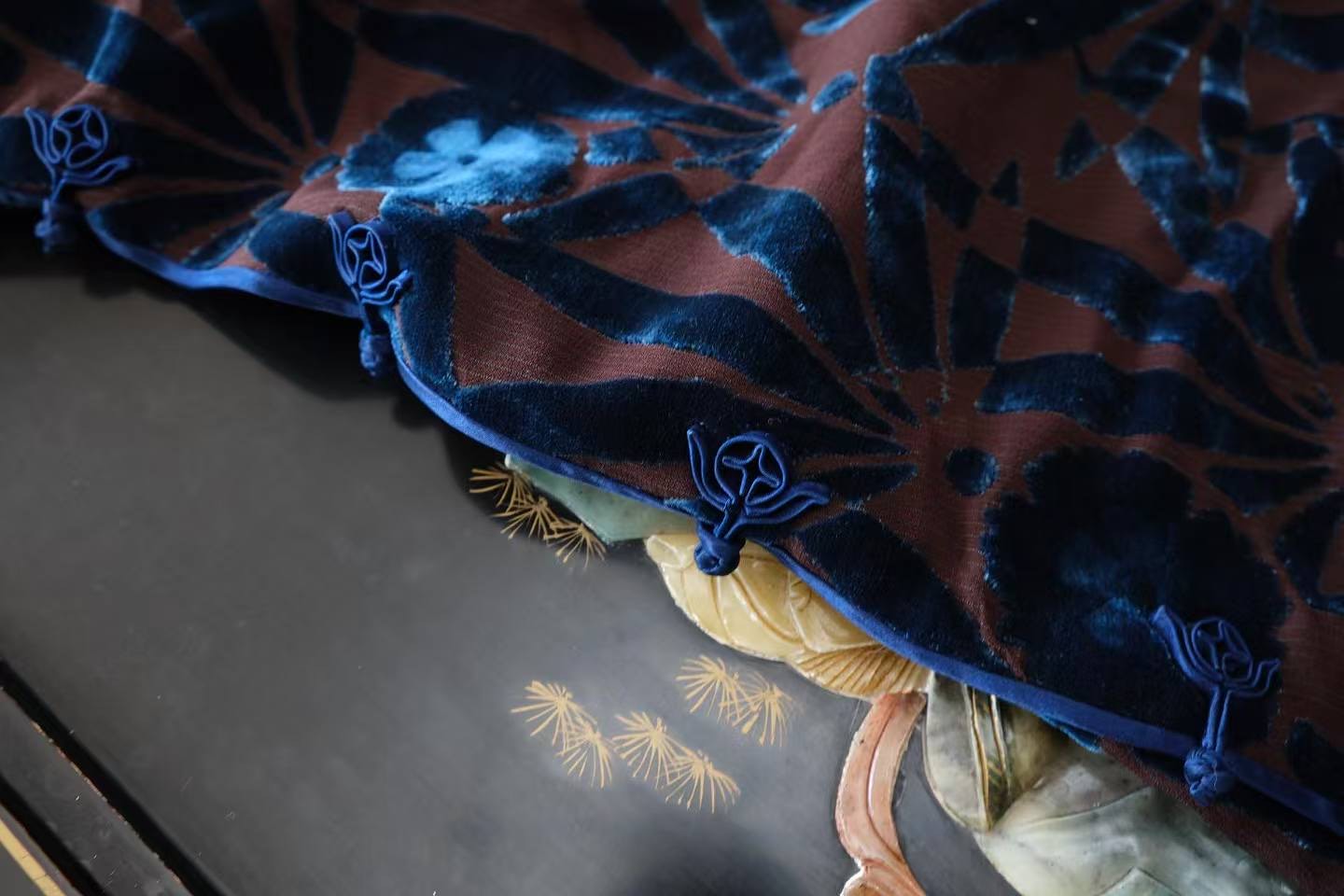
旗袍通体以烧花丝绒(亦称“剪绒”)工艺呈现图案,底料为棕褐色暗纹素绸,其上以深蓝色丝绒烫剪出放射状植物纹样。主体图案可辨为棕榈叶与抽象花卉:叶片呈扇形放射,边缘以绒毛勾勒出锯齿状轮廓,如同阳光穿透叶脉的光影切片;花卉则以团簇形态点缀其间,花瓣层叠如云纹,中心缀以绒球状花蕊,既保留了中国传统“缠枝纹”的绵延感,又融入了装饰艺术(Art Deco)的几何抽象语言。
这种图案设计堪称“中西合璧的视觉诗学”。一方面,棕榈叶的放射结构呼应了Art Deco风格对“机械美学”与“自然形态几何化”的追求——正如1930年代上海《良友》画报中所载:“新式衣料纹样,多取植物之骨骼,以直线曲弧相参,显现代之精神”;另一方面,花卉的团簇布局与“生生不息”的吉祥寓意,又根植于中国服饰纹样的传统基因。烫剪丝绒的立体绒毛在光线下呈现深浅渐变,使平面图案生发出“浮雕般的生命力”,恰如《清异录》所言“绒华璀璨,若星辰列张”,却又以现代设计语言重构了古典诗意。
难得的是“全身花扣”的设计:领口至斜襟沿线,缀有十一对手工盘制的蓝色丝绒花扣。每枚扣头呈铜钱花形,扣结以绞丝纹缠绕,与主体图案的花卉元素遥相呼应;扣袢与绒面同色,缝制时严丝合缝,毫无线头外露。这种“花扣与图案一体同构”的设计,打破了传统旗袍“素扣配花衣”的惯例,堪称“以扣为饰,以饰入画”的创新。正如《中国古代服饰研究》所载:“三十年代上海名裁缝喜以扣为‘衣之点睛’,然通体花扣者,唯富贵之家定制,存世稀罕。”
这件旗袍的形制亦暗藏时代密码:立领高度约5厘米,恰合1935年前后“高领复兴”的风尚(此前十年领口渐低,此年始回升);袖长至肘,贴合手臂曲线,体现西式剪裁对东方袍服的改造;开衩高度适中,既保留传统含蓄,又暗显女性身体解放的诉求。其面料与图案的“华丽而不繁缛”,更折射出三十年代上海“摩登与传统并存”的社会心态——正如学者陈建华在《革命与形式:茅盾早期小说的现代性》中所述:“海派服饰的精髓,在于以西方物质文明为表,以东方审美精神为里,在碰撞中生成独特的‘摩登古典主义’。”
与上海博物馆藏同类旗袍相比,这件藏品的棕蓝色调更为沉郁,放射状图案的动感更强,且保存状态极佳,绒面未见大面积脱落,花扣完整无缺。它不仅是“民国女子衣橱”的缩影,更是研究近代中国服饰工业、工艺史与女性文化的“活化石”。
当我们在这件旗袍上触摸到烧花丝绒的绒毛起伏,看到花扣如蓝宝石般缀于襟前,实则是在与八十余年前的上海对话——对话那个既迷恋西洋风尚、又坚守东方底蕴的时代,对话那些在缝纫机前挥洒匠心的裁缝,更对话中国服饰美学从传统走向现代的艰难蜕变。它之稀缺,不仅在于工艺的濒危,更在于它承载着一段无法复制的“海派记忆”。
1930s Shanghai Antique Qipao: An Antique Poem of Fashion and Craftsmanship
A Masterpiece of Cultural Fusion In the genealogy of Republic-era dress, this mid-1930s Devoré (burnt-out) velvet qipao—adorned with an all-over floral frog button design—is a "museum-grade rarity." It is more than a microcosm of Shanghai fashion; it is a piece of material cultural heritage showcasing the fusion of Eastern and Western craftsmanship. While similar in form to pieces held in the Shanghai Museum, its unique craft details and motif design elevate it to an extraordinary aesthetic height.
Devoré Craftsmanship: The Poetics of Light and Shadow The garment utilizes the "burnt-out" (Devoré) technique to create its motifs. Upon a base of dark brown silk with subtle hidden patterns, deep blue velvet is etched into radiating botanical forms. The primary motifs consist of palm leaves and abstract blossoms: the leaves fan out in a radial structure, their serrated edges outlined by the velvet pile like light passing through veins. The flowers are interspersed in clusters, their petals layered like auspicious clouds and centered with velvet pompom-like stamens. This design preserves the rhythmic continuity of traditional Chinese "scrolling vines" while embracing the geometric abstraction of Art Deco.
The "Modern Classicism" of the 1930s This motif design represents a "Visual Poetics of East Meets West." The radial structure of the palm leaves echoes Art Deco’s obsession with "machine aesthetics" and the "geometrization of natural forms." This mirrors the sentiment found in a 1930s issue of The Young Companion (Liangyou): "Modern fabric patterns take the skeletons of plants, utilizing lines and curves to manifest the modern spirit." Conversely, the cluster layout and the symbolism of "endless vitality" are rooted in traditional Chinese motifs. Under light, the velvet pile creates a three-dimensional gradient, imbuing the pattern with a "relief-like vitality," evocative of the ancient text Qingyi Lu: "The velvet splendor is brilliant, like the arrangement of the stars."
The "All-Over Floral Closures": A Rare Artistry Most remarkable is the "Full-Body Floral Frog Button" design. Along the line from the high collar to the slanted bodice, eleven pairs of handcrafted blue velvet frog buttons are meticulously arranged. Each "button head" is shaped like a copper-coin blossom, with the knots wound in silk-thread patterns that echo the floral motifs of the fabric. The "integration of button and pattern" breaks the traditional rule of "plain buttons on patterned cloth." As noted in Research on Ancient Chinese Costume: "Famous Shanghai tailors of the 30s loved to treat buttons as the 'finishing touch' of a garment; however, those with full-body floral buttons were reserved for the wealthy and are exceedingly rare today."
The Silhouette: A Code of the Era The 5cm high collar perfectly marks the "High Collar Revival" of circa 1935. The elbow-length sleeves follow the arm’s curve, reflecting Western tailoring’s modification of the Eastern robe. The maroon and deep blue tones, the dynamic radial patterns, and the pristine condition—with no velvet loss and all buttons intact—make this a "living fossil" of China’s modern sartorial history. It captures the essence of "Shanghai Modernity": Western material civilization as the surface, and Eastern aesthetic spirit as the soul.