深圳溯源
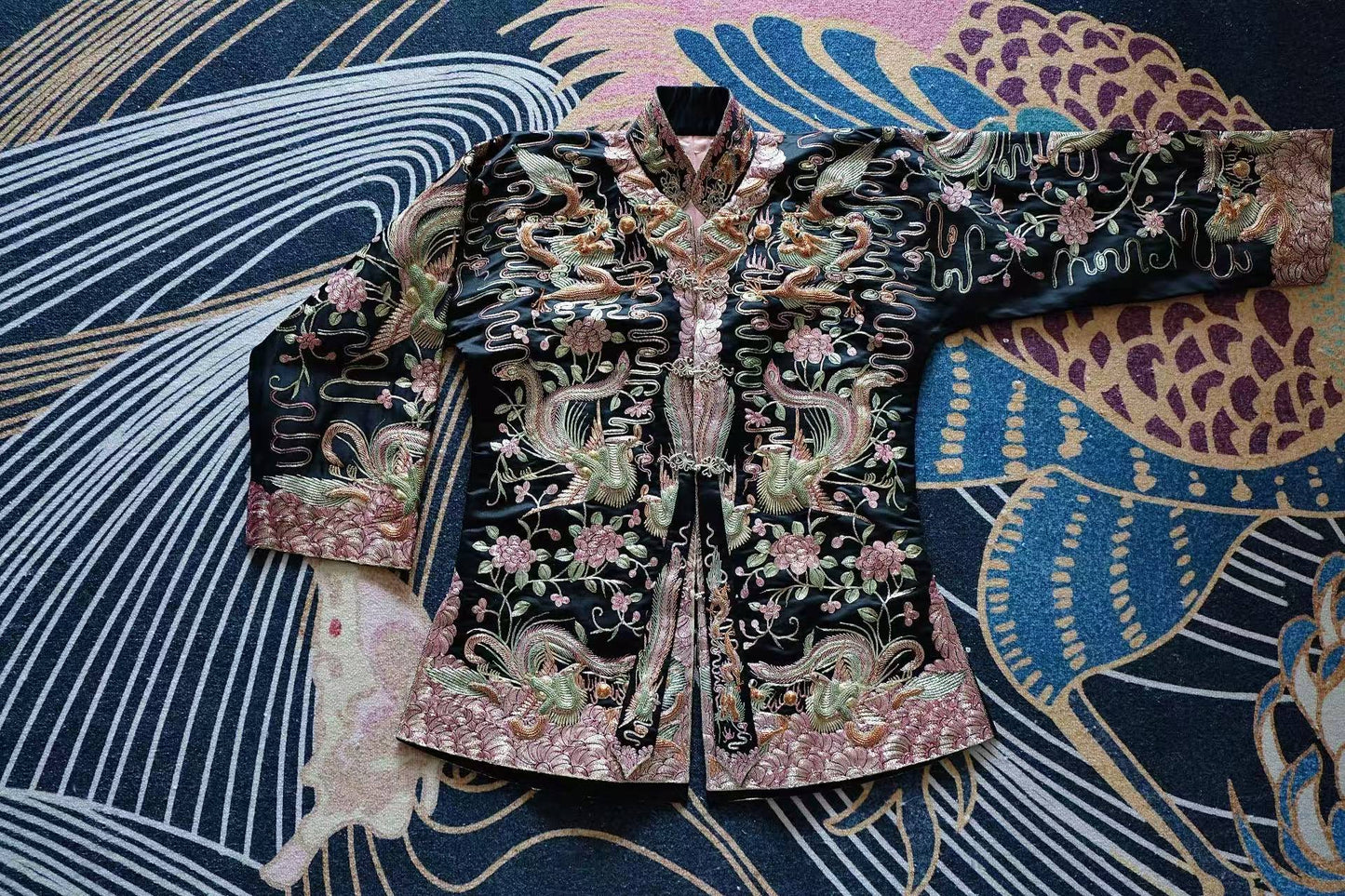
40年代 - 云龙飞凤纹黑缎盘金绣上褂:一袭锦绣,半世风华 | 1940s - Black Satin Jacket with Gold-Couched Dragon and Phoenix: A Tapestry of Splendor, A Lifetime of Elegance
40年代 - 云龙飞凤纹黑缎盘金绣上褂:一袭锦绣,半世风华 | 1940s - Black Satin Jacket with Gold-Couched Dragon and Phoenix: A Tapestry of Splendor, A Lifetime of Elegance
Couldn't load pickup availability
云龙飞凤纹黑缎盘金绣上褂:一袭锦绣,半世风华
图案解构:云龙飞凤间的吉祥密码
这件黑缎盘金绣上褂,以玄黑缎面为底,其上云龙飞凤盘旋翻腾,
古董衣故事:乱世中的锦绣传承
上世纪40年代,上海滩风云际会,中西文化在此碰撞交融。
引经据典:锦绣中的文化意蕴
龙凤图案在中国文化中有着深厚的历史渊源。《诗经·商颂》有云:
艺术风格与稀缺性:民国刺绣的巅峰之作
这件上褂的艺术风格,集中体现了民国时期刺绣工艺的最高水平。
一袭黑缎盘金绣上褂,如同时光的使者,
Black Satin Jacket with Gold-Couched Dragon and Phoenix: A Tapestry of Splendor, A Lifetime of Elegance
Pattern Deconstruction: The Auspicious Cipher of Clouds, Dragons, and Phoenixes
Crafted on a foundation of mysterious deep-black satin, this jacket features dragons soaring and phoenixes wheeling, weaving a vivid tableau of "The Dragon and Phoenix Bringing Prosperity" (Longfeng Chengxiang). The dragon’s body meanders with scales rendered in gold-wrapped thread couching (Panjin Xiu); its whiskers flare and claws sharpen as if churning the seas amidst the clouds. Beside it, the phoenix spreads its plumage, its fan-like tail feathers embroidered with gradient silk in shades of pink and green, creating a brilliant counterpoint to the golden dragon.
Interspersed are peonies and plum blossoms, their layered petals and graceful stems whispering the promise of "Wealth and Honor in Full Bloom." Cloud motifs surge like waves, outlined in silver and filled with gold, heightening the dynamic movement of the celestial creatures while adding an air of opulence. The layout follows the "Full-Work" (Man Gong) tradition—dense and intricate, covering every inch without a single void, yet remaining orderly—a testament to the exquisite mastery of Republican-era embroidery.
The Antique’s Tale: A Legacy of Silk in a Tumultuous Age
In the 1940s, Shanghai was a crucible of change where East met West. This jacket was born of that era, preserving the soul of traditional Chinese dress while bearing the marks of a changing world. Its owner might have been a daughter of a prestigious clan; in those turbulent times, such a garment was not merely a status symbol, but a quiet act of cultural defiance.
The couched gold embroidery technique is immensely labor-intensive. Each thread is created by twisting genuine gold leaf around a silk core. An embroiderer would need immense patience and skill to coil and stitch these threads onto the satin, a process taking months or even years. By the Republican period, this level of craftsmanship was already rare, reserved primarily for the bespoke wardrobes of official families or tycoon estates.
Literary Allusions: The Cultural Resonance of the Brocade
The dragon and phoenix motifs possess deep roots in Chinese history. The Classic of Poetry (Shijing) notes, "Heaven commanded the Black Bird (Phoenix) to descend and give birth to the Shang," establishing the phoenix as a totem of nobility and grace. The dragon, meanwhile, remains the emblem of the Chinese nation, representing power and majesty. Together, they symbolize a perfect union, often worn at weddings to invite joy and harmony.
Furthermore, the peony—the "King of Flowers"—has been revered since the Tang Dynasty. The poet Liu Yuxi once praised it: "Only the peony is truly a national beauty; its blooming moves the entire capital." By weaving these symbols together, the jacket acts as both a vessel for heritage and a prayer for a prosperous life.
Artistic Style and Rarity: A Pinnacle of Republican Embroidery
This jacket represents the zenith of embroidery during the Republican era. Gold-couched embroidery is a jewel of Chinese craft, emerging as early as the Tang Dynasty and peaking in the Ming and Qing. In the early 20th century, as Western influence surged, traditional crafts faced decline. Yet, this piece stands as a steadfast guardian of tradition.
Its rarity is twofold:
-
The Scarcity of Skill: The technique is so complex and costly that few embroiderers in the 1940s possessed the mastery to execute such a fine work.
-
The Toll of Time: Having survived nearly a century of upheaval, finding a black satin piece in such pristine condition is an extreme rarity.
This jacket is more than a garment; it is an envoy of time, freezing the elegance of 1940s Shanghai within every golden thread and needlework. It remains a treasure of sartorial history and a living carrier of culture, worthy of profound appreciation and preservation.
Share