深圳溯源
Couldn't load pickup availability
衣服尺寸:
胸围/腰围/臀围:84/74/90 厘米
衣长:100 厘米
细节描述:
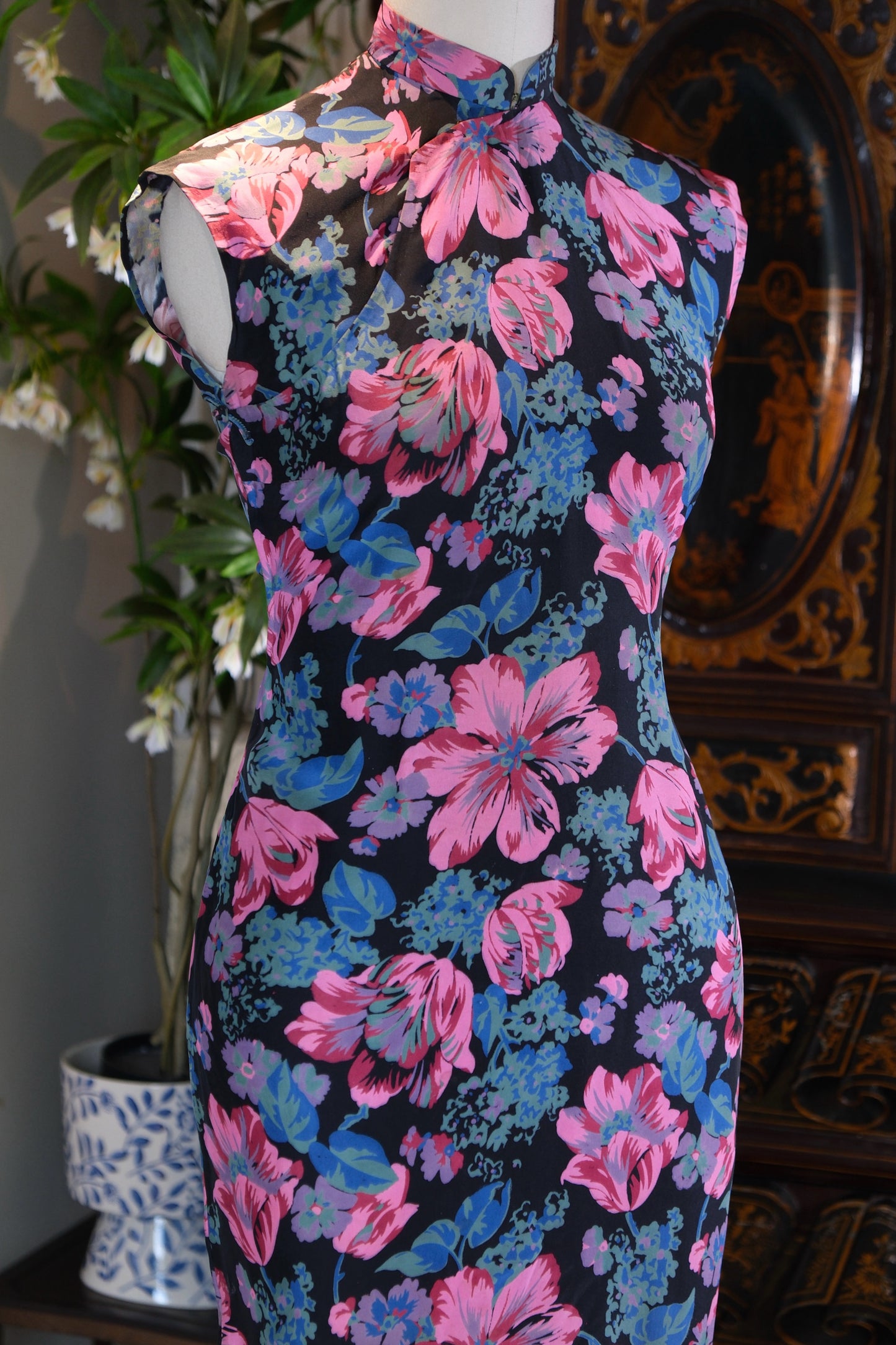
这件来自加拿大华侨女性的印花绸旗袍,是民国四十年代海派旗袍的典范之作。它以经典的平裁工艺、大胆的印花图案和优雅的廓形,完美诠释了那个时代“中西合璧”的时尚精神,也承载着一位海外华人对故土文化的深情眷恋。
墨底繁花,视觉盛宴
这件旗袍的面料,是其最引人注目的亮点。
- 底色与印花:以深邃的黑色为底,如同夜幕降临,为繁花提供了最完美的舞台。衣身布满了大朵的粉色、蓝色、紫色花卉,这些花朵并非传统的工笔或写意画风,而是采用了当时流行的“月份牌”风格,色彩浓烈、笔触奔放,极具现代感。粉色的牡丹、蓝色的绣球、紫色的鸢尾,在黑色底布的映衬下,显得格外娇艳欲滴,仿佛在夜色中悄然绽放。
- 工艺与质感:面料为轻盈的印花绸,触感柔滑,垂坠感极佳。这种面料在四十年代非常流行,它不仅穿着舒适,更因其良好的悬垂性,能够完美贴合身体曲线,展现女性的曼妙身姿。印花工艺精湛,色彩饱和度高,历经数十年依然鲜艳如初,足见其品质之高。
平裁经典,曲线玲珑
这件旗袍的剪裁,是四十年代海派旗袍的精髓所在。
- 平裁工艺:采用传统的平裁工艺,即不使用省道,而是通过归拔(熨烫塑形)来塑造身体曲线。这种工艺对裁缝的技艺要求极高,需要凭借丰富的经验,通过熨斗的温度和力度,将平面的布料塑造成符合人体曲线的立体形态。这件旗袍的腰身收得恰到好处,既贴合身体,又不显紧绷,完美展现了女性的S型曲线。
- 无袖与高领:无袖设计是四十年代旗袍的一大特色,它露出了纤细的小臂,增加了夏日的清凉感与行动的便利性。高领依然保留,但高度适中,显得挺拔而不过于拘谨。领口处的盘扣设计,简洁而精致,为整体增添了一抹东方的雅致。
加国旧梦,故土情怀
这件旗袍,是那位加拿大华侨女性的“战袍”,也是她对故土文化的深情回望。在异国他乡,她穿着这件旗袍,仿佛穿越时空,回到了那个繁华的上海滩。她不是在模仿西方,而是在用自己的方式,诠释着东方的优雅与现代。
它是一件艺术品,更是一段历史。它见证了那个时代的开放与包容,也见证了海外华人对文化的坚守与创新。
Measurements / Size Guide:
Bust / Waist / Hips: 84/74/90 cm
Total Length: 100 cm
Detailed Description:
This printed silk Qipao, belonging to a Chinese-Canadian woman, is a quintessential masterpiece of 1940s Haipai (Shanghai-style) Qipao. With its classic flat-cut craftsmanship, bold printed patterns, and elegant silhouette, it perfectly interprets the "East-meets-West" fashion spirit of that era while carrying the deep cultural nostalgia of an overseas Chinese for her homeland.
Floral Blooms on an Ink Backdrop: A Visual Feast The fabric of this Qipao is its most striking highlight.
Base Color and Prints: Set against a profound black base—like the falling night—it provides the perfect stage for the blooming flowers. The garment is covered in large pink, blue, and purple blossoms. These are not rendered in traditional fine-brush or freehand styles but instead adopt the popular "Calendar Poster" (Yuefenpai) aesthetic of the time: intense colors and bold brushstrokes full of modernity. Pink peonies, blue hydrangeas, and purple irises stand out vividly against the black backdrop, appearing as if they are blooming quietly in the night.
Craftsmanship and Texture: The material is a lightweight printed silk, smooth to the touch with an excellent drape. This fabric was highly popular in the 1940s; it was not only comfortable to wear but, due to its superior hanging quality, could perfectly contour to the body's curves, showcasing a woman's graceful silhouette. The printing process was exquisite, with high color saturation that remains vibrant even after decades, attesting to its superior quality.
Classic Flat-cut: Exquisite Curves The tailoring of this Qipao represents the essence of 1940s Haipai style.
Flat-cut Craftsmanship: It utilizes traditional flat-cut techniques, meaning no darts are used. Instead, the body's curves are shaped through "Gui-Ba" (stretching and shrinking via professional ironing). This technique demands extreme skill from the tailor, requiring vast experience to mold flat fabric into a three-dimensional form that fits the human body using only the temperature and pressure of an iron. The waist of this Qipao is cinched just right—fitting the body without feeling tight—perfectly displaying the feminine S-curve.
Sleeveless and High Collar: The sleeveless design is a hallmark of 1940s Qipao, revealing slender arms and adding a sense of summer coolness and ease of movement. The high collar is retained at a moderate height, appearing upright without being overly stiff. The frog button design at the collar is simple yet refined, adding a touch of Oriental elegance to the overall look.
A Dream of Old Canada, A Sentiment for the Homeland This Qipao was the "battle robe" of that Chinese-Canadian woman, as well as her soulful backward glance at her ancestral culture. In a foreign land, wearing this Qipao felt like traveling through time and space back to the bustling Bund of Shanghai. She was not merely imitating the West; she was using her own way to interpret Oriental elegance and modernity.
It is an artwork and, moreover, a segment of history. It witnessed the openness and inclusivity of that era, as well as the persistence and innovation of overseas Chinese toward their culture.