深圳溯源
Couldn't load pickup availability
衣服尺寸:
胸围/腰围/臀围:// 厘米
衣长: 厘米
细节描述:
这件来自加拿大华侨女性的灰色羊毛旗袍,以其独特的材质、鲜明的刺绣和时代感十足的垫肩设计,成为民国四十年代海派旗袍中的“冬日珍品”。它不仅是一件御寒的衣物,更是一段凝固的历史,见证了海外华人女性在异国他乡对故土文化的坚守与创新。
羊毛为骨,红枫为魂
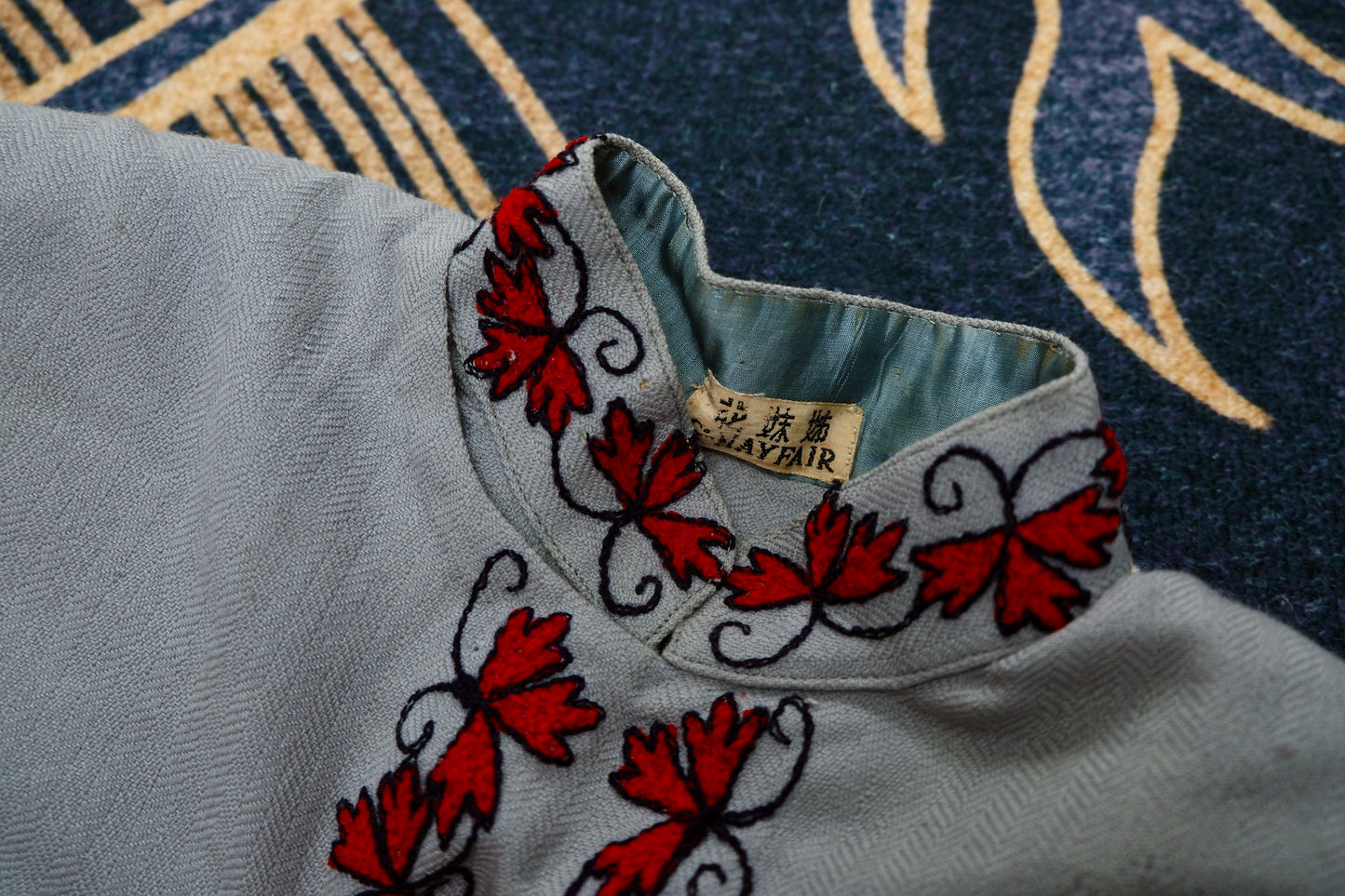
旗袍的面料为厚实的灰色羊毛,质地紧密,保暖性极佳,是冬日穿着的理想选择。衣身通体素灰,仅在领口、胸前与袖口处以红色和黑色羊毛线,手绣出枫叶与卷草纹的图案,色彩浓烈而不俗艳,极具视觉冲击力。
- 枫叶纹样:枫叶是加拿大的国家象征,也是这位华侨女性对第二故乡的情感寄托。红色枫叶在灰色羊毛底上格外醒目,象征着热情与生命力,也寓意着“落叶归根”的乡愁。
- 卷草纹样:黑色的卷草纹与枫叶交织,形成“缠枝莲”般的传统吉祥图案。这种纹样在民国时期极为流行,象征着“生生不息,富贵连绵”。
垫肩塑形,时代印记
这件旗袍最显著的时代特征,莫过于其夸张的大垫肩设计。
- 肩部廓形:垫肩使肩线平直、宽阔,呈现出倒三角的视觉效果。这种设计源于好莱坞电影中的女明星形象,旨在展现女性的力量与独立。在民国语境下,它不仅是一种时尚,更是一种“新女性”的身份宣言——她们不再是深闺中的弱柳扶风,而是可以走出家门、参与社会事务的现代公民。
- 修身剪裁:与宽肩形成对比的是极度修身的腰身和下摆。旗袍紧贴身体曲线,勾勒出女性的曼妙身姿,这正是“海派旗袍”的精髓所在——“露”与“藏”的微妙平衡。
海外华人的文化图腾
这件旗袍,是那位加拿大华侨女性的“文化图腾”。在异国他乡,她穿着这件旗袍,仿佛将故土的吉祥与祝福穿在身上。枫叶与卷草纹的纹样,不仅是对美好生活的祈愿,更是对中华文化的深情回望。
它是一件艺术品,更是一段历史。它见证了那个时代的开放与包容,也见证了海外华人对文化的坚守与创新。
Measurements / Size Guide:
Bust / Waist / Hips: / / cm
Total Length: cm
Detailed Description:
This grey wool Qipao, once belonging to an overseas Chinese woman in Canada, stands as a "winter treasure" of 1940s Haipai (Shanghai-style) Qipao due to its unique material, distinct embroidery, and prominent, era-defining shoulder pad design. It is more than just a garment for protection against the cold; it is a segment of frozen history, witnessing the perseverance and innovation of ancestral culture by Chinese diaspora in a foreign land.
Wool as the Bone, Red Maple as the Soul The fabric of this Qipao is thick grey wool—tight in texture with excellent warmth retention, making it an ideal choice for winter wear. The body is pure grey, featuring hand-embroidered patterns of maple leaves and scrolling grass motifs at the collar, chest, and cuffs using red and black wool thread. The colors are intense without being gaudy, creating a powerful visual impact.
Maple Leaf Motif: The maple leaf is Canada's national symbol, representing this overseas Chinese woman’s emotional attachment to her second home. The red maple leaves are exceptionally striking against the grey wool base, symbolizing passion and vitality, while also carrying the nostalgic sentiment of "falling leaves returning to their roots."
Scrolling Grass Motif: Black scrolling grass intertwines with the maple leaves, forming a traditional auspicious pattern resembling "intertwining lotus vines." This motif was extremely popular during the Republic of China era, symbolizing "endless life and continuous prosperity."
Shoulder Pads: The Imprint of an Era The most striking era characteristic of this Qipao is its exaggerated large shoulder pad design.
Shoulder Silhouette: The pads make the shoulder line straight and wide, creating an inverted triangle visual effect. This design originated from Hollywood film stars, intended to showcase female power and independence. In the context of the Republic of China, it was not just a fashion statement but a declaration of the "New Woman" identity—they were no longer the frail "weeping willows" of the inner chambers, but modern citizens involved in social affairs.
Slim-Fit Tailoring: Contrasting with the broad shoulders are the extremely slim waist and hem. The Qipao clings to the body’s curves, outlining a woman’s graceful silhouette—the very essence of the "Haipai Qipao," a delicate balance between "revealing" and "concealing."
The Cultural Totem of Overseas Chinese This Qipao served as a "cultural totem" for that overseas Chinese woman in Canada. In a foreign land, wearing this garment was like wearing the blessings and auspiciousness of her homeland. The maple leaf and scrolling grass motifs were not only prayers for a better life but also a deep, soulful look back at Chinese culture.
It is a work of art and a piece of history. It witnessed the openness and inclusivity of that era, as well as the perseverance and innovation of the Chinese diaspora.