翠漪凝香:一件四十年代真丝提花旗袍的流光絮语
一、织纹里的“海派”风华
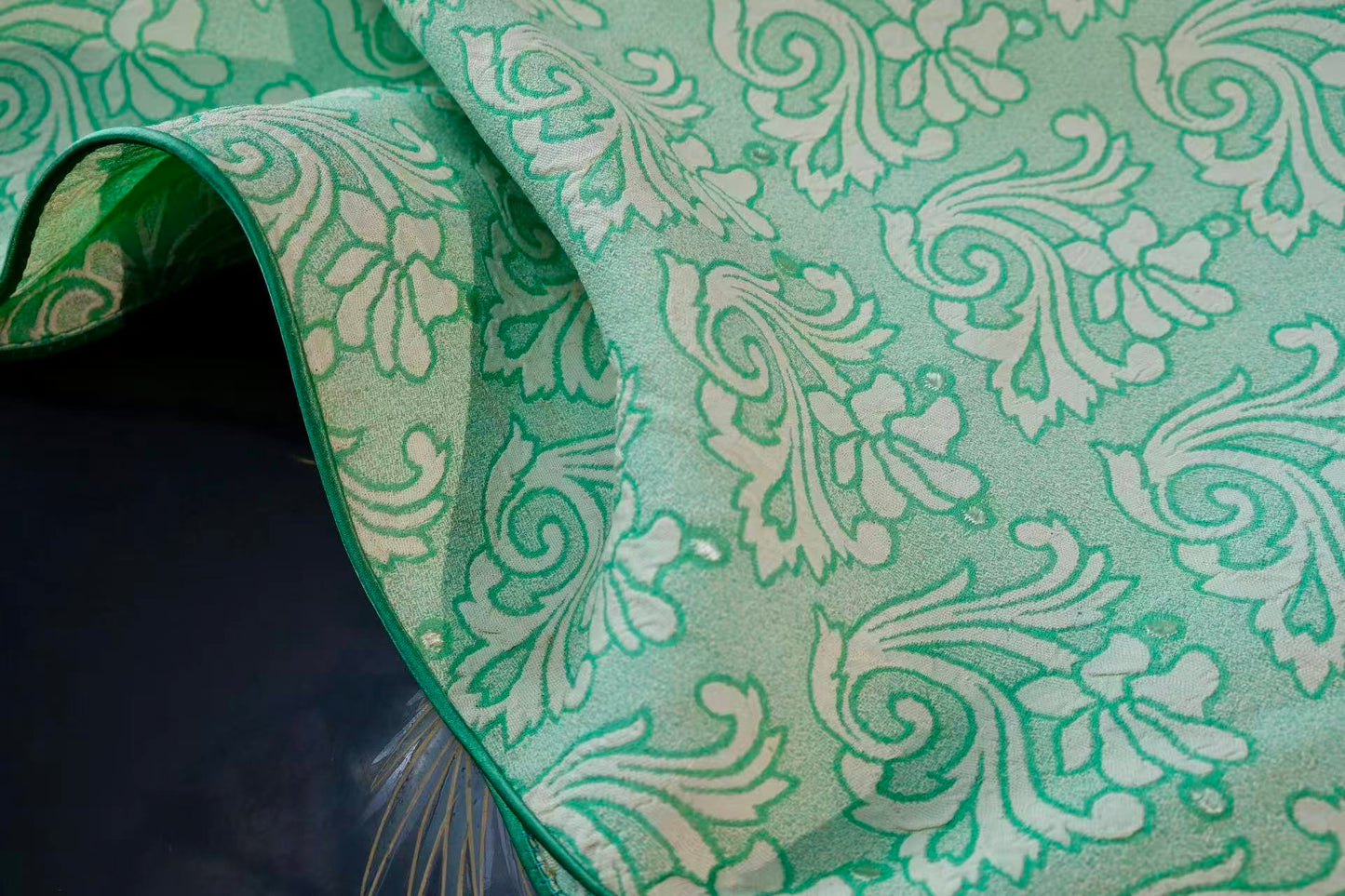
这件诞生于1940年代的真丝提花绸旗袍,是“海派”服饰美学的缩影。其面料采用当时先进的提花工艺,以本色桑蚕丝为经纬,通过绞综提花机织出满布的缠枝花卉纹样——叶片舒展如卷云,花瓣层叠似浪涌,线条婉转处暗合《营造法式》中“卷草纹”的灵动意趣,又因西方装饰艺术(Art Deco)的影响,图案布局更显几何秩序之美。浅绿色底料如春水初生,白色提花纹理若隐若现,恰似张爱玲笔下“月白纱旗袍上绣着缠枝莲,月光下泛着银光”的意境,将东方含蓄与摩登风韵熔于一炉。
二、旗袍的“摩登”叙事
这件旗袍的立领高度适中,既保留传统端庄,又以流畅的肩线与贴合腰身的剪裁,勾勒出女性柔美曲线;无袖设计大胆露臂,暗合当时“摩登女郎”追求自由解放的时代精神。领口处的盘扣以同色真丝缠绕而成,结形小巧精致,既实用又添雅趣,正如《申报》1943年一篇《新式旗袍谈》所言:“盘纽如花蕊,领襟似荷茎,方寸间见匠心。”
三、真丝提花绸的工艺绝响
面料选用的真丝提花绸,是民国时期江南织造的巅峰之作。桑蚕丝经脱胶处理后,光泽柔和如凝脂,触感滑糯似流水;提花纹样通过“通经断纬”的古老技法织就,每平方厘米需交织数十根经纬线,耗时费力。这种面料在当时仅见于高级定制旗袍,如今历经八十余载岁月,仍可见其纹路清晰、色泽温润,足见工艺之精湛。正如《天工开物》所载“凡丝贵光润,纹贵精工”,此件旗袍正是“丝光”与“纹精”的完美统一。
四、时光里的女性物语
它或许曾属于一位上海弄堂里的知识女性:晨起时,她对着铜镜系上盘扣,去圣约翰大学授课;午后,她披着旗袍的柔光,在霞飞路咖啡馆与友人谈诗论艺;夜幕下,她挽着爱人走过百乐门,旗袍开衩处随步伐轻摇,留下一串风华绝代的剪影。这件旗袍不仅是一件衣物,更是一代女性挣脱束缚、拥抱现代性的见证,正如张爱玲在《更衣记》中所写:“旗袍的作用不外乎烘云托月忠实地将人体轮廓曲曲勾出。”
五、稀缺性与艺术价值
存世的1940年代真丝提花旗袍本就稀少,而此件作品兼具“海派”形制、顶级面料与精湛工艺,更显珍贵。其面料的提花纹样完整无损,剪裁比例符合现代审美,可直接上身演绎复古风情;更难得的是,它承载着民国服饰从传统向现代转型的历史信息,是研究中国近现代服装史的“活化石”。正如学者高春明所言:“一件好的古董旗袍,是穿在身上的历史,是流动的文明。”
六、结语
当指尖抚过这件旗袍的提花纹理,仿佛能触到1940年代上海的霓虹与微风,听到旗袍摆动时桑蚕丝摩擦的细响。它不只是布料与针线的结合,更是一段凝固的时光,一种永不褪色的东方美学。正如《诗经》所咏“青青子衿,悠悠我心”,这件翠色旗袍,正以它独有的方式,诉说着关于美、关于时代、关于女性力量的永恒絮语。
Emerald Ripples and Lingering Fragrance: Whispers of a 1940s Silk Jacquard Qipao
I. The "Haipai" Elegance Within the Weave
This silk jacquard Qipao, born in the 1940s, is a microcosm of "Haipai" (Shanghai-style) fashion aesthetics. The fabric utilizes advanced jacquard techniques of the era, weaving sprawling floral motifs from natural mulberry silk. The leaves unfurl like rolling clouds, and the petals surge like waves—their winding lines echo the rhythmic "scrolling grass" patterns of ancient Chinese architecture, while the layout reflects the geometric order influenced by Western Art Deco. The pale green base resembles spring water, with white jacquard textures appearing and disappearing like moonlight—perfectly capturing the atmosphere described by Eileen Chang: "A moon-white gauze Qipao embroidered with entwined lotuses, shimmering silver under the moon."
II. A "Modern" Narrative of the Qipao
With a moderate standing collar, fluid shoulder lines, and a body-contoured cut, this piece balances tradition with allure. The sleeveless design—a bold choice for the time—aligns with the spirit of the "Modern Girl" seeking freedom and liberation. The Pankou (frog buttons) at the collar, meticulously crafted from matching silk, are as delicate as flower stamens, embodying the craftsmanship praised in 1940s fashion journals: "The buttons are like buds, the lapels like lotus stems; ingenuity found in every square inch."
III. The Lost Art of Silk Jacquard
The material is a pinnacle of Jiangnan weaving from the Republican era. After degumming, the mulberry silk possesses a luster as soft as cream and a touch as smooth as flowing water. This "silk light" and "fine texture" represent the perfection of the "Ti Hua" (jacquard) craft, where dozens of warp and weft threads interlace in every square centimeter—a feat of labor-intensive luxury rarely seen today.
IV. A Woman’s Story Through Time
One can imagine its original owner: an intellectual woman in a Shanghai Lilong (alleyway). Perhaps she fastened these buttons before a bronze mirror before heading to St. John's University to lecture; or perhaps she sat in a café on Avenue Joffre discussing poetry. As Eileen Chang wrote in Chronicle of Changing Clothes: "The function of the Qipao is nothing more than to faithfully trace the contours of the human body." This garment is a witness to a generation of women embracing modernity.
V. Rarity and Artistic Value
Surviving 1940s silk jacquard pieces are rare "living fossils" of fashion history. This piece is particularly precious for its intact patterns and proportions that still align with contemporary beauty standards. It is, as scholars say, "History worn on the body; civilization in motion."