锦瑟华年,波普旧梦——四十年代加拿大华侨织锦缎旗袍考释
衣服尺寸:
胸围/腰围/臀围:86/72/90 厘米
衣长:109 厘米
细节描述:
如果说上一件羊毛刺绣旗袍是战时女性的坚韧独白,那么眼前这件织锦缎旗袍,则是民国四十年代“中西合璧”美学巅峰的华丽注脚。它同样来自那位远渡重洋的加拿大华人女性,却以一种更为张扬、更具现代性的姿态,展现了那个时代独有的“摩登”精神。
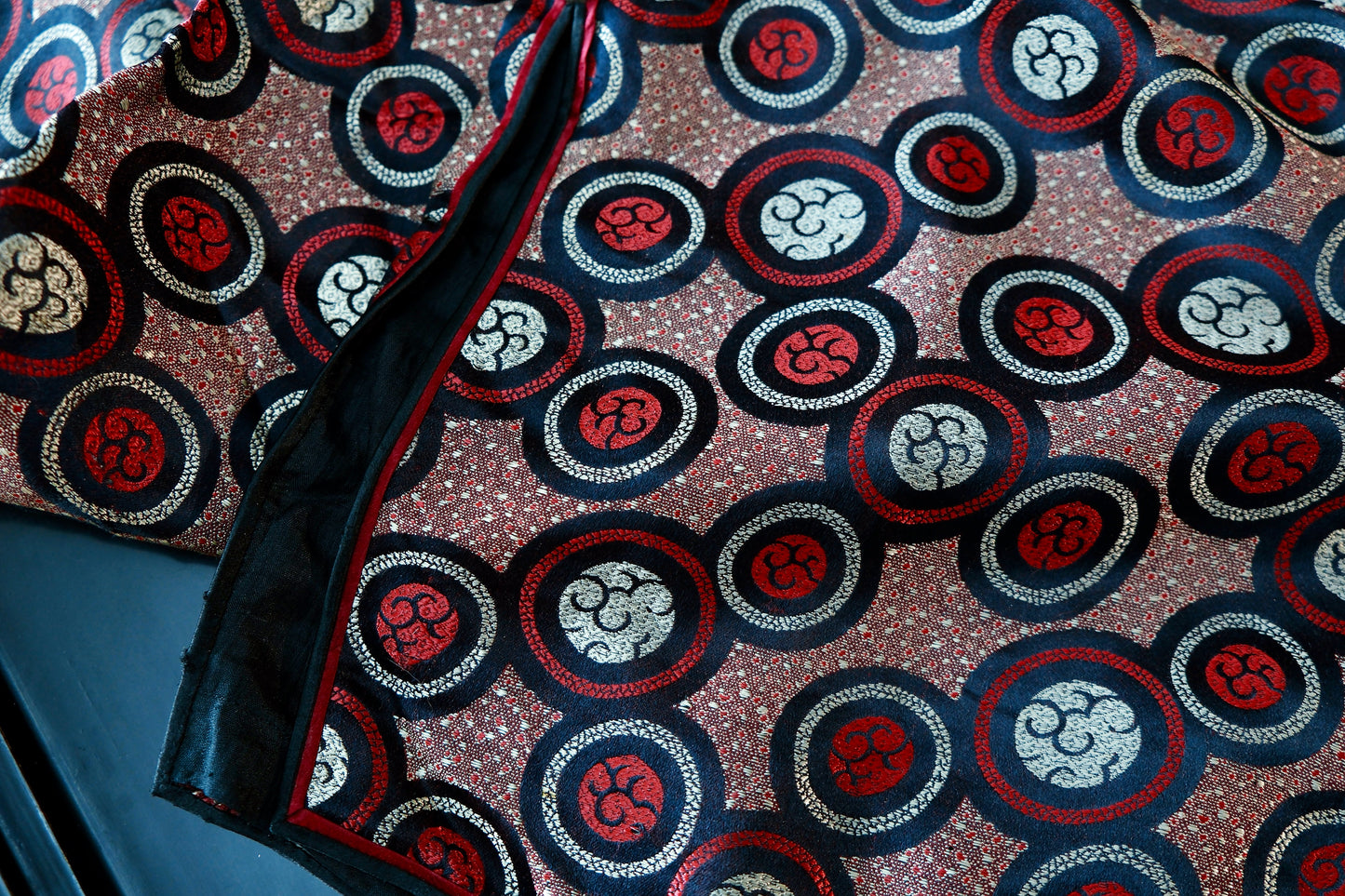
这件旗袍的面料堪称一绝。它采用了极具视觉冲击力的波普风格织锦缎,在民国时期的古董衣中极为罕见。
底料并非传统的素色绸缎,而是一种带有金属光泽的暗红或古铜色地,上面密布着细碎的点状纹理,宛如星河璀璨,又似浮光跃金。这种底纹不仅增加了面料的层次感,更在光影流转间赋予穿着者一种流动的华贵。
衣身通体布满了大小不一、错落有致的圆形纹样,这是典型的“波普”前身——装饰艺术风格的几何化表达。这些圆圈并非简单的几何图形,而是经过精心设计的“团纹”。
圆环:每个圆圈都由黑、红、金(或银)三色勾勒,线条粗犷而有力,极具现代平面设计的构成感。黑色勾边稳重深邃,红色点缀热烈奔放,金银丝线则增添了奢华的质感。
云纹/如意纹:圆圈内部填充着抽象化的传统云纹或如意纹,这些纹样经过几何简化,既保留了东方吉祥寓意(“云”象征高升,“如意”象征顺遂),又符合西方现代主义的审美趣味。这种“旧瓶装新酒”的设计手法,正是民国设计师的高明之处。
这种面料极有可能是当时从欧洲(如法国里昂或英国)进口的提花织锦,或者是上海本土织造厂模仿西方现代风格的高端定制品。在四十年代物资匮乏的背景下,如此华丽且具现代感的面料,足见其主人的不凡品味与经济实力。
四十年代的旗袍廓形,最大的特点就是“西式化”。这件旗袍完美复刻了当时的流行趋势。
大垫肩:肩部采用了夸张的垫肩设计,使肩线平直、宽阔,呈现出倒三角的视觉效果。这种设计源于好莱坞电影中的女明星形象(如琼·克劳馥),旨在展现女性的力量与独立。在民国语境下,它不仅是一种时尚,更是一种“新女性”的身份宣言——她们不再是深闺中的弱柳扶风,而是可以走出家门、参与社会事务的现代公民。
修身剪裁:与宽肩形成对比的是极度修身的腰身和下摆。旗袍紧贴身体曲线,勾勒出女性的曼妙身姿,这正是“海派旗袍”的精髓所在——“露”与“藏”的微妙平衡。
高领与短袖:高领依然保留,但高度适中,显得挺拔而不过于拘谨。短袖设计则露出纤细的小臂,增加了夏日的清凉感与行动的便利性。
Splendid Years, Pop Art Dreams — An Analytical Study of a 1940s Canadian Overseas Chinese Brocade Qipao
Measurements / Size Guide:
Bust / Waist / Hips: 86/72/90 cm
Total Length: 109 cm
Detailed Description:
If the previous wool embroidered Qipao was a resilient monologue of wartime women, then this brocade Qipao is a magnificent footnote to the peak of "East-meets-West" aesthetics in the 1940s Republic of China era. Also sourced from that same Chinese-Canadian woman who traveled across the ocean, it showcases the unique "Moderne" spirit of that era with a more flamboyant and modern posture.
The fabric of this Qipao is a masterpiece. It features a Pop Art-style brocade with immense visual impact, which is extremely rare among antique garments of the Republican period.
The base material is not a traditional solid-colored silk or satin, but a dark red or bronze ground with a metallic luster, densely covered with fine dotted textures—resembling a brilliant galaxy or shimmering golden light on water. This base pattern not only adds layers to the fabric but also endows the wearer with a sense of fluid luxury as light and shadow shift.
The body of the garment is covered with circular motifs of varying sizes in a well-arranged layout, representing a typical "Pop Art" precursor—the geometric expression of the Art Deco style. These circles are not simple geometric shapes but meticulously designed "roundel patterns" (Tuanwen).
-
The Rings: Each circle is outlined in three colors—black, red, and gold (or silver)—with bold and powerful lines that possess a strong sense of modern graphic design composition. The black edging is steady and profound, the red accents are passionate and bold, and the gold/silver threads add a luxurious texture.
-
Cloud/Ruyi Motifs: The interior of the circles is filled with abstracted traditional cloud or Ruyi motifs. These patterns have been geometrically simplified, preserving Oriental auspicious meanings ("Cloud" symbolizing rising status, and "Ruyi" symbolizing smooth success) while catering to the aesthetic tastes of Western modernism. This technique of "new wine in old bottles" is precisely where the brilliance of Republican-era designers lay.
This fabric was likely high-end jacquard brocade imported from Europe (such as Lyon, France, or the UK) at the time, or a premium custom product from a local Shanghai weaving mill imitating Western modern styles. Against the backdrop of resource scarcity in the 1940s, such a magnificent and modern fabric speaks volumes of the owner's extraordinary taste and economic standing.
The most prominent feature of the 1940s Qipao silhouette is its "Westernization." This Qipao perfectly replicates the prevailing trends of that time.
-
Bold Shoulder Pads: The shoulders feature an exaggerated padded design, making the shoulder line straight and broad, creating an inverted triangle visual effect. This design originated from the images of Hollywood actresses (such as Joan Crawford), aimed at showcasing female power and independence. In the Republican context, it was not just a fashion statement but a manifesto of the "New Woman"—they were no longer fragile beauties confined to inner chambers, but modern citizens who could step out of the home and participate in social affairs.
-
Slim-fit Tailoring: Contrasting with the broad shoulders is the extremely slim waist and hem. The Qipao fits tightly to the body's curves, outlining the graceful silhouette of the woman—this is the essence of the "Haipai (Shanghai-style) Qipao": a subtle balance between "revealing" and "concealing."
-
High Collar and Short Sleeves: The high collar is retained but at a moderate height, appearing upright without being overly stiff. The short sleeve design reveals slender forearms, adding a sense of summer coolness and convenience for movement.