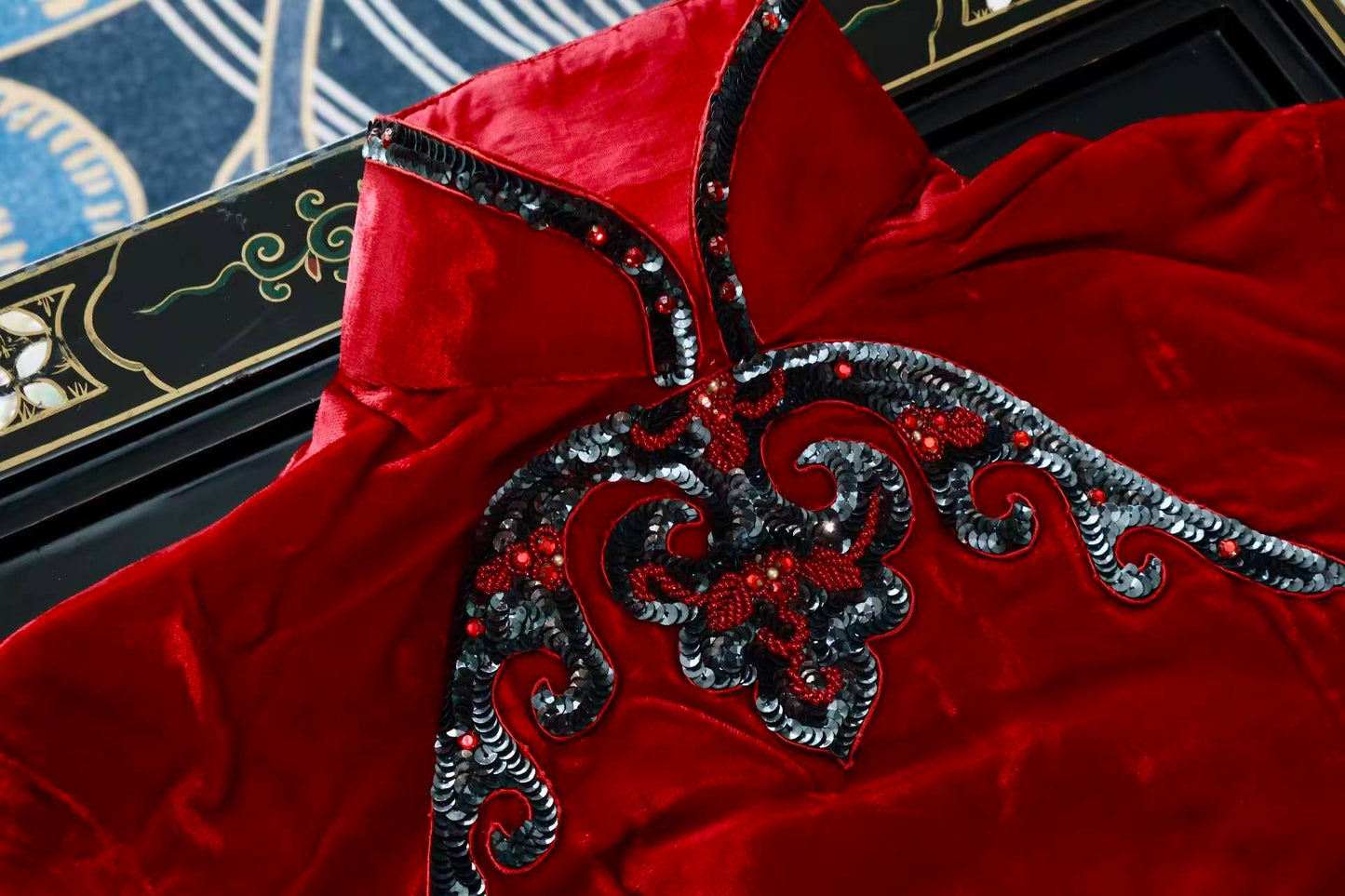
五十年代香港天鹅绒线香钉珠如意云头旗袍
这件旗袍堪称五十年代香港工艺美学的巅峰之作,以天鹅绒为底,线香钉珠勾勒如意云头,将传统吉祥纹样与时代摩登感完美融合,每一针每一线都诉说着那个年代的精致与风华。
这件旗袍的主体纹样为如意云头,以线香钉珠工艺精心绣制,云头造型流畅婉转,边缘以银灰色亮片勾勒轮廓,内部点缀红色珠粒,形成层次丰富的视觉效果。云头纹在中国传统文化中象征吉祥如意、高升腾达,常用于宫廷与贵族服饰,寓意福气绵延、步步高升。旗袍领口与袖口亦饰以同款云头纹,形成视觉上的呼应,既保留了传统纹样的庄重感,又通过珠片的光泽增添现代时尚气息。
从工艺角度看,这件旗袍采用天鹅绒面料,质地柔软厚实,触感细腻,具有良好的垂坠感与保暖性,是五十年代高档服饰的典型用料。线香钉珠工艺则需手工将细小珠片逐一缝制于布面,耗时耗力,非熟练工匠难以完成,体现了当时香港制衣业的高超技艺。这种工艺不仅提升了服饰的装饰性,更使其在灯光下熠熠生辉,适合舞会、庆典等正式场合穿着。
这件旗袍的历史价值不仅在于其工艺与设计,更在于其与王莱的关联。王莱作为五十年代香港影坛的重要女星,其着装风格直接影响当时的时尚潮流。这件旗袍与她所穿的同款,具有明确的名人效应与时代印记。在那个电影工业蓬勃发展的年代,旗袍不仅是日常服饰,更是身份与品味的象征,承载着女性独立、优雅与自信的时代精神。
从文化意义上讲,这件旗袍是中西合璧的典范。它保留了传统旗袍的立领、斜襟、收腰等经典元素,同时融入了西方装饰艺术(Art Deco)的几何线条与珠片装饰,体现了五十年代香港作为东西方文化交汇点的独特魅力。这种风格的旗袍在当时深受知识女性与影艺界人士喜爱,成为“东方摩登”的代名词。
这件五十年代香港产天鹅绒线香钉珠如意云头旗袍,不仅是一件精美的古董服饰,更是一段凝固的历史。它以精湛工艺、吉祥纹样与名人关联,展现了那个时代女性的优雅风姿与文化自信,是收藏界难得的珍品,值得珍视与传承。
A Pinnacle of 1950s Hong Kong Craftsmanship: The Velvet Beaded "Ruyi Cloud" Qipao
This Qipao represents the zenith of 1950s Hong Kong aesthetic craft. Using luxurious velvet as its canvas and incense-stick beading (线香钉珠) to trace the "Ruyi" cloud motifs, it seamlessly blends traditional auspicious symbols with modern sophistication. Every stitch and thread narrates the refinement and elegance of a golden era.
The central motif features the Ruyi Cloud (如意云头), meticulously embroidered through the incense-stick beading technique. The silhouettes are fluid and graceful, with silver-gray sequins outlining the edges and vibrant red beads accentuating the interior, creating a rich, layered visual effect. In traditional Chinese culture, the cloud motif symbolizes good fortune and career advancement—historically reserved for courtly and noble attire to imply "everlasting blessings." These motifs are echoed on the collar and cuffs, maintaining the solemnity of tradition while adding a contemporary sparkle.
From a technical standpoint, the choice of velvet—soft, thick, and boasting an exquisite drape—is a hallmark of high-end 1950s fashion. The beading process, requiring craftsmen to hand-sew tiny beads and sequins one by one, is an incredibly labor-intensive feat that showcases the masterful skill of Hong Kong’s garment industry at the time. This craftsmanship ensures the dress shimmers brilliantly under gala lights, making it ideal for balls and formal celebrations.
The historical significance of this piece is further elevated by its association with Wang Lai (王莱). As a pivotal star of the 1950s Hong Kong film industry, her wardrobe directly influenced the fashion trends of the time. This Qipao, identical to the one she wore, carries a distinct celebrity imprint. In an era where the film industry was booming, the Qipao was more than daily wear; it was a symbol of status and taste, embodying the independence, elegance, and confidence of the modern woman.
Culturally, this garment is a textbook example of East-meets-West. It preserves the classic standing collar, diagonal bodice, and cinched waist, yet integrates the geometric lines and sequined flair of Western Art Deco. It stands as a testament to 1950s Hong Kong as a cultural melting pot—a style beloved by intellectuals and film icons alike, becoming synonymous with "Oriental Modernity."
This velvet beaded Qipao is not merely a piece of antique clothing but a frozen fragment of history. Through its superb artistry and cultural narrative, it remains a rare treasure worthy of preservation and inheritance.