深圳溯源
Couldn't load pickup availability
衣服尺寸:
胸围/腰围/臀围:98/92/106 厘米
衣长:108 厘米
细节描述:
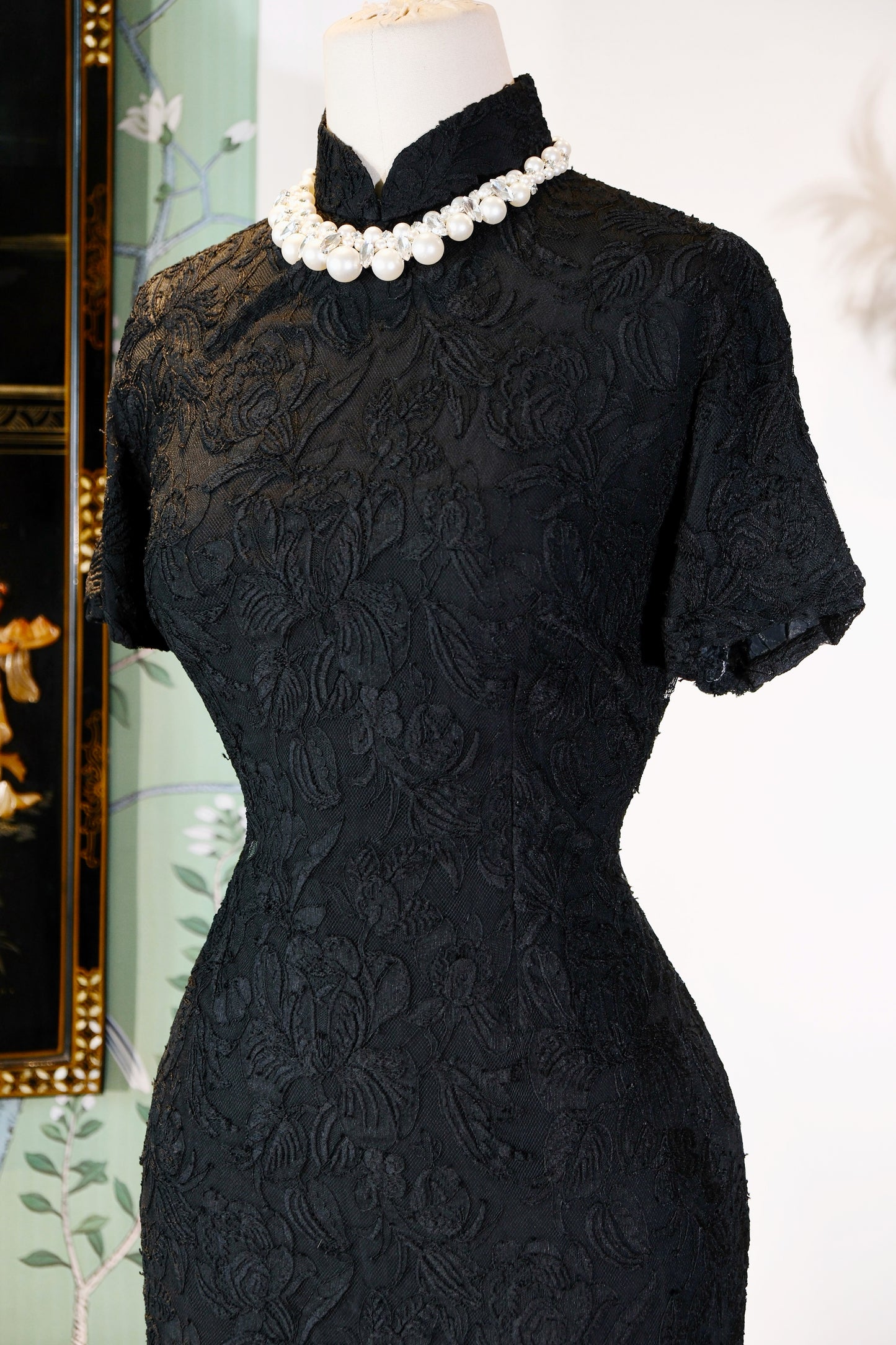
在时尚的浩瀚长河中,有些衣物不仅是蔽体之物,更是凝固的时光,是东西方文明在特定历史切片下激烈碰撞又完美交融的产物。眼前这件诞生于上世纪五十年代香港、采用法国进口玫瑰蕾丝制作的古董旗袍,便是一件极具文献价值与艺术张力的孤品。它不仅是一件衣服,更是一段关于流亡、奢华与重生的历史注脚。
一、纹样考据:暗夜玫瑰的浮雕诗学
这件旗袍最摄人心魄之处,在于其面料的肌理与图案。通体采用深邃的墨黑色,这并非沉闷的死黑,而是一种极具包容性与神秘感的底色。
- 玫瑰蕾丝的立体叙事:不同于江南传统的平纹丝绸,这件旗袍选用了来自法国加莱的顶级蕾丝。图案以繁复的玫瑰花丛为主体,花叶缠绕,呈现出一种巴洛克式的繁复与洛可可式的细腻。这种蕾丝并非轻薄的网状结构,而是带有浮雕感的刺绣蕾丝,花瓣轮廓清晰,叶脉纹理毕现。
- 光影的戏剧性:黑色蕾丝覆盖在肤色或衬裙之上,形成了一种“隔帘看花”的朦胧美感。玫瑰图案在黑色的基调中若隐若现,既有着西方哥特式的暗黑浪漫,又暗合了东方美学中“墨分五色”的层次感。这种图案设计打破了传统旗袍花鸟鱼虫的具象表达,转而追求一种更为抽象、更为现代的艺术装饰风格。
二、历史回响:香江岸边的旧梦重温
要读懂这件旗袍,必须将其置于1950年代的历史语境之中。那是一个大时代剧烈震荡后的沉淀期,也是“东方巴黎”香港时尚产业崛起的黄金年代。
- 东西方的流亡与邂逅:1950年代的香港,汇聚了来自上海滩的裁缝大师、西方的面料商以及追求时髦的南洋名媛。这件旗袍正是这一历史背景下的产物。当时的香港名媛阶层,既保留着中国传统的身段审美,又深受好莱坞电影与西方生活方式的影响。
- 法式面料的东方剪裁:在那个物资相对匮乏的年代,能从法国进口如此奢华的蕾丝面料,足见其原主人的显赫家世。将极其西化的蕾丝面料,通过归拔工艺,严丝合缝地制作成极具东方韵味的立领、斜襟、收腰旗袍,这是海派文化与港式风情的一次完美“联姻”。它不再是旧式旗装的宽大,而是如第二层皮肤般紧紧包裹着女性的曲线,这种对“身体解放”与“曲线展示”的追求,正是五十年代全球时尚的先锋精神。
三、艺术风格与稀缺性:不可复制的绝响
从艺术史的角度审视,这件旗袍具有极高的稀缺性与收藏价值。
- “海派”余韵的绝唱:它继承了1930年代上海旗袍的精髓——那种慵懒而精致的颓废美,但在工艺上更为精进。蕾丝的弹性与剪裁的难度远超普通丝绸,这对裁缝的技艺提出了极高的要求。每一个省道、每一处滚边,都凝聚着那个时代手工艺人的匠心。
- 材质的不可再生性:法国老式蕾丝织机(Leavers lace looms)如今已近绝迹,当年生产的这种重工浮雕蕾丝更是存世极少。这种面料随着时间的推移,会变得更加脆弱,但也更加珍贵。
- 永恒的黑色美学:黑色在时尚界拥有至高无上的地位,正如可可·香奈儿所言:“我常说黑色包容一切,白色亦然。它们的美无懈可击。”这件黑色蕾丝旗袍,既适合晚宴的觥筹交错,也适合日常的优雅漫步,它超越了时间的限制,成为了一种永恒的符号。
结语
这件1950年代的法国蕾丝旗袍,是一首写在身体上的十四行诗。它用黑色的玫瑰蕾丝,编织了一个关于旧时光的梦。当你穿上它,你穿上的不仅仅是一件古董衣,而是那个风华绝代年代的灵魂,是张爱玲笔下的“葱绿配桃红”之外的另一种——“墨黑配珠白”的苍凉与华丽。它是博物馆级的藏品,是真正懂衣、懂史、懂美的藏家不可多得的珍藏。
Measurements / Size Guide:
Bust / Waist / Hips: 98/92/106 cm
Total Length: 108 cm
Detailed Description:
In the vast river of fashion, some garments are more than just coverings for the body; they are frozen moments in time, products of the intense collision and perfect fusion of Eastern and Western civilizations at a specific historical intersection. This antique qipao before us, crafted in 1950s Hong Kong using imported French rose lace, is a unique piece of immense documentary value and artistic tension. It is not merely a dress, but a historical footnote regarding exile, luxury, and rebirth.
The most soul-stirring aspect of this qipao lies in the texture and pattern of its fabric. The entire piece utilizes a deep ink-black—not a dull or lifeless black, but a base color full of inclusivity and mystery.
The Three-Dimensional Narrative of Rose Lace: Unlike the traditional plain-weave silks of Jiangnan, this qipao features top-tier lace from Calais, France. The pattern centers on intricate rose thickets with intertwining flowers and leaves, presenting a Baroque-style complexity and Rococo-style delicacy. This is not a lightweight mesh structure, but an embroidered lace with a relief-like feel, featuring clear petal outlines and visible leaf veins.
Dramatic Interplay of Light and Shadow: When the black lace overlays skin or an undergarment, it creates a hazy aesthetic of "viewing flowers through a screen." The rose patterns emerge faintly against the black foundation, possessing both Western Gothic dark romance and the layered "five colors of ink" found in Eastern aesthetics. This design breaks away from the concrete representations of flowers, birds, fish, and insects in traditional qipao, pursuing instead a more abstract and modern decorative art style.
To understand this qipao, one must place it within the historical context of the 1950s—a period of settling after a great era of upheaval and the golden age of Hong Kong’s rise as the "Paris of the East."
Exile and Encounter of East and West: Hong Kong in the 1950s brought together master tailors from Shanghai, fabric merchants from the West, and socialites from Southeast Asia in pursuit of fashion. This qipao is a direct product of this background. The Hong Kong socialite class of that time maintained traditional Chinese aesthetic silhouettes while being deeply influenced by Hollywood films and Western lifestyles.
Eastern Tailoring of French Fabric: In an era of relative scarcity, the ability to import such luxurious lace from France speaks to the prominent family background of its original owner. Transforming highly Westernized lace fabric into a qipao with high standing collars, diagonal closures, and a cinched waist through traditional "stretching and shrinking" (Gui-Ba) techniques represents a perfect "marriage" of Haipai (Shanghainese) culture and Hong Kong style. It moved away from the bulkiness of old-style Manchu robes to wrap the female silhouette like a second skin. This pursuit of "bodily liberation" and "curve display" was the vanguard spirit of 1950s global fashion.
From the perspective of art history, this qipao possesses extreme scarcity and collection value.
The Final Song of "Haipai" Charm: It inherits the essence of 1930s Shanghai qipao—that languid and exquisite decadence—but with even more refined craftsmanship. The elasticity of lace and the difficulty of its tailoring far exceed that of ordinary silk, placing extremely high demands on the tailor's skill. Every dart and every piped edge embodies the ingenuity of the craftsmen of that era.
Irreplaceable Materials: Antique French Leavers lace looms are now nearly extinct, and the heavy-duty relief lace produced back then is rarely found today. As time passes, this fabric becomes more fragile, yet even more precious.
Eternal Black Aesthetics: Black holds a supreme position in the fashion world, as Coco Chanel once said: "I have said that black has it all. White too. Their beauty is absolute." This black lace qipao is suited for both the clinking glasses of a banquet and an elegant daily stroll. It transcends the limitations of time to become an eternal symbol.
This 1950s French lace qipao is a sonnet written upon the body. Using black rose lace, it weaves a dream of bygone days. When you wear it, you are not just putting on an antique garment; you are donning the soul of a magnificent era. It is a different kind of beauty from the "onion green paired with peach red" described by Eileen Chang—it is the desolation and splendor of "ink black paired with pearl white." It is a museum-grade piece, a rare treasure for collectors who truly understand clothing, history, and beauty.