深圳溯源
50年代 - 蓝底金叶·旧港遗梦 —— 五十年代香港产油画肌理古董旗袍鉴赏_HL | 1950s - Gilded Leaves & Old Hong Kong Dreams: An Artistic Appreciation of a 1950s Oil-Painting Texture Antique Qipao_HL
50年代 - 蓝底金叶·旧港遗梦 —— 五十年代香港产油画肌理古董旗袍鉴赏_HL | 1950s - Gilded Leaves & Old Hong Kong Dreams: An Artistic Appreciation of a 1950s Oil-Painting Texture Antique Qipao_HL
Couldn't load pickup availability
蓝底金叶·旧港遗梦 —— 五十年代香港产油画肌理古董旗袍鉴赏
衣服尺寸:
胸围/腰围/臀围:90/72/98 厘米
衣长:96 厘米
细节描述:
“一叶知秋,一衣藏史。”
在时光的长河中,总有一些织物,承载着特定时代的风华与温度。
一、 视觉盛宴:油画肌理与秋叶交响
当你凝视这件旗袍,首先被攫取的是那极具冲击力的视觉语言。
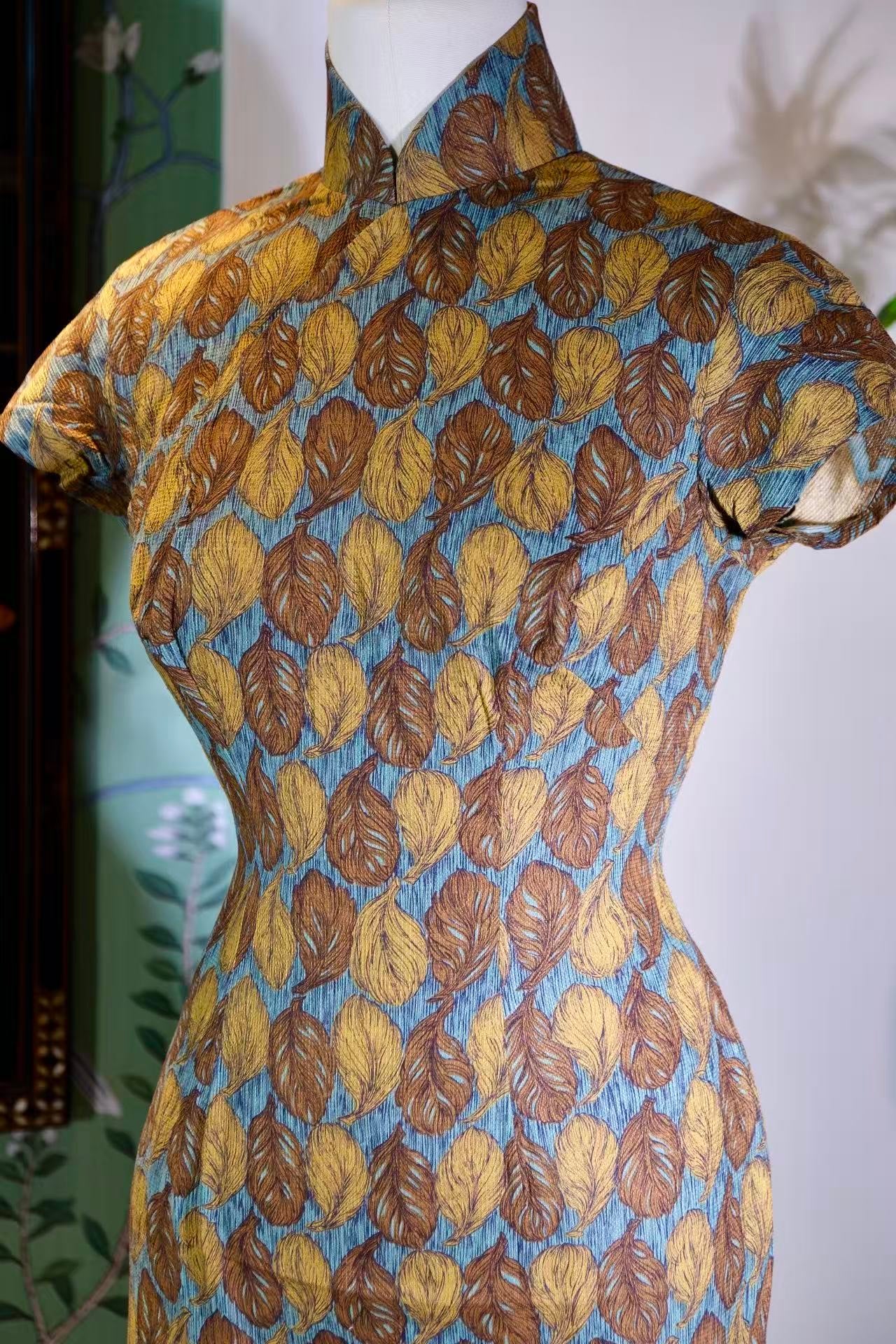
- 底色如海,静谧深邃:面料以一种独特的灰蓝色为底,
- 金叶纷飞,立体浮雕:衣身之上,密布着层层叠叠的秋叶图案。
- 构图韵律,密而不乱:叶片的排列看似随意,
二、 时光切片:香江畔的旗袍往事
追溯这件旗袍的身世,
彼时的香港,正处于战后经济复苏与文化交融的关键时期。
它产自当时的香港工坊,
三、 引经据典:衣香鬓影里的文学意象
“碧云天,黄叶地,秋色连波,波上寒烟翠。”——范仲淹《
这件旗袍上的图案,完美呼应了中国古典文学中对秋景的极致描绘。
在张爱玲的笔下,衣服是女人的“华丽的袍”。而这件旗袍,
四、 稀世珍藏:不可复制的艺术孤品
时至今日,这样一件集年代感、稀缺性、艺术性于一身的古董旗袍,
- 工艺绝版:那种模仿油画笔触的复杂提花工艺,
- 岁月留痕:它承载了七十载的岁月痕迹,
- 文化载体:它不仅是一件服饰,更是研究五十年代香港社会文化、
结语
这不仅仅是一件旗袍,这是一段可以穿在身上的历史,
Gilded Leaves & Old Hong Kong Dreams: An Artistic Appreciation of a 1950s Oil-Painting Texture Antique Qipao
Measurements / Size Guide:
Bust / Waist / Hips: 90/72/98 cm
Total Length: 96 cm
Detailed Description:
"A single leaf heralds autumn; a single garment preserves history."
In the long river of time, certain textiles carry the elegance and temperature of a specific era. This antique qipao, born in 1950s Hong Kong, is such a treasure—a masterpiece where time is frozen and art flows freely.
I. A Visual Feast: The Symphony of Oil-Painting Texture and Autumn Leaves
When you gaze upon this qipao, you are immediately captured by its powerful visual language.
-
A Deep, Silent Base: The fabric features a unique grey-blue base—neither a frigid ice blue nor a dull navy, but a blue with a vintage, muted filter. This hue evokes the early morning mist of Victoria Harbour in the 1950s, quiet and slightly detached, setting a sophisticated and restrained tone for the entire garment.
-
Gilded Leaves in Relief: The body is densely covered with layers of autumn leaves. Each leaf appears as if a painter had piled thick oil pigments onto a canvas. The interplay of golden yellow and ochre brown not only mimics the natural transition of autumn foliage but also creates a subtle, tactile relief on the fabric surface. As light shifts, the leaves seem to breathe and dance against the deep blue, like a grand autumnal carnival unfolding across the silk.
-
Rhythmic Composition: The arrangement of the leaves follows a rigorous aesthetic rhythm. Varied in size and spacing, the pattern offers the opulence of a blossom-covered ground without feeling suffocating. This intricate yet organized design is the perfect embodiment of the 1950s Hong Kong pursuit of combined "modernity" and "refinement."
II. A Slice of Time: Qipao Narratives by the Fragrant River
Tracing the lineage of this qipao, one can almost hear the bustle of 1950s Hong Kong streets. At that time, Hong Kong was at a crossroads of post-war recovery and cultural fusion. Socialites and master tailors from Shanghai migrated south, bringing the exquisite craftsmanship of old-school qipaos, while the influx of Western culture sparked innovation in textile design.
This garment is a product of that "East meets West" spirit. Produced in a Hong Kong workshop, its fabric boldly draws from the brushstrokes and palettes of Western Impressionism, yet applies them to the traditional medium of the Chinese qipao. The short-sleeve design and tailored fit preserve the subtle curves of the Oriental woman while adapting to the subtropical climate. It is more than a dress; it is the second skin of a modern lady traversing the Hong Kong night, witnessing the glamour of a golden age.
III. Cultural Allusions: Literary Imagery in Silk and Shadow
"Emerald clouds in the sky, yellow leaves on the ground; autumn colors ripple over the waves, and cold mists drift green above." — Fan Zhongyan, Sumuzhe
The patterns on this qipao perfectly echo the pinnacle of autumn descriptions in classical Chinese literature. The blue base is the vast sky and autumn water, while the golden leaves are the foliage that stains the forest. To wear it is to wear the expansive, slightly melancholic autumn mood of Fan Zhongyan’s poetry.
In the eyes of Eileen Chang, clothes were a woman’s "magnificent robe." This qipao is a paragon of her philosophy that "truth is found in the details." She famously wrote: "To those who cannot speak, clothes are a language; what one carries with them is a pocket drama." Every leaf on this qipao tells a story of the 1950s, of Hong Kong, and of an unknown woman with impeccable taste.
IV. A Rare Collection: An Irreplaceable Artistic Original
Today, an antique qipao that combines such a sense of era, scarcity, and artistry is exceedingly rare.
-
Lost Craftsmanship: The complex jacquard technique used to mimic oil-painting brushstrokes has nearly vanished in today’s efficiency-driven industrial production.
-
The Mark of Time: It carries seventy years of history. Every fiber is saturated with the "flavor of time," possessing a beauty of age that no modern reproduction can match.
-
A Cultural Carrier: It serves as a precious physical record for studying the social culture and aesthetic evolution of 1950s Hong Kong.
Conclusion
This is not just a qipao; it is wearable history and a flowing visual poem. When you wear it, you enter a century-spanning dialogue with a 1950s Hong Kong belle. It waits silently for a connoisseur who understands and cherishes it to continue its legend of beauty.
Share