深圳溯源
Couldn't load pickup availability
衣服尺寸:
胸围/腰围/臀围:92/68/98 厘米
衣长: 104 厘米
细节描述:
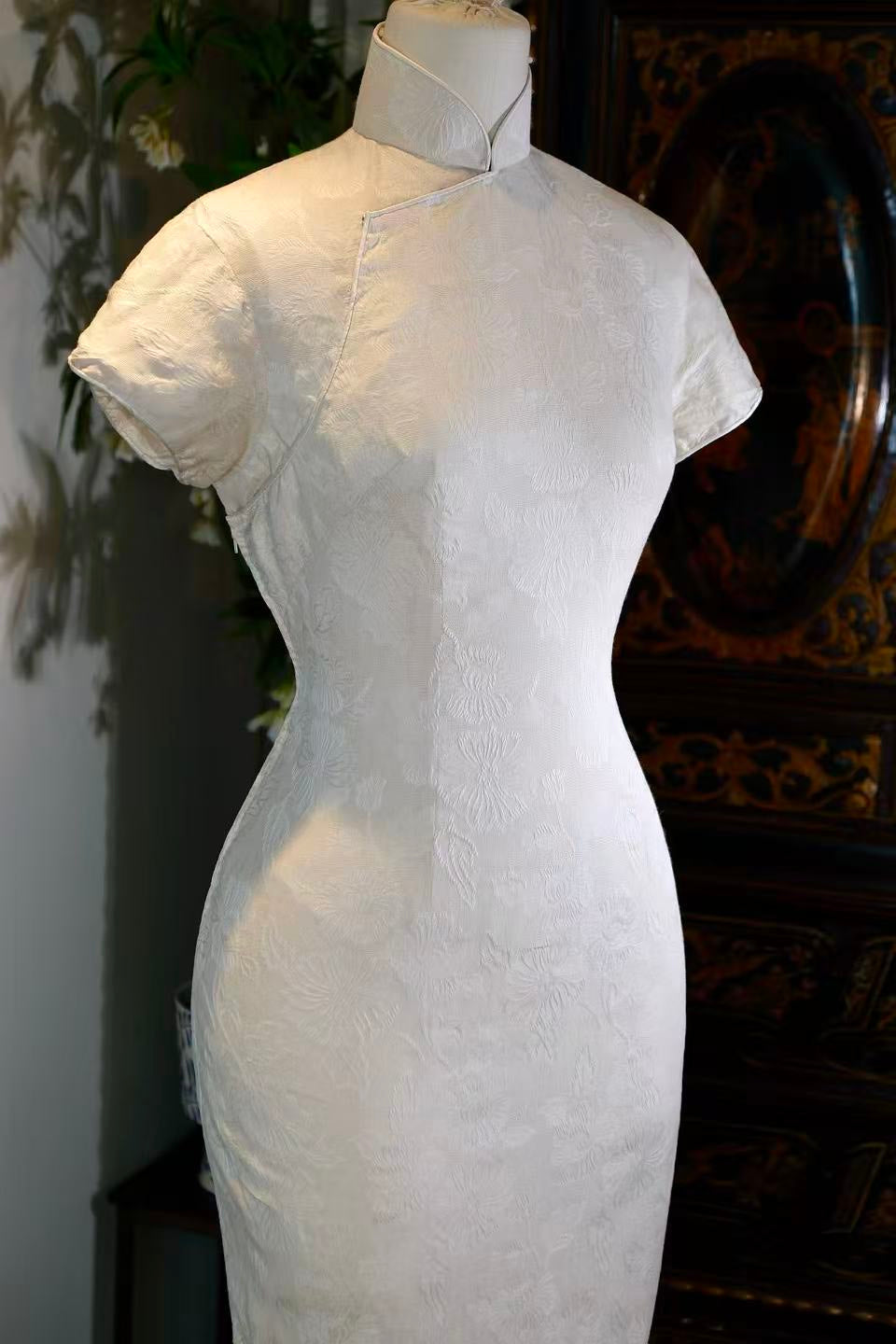
这是一件极具韵味的上世纪五十年代香港产素白花罗旗袍,
一、织物与纹样:素白花罗上的“繁花”低语
这件旗袍最摄人心魄之处,便是它通体采用的“花罗”织物。
- 材质之美:罗织物轻薄透气,触感凉爽,
- 纹样解读:仔细观察,布面上的花卉图案并非大红大紫的喧闹,
二、形制与剪裁:五十年代的“摩登”身姿
这件旗袍的剪裁,精准地定格了五十年代香港旗袍的独特风韵,
- 高领与斜襟:立领挺拔,线条干净利落,紧紧包裹颈部,
- 合体剪裁:这一时期的香港旗袍,深受海派旗袍影响,
- 长度适中:裙摆长度大约在小腿肚位置,行走间摇曳生姿,
三、古董衣的故事:旧时光里的海上花
这件素白花罗旗袍,不仅仅是一件衣物,更是一段流动的历史。
它诞生于五十年代的香港。那是一个特殊的年代,
它可能曾穿在一位书香门第的小姐身上,在浅水湾的夕阳下漫步,
四、引经据典:衣香鬓影间的文学意象
这件旗袍的风韵,让人不禁联想到张爱玲笔下的那些女子。
它的素雅,正如《红楼梦》中林黛玉的“质本洁来还洁去”,
五、稀缺性与艺术价值
在如今的古着市场上,保存如此完好、
- 工艺稀缺:花罗的织造工艺复杂,耗时耗力,
- 时代印记:它见证了香港从一个转口港向东方之珠转变的历史进程,
这不仅仅是一件旗袍,更是一件可以穿在身上的艺术品,
Measurements / Size Guide:
Bust / Waist / Hips: 92/68/98 cm
Total Length: 104 cm
Detailed Description:
This exquisite piece from 1950s Hong Kong is a masterpiece of refined Oriental aesthetics—a profound study in elegance and minimalist sophistication.
The most breathtaking feature of this qipao is its use of Luo-silk (Gauze). Unlike the smooth surface of standard silk, Luo is a specialized weaving craft utilizing a complex "leno weave" structure, creating a breathable, mesh-like texture where layers of floral patterns emerge and recede.
The Beauty of the Material: Historically the preferred summer fabric for royalty and socialites, Luo is light, airy, and cool to the touch. This "Floral Luo" represents the pinnacle of the craft; its intricate jacquard weaving demands immense labor and precision.
Deciphering the Patterns: Upon close inspection, the motifs are not gaudy or loud but consist of subtle tone-on-tone white lines. This "phantom" effect allows the blossoms to appear as if floating in a mist, creating a hazy, poetic atmosphere reminiscent of the classic line: "Faint fragrance floats in the twilight shadows of the moon." This restrained decorative style is the ultimate expression of the "Elegant School" of qipao aesthetics from the 1940s to the 1950s.
The tailoring of this garment perfectly captures the unique charm of 1950s Hong Kong style—a balance between traditional adherence and the absorption of Western aesthetics:
Mandarin Collar and Diagonal Closure: The high, stiff collar is clean and sharp, wrapping the neck to signify the modesty and dignity characteristic of Oriental women. The classic diagonal closure (Pankou) curves gracefully from the neckline, breaking the monotony of straight lines and highlighting the soft contours of the shoulders.
Tailored Fit: Deeply influenced by the Haipai (Shanghai) style but adapted for the humid Hong Kong climate, this era's cut moved away from the wide sleeves of the early Republic. It utilizes bold darting to emphasize the "S-curve" contrast between the bust, waist, and hips. The short sleeves provide a healthy, modern breath of fresh air.
Graceful Length: The hem falls near the mid-calf, creating a swaying motion as the wearer walks—a blend of classical reserve and the independent confidence of the modern woman.
This qipao is more than a garment; it is a piece of fluid history. Born in 1950s Hong Kong, it represents a special era when the prosperity and dreams of Shanghai migrated south, merging with Hong Kong’s burgeoning urban energy.
It might have belonged to a lady from a scholarly family, strolling along Repulse Bay at sunset or conversing in a Central District tea house. The pristine white symbolizes purity and high status, suggesting the wearer’s refined taste. In an era of vibrant colors, choosing pure white required not just courage, but the quiet confidence of "inner knowledge blooming into outward grace."
The aura of this qipao evokes the women depicted by Eileen Chang, who famously wrote: "To those who cannot speak, clothes are a language; what one carries with them is a pocket drama." This white Luo qipao is a silent play.
Its understated grace mirrors the character of Lin Daiyu from Dream of the Red Chamber—pure and principled. The shimmering gauze patterns evoke the ethereal beauty of the Book of Songs: "The reeds are gray and green; the white dew turns to frost." It possesses an enchanting, subtle charm that reveals itself in every movement.
In today's vintage market, a 1950s Hong Kong floral Luo qipao in such pristine condition is an extreme rarity—a "phoenix feather."
Craft Scarcity: The weaving of Luo is a time-consuming and complex art that few modern artisans have mastered. Every subtle blossom on this fabric showcases the peak of mid-century textile industry standards.
A Mark of the Era: It is a physical witness to Hong Kong's transformation from an entrepôt into the "Pearl of the Orient," capturing the unique cultural atmosphere of the "Paris of the East."
This is not just a qipao; it is wearable art—a poem written in silk. It quietly tells the story of an era, waiting for a true connoisseur to reawaken it and let the elegance of the past bloom once more in the light of the new age.