五十年代中期粉色提花织锦缎旗袍:织入经纬的香江旧梦
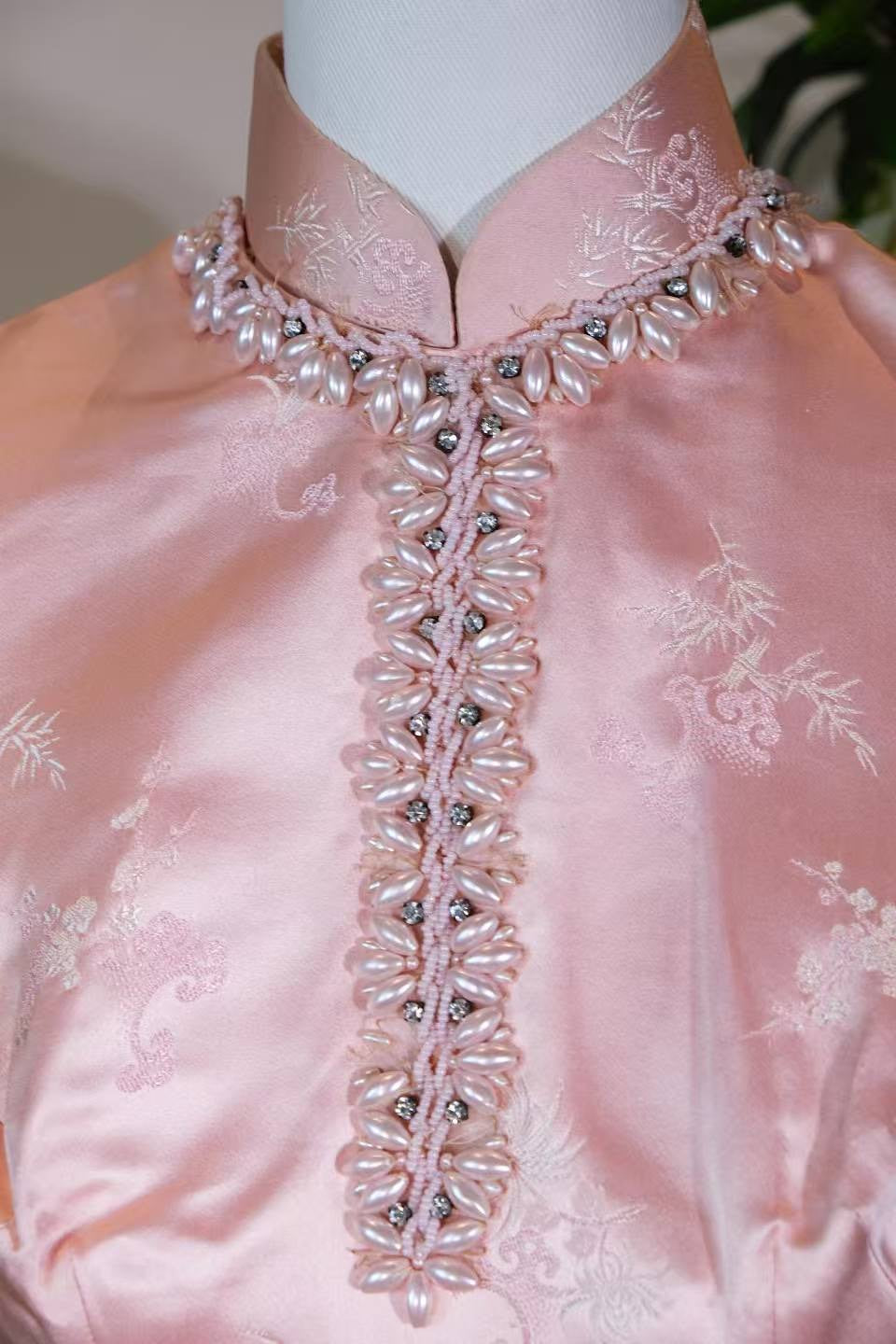
这件上世纪五十年代中期的粉色提花织锦缎旗袍,是香港制衣工艺鼎盛时期的珍稀遗存,其面料以真丝为基底,织入银线勾勒的折枝花卉与海浪纹样,暗纹在光线下流转如诗,恰似《红楼梦》中“软烟罗”般“远看似烟,近观如画”的意境。领口与袖口以法式珠绣技法缀满米珠与水钻,形成繁复而精致的叶脉纹饰,每一颗珠粒的排列皆遵循传统“盘金绣”章法,既保留中式衣裳的端庄气韵,又融入了战后香港东西方审美交融的摩登气息。
旗袍的剪裁采用“立裁肩开”经典结构,侧摆开衩至膝,线条流畅贴合人体,体现五十年代“收腰显臀”的时尚审美;提花图案中可见兰草、灵芝与海浪穿花等传统吉祥纹样,暗合《诗经·卫风》“爰有树檀,其下维榖”的雅致意趣,亦呼应了当时香港社会对“福禄寿喜”的民俗祈愿。珍珠与水钻的组合运用,在保留东方含蓄之美的同时,亦流露出殖民地时期西方装饰艺术(Art Deco)的影响,堪称“中体西用”美学的实物典范。
此类香港产古董旗袍存世量极罕,因五十年代香港制衣业仍以定制为主,批量生产尚未普及,且织锦缎面料成本高昂,多为名门望族或影剧明星订制。其工艺复杂度与艺术完成度,使其超越日常衣着,成为承载时代记忆与工艺文明的“移动画卷”。正如沈从文在《中国古代服饰研究》中所言:“衣裳者,所以别礼仪,彰华美,亦所以记时代。”此袍不仅是一件衣,更是一段被织入经纬的香江旧梦,其稀缺性与艺术价值,足以在古董服饰收藏史上占据独特席位。
1950s Hong Kong Bespoke Pink Silk Brocade Cheongsam: A Woven Dream of the Pearl of the Orient
The Poetics of Fabric and Light This pink silk brocade cheongsam, originating from the mid-1950s, is a rare vestige of Hong Kong’s golden age of garment making. Its foundation is a premium silk base, interwoven with silver threads that trace "folded-branch" floral motifs and rolling wave patterns. Under shifting light, the hidden textures flow like poetry, evoking the ethereal "Soft Smoke Silk" (Ruan Yan Luo) described in Dream of the Red Chamber—an aesthetic that appears "like mist from afar, and like a painting up close."
A Confluence of East and West Craftsmanship The collar and cuffs are lavishly embellished using French beadwork techniques, featuring seed beads and rhinestones that form intricate leaf-vein patterns. The arrangement of each bead follows the traditional logic of "Gold-thread Couching" (Panjin Embroidery), preserving the dignified aura of Chinese attire while infusing it with the modern, cosmopolitan spirit of post-war Hong Kong.
Tailoring and Symbolic Language The garment utilizes the classic "draping with shoulder opening" (Lichai Jiankai) structure. It features a fluid silhouette that contours to the body, reflecting the 1950s aesthetic of a cinched waist and emphasized hips, with side slits reaching the knee. The jacquard patterns incorporate auspicious symbols such as orchids, lingzhi mushrooms, and waves—hidden echoes of the elegant verses from The Book of Songs. This combination of pearls and rhinestones showcases the influence of Western Art Deco on Eastern modesty, standing as a physical manifesto of the "Chinese Essence, Western Application" (Zhong Ti Xi Yong) philosophy.
A Moveable Scroll of Civilization Surviving Hong Kong antique cheongsams of this caliber are exceptionally rare. In the 1950s, the industry was defined by bespoke tailoring rather than mass production. Due to the exorbitant cost of silk brocade, such pieces were commissioned exclusively by prominent families or cinema stars. Its technical complexity and artistic maturity elevate it beyond mere clothing into a "moveable scroll" of historical memory. As the scholar Shen Congwen noted in Research on Ancient Chinese Costumes: "Clothing serves to distinguish rituals and manifest beauty, but also to record the era." This robe is not merely a garment; it is a fragment of the "Old Hong Kong Dream" woven into silk, deserving a unique place in the history of antique fashion collection.