深圳溯源
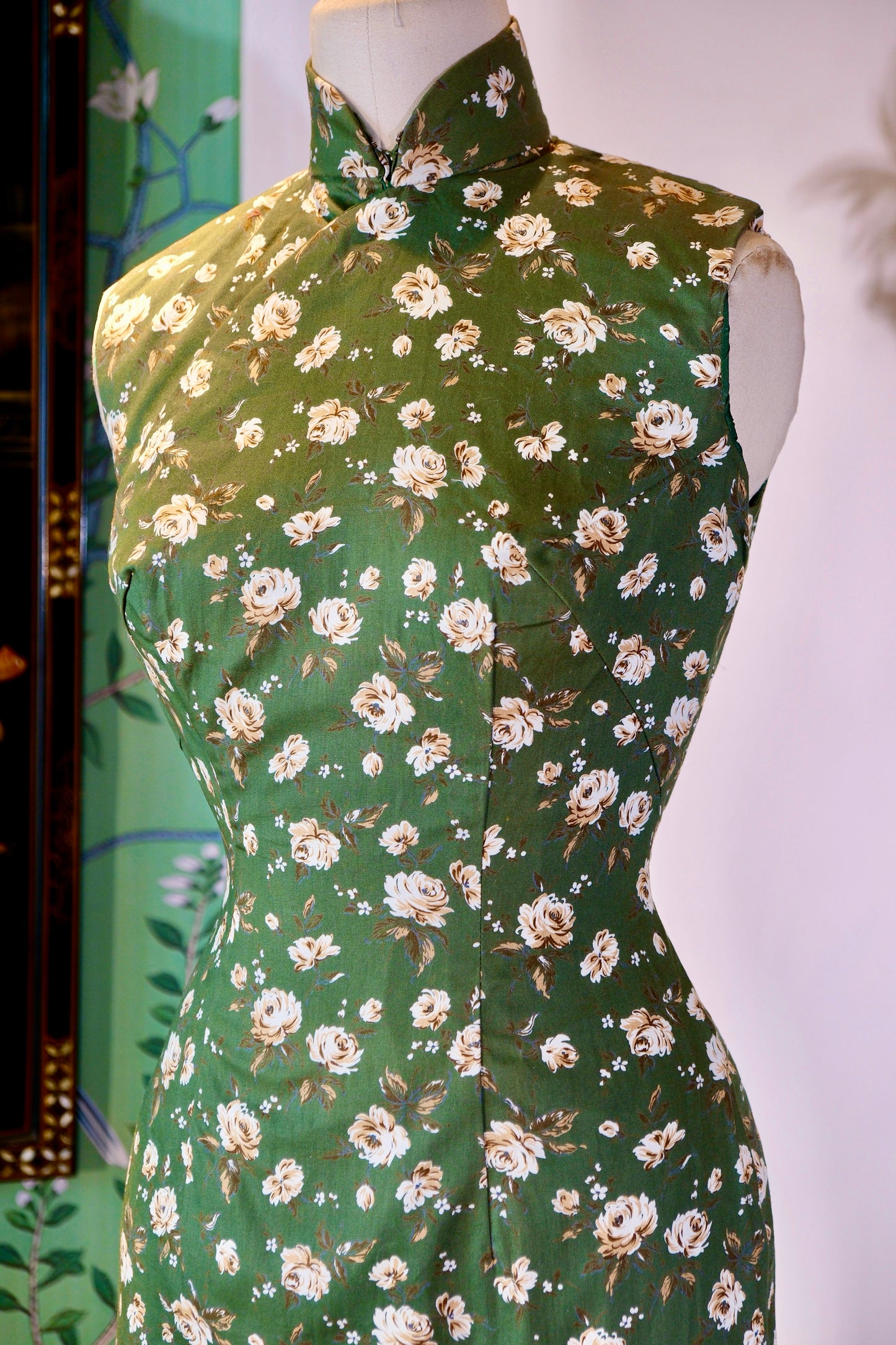
60年代 - 上世纪六十年代台湾白玫瑰碎花古董旗袍 | 1960s - 1960s Taiwan Vintage Qipao: White Roses and Floral Sprigs
60年代 - 上世纪六十年代台湾白玫瑰碎花古董旗袍 | 1960s - 1960s Taiwan Vintage Qipao: White Roses and Floral Sprigs
Couldn't load pickup availability
上世纪六十年代台湾白玫瑰碎花古董旗袍
衣服尺寸:
胸围/腰围/臀围:88/62/88 厘米
衣长:105 厘米
细节描述:
一、图案描述
此件旗袍以“苍绿”为底色,绘就了一幅“繁花似锦”的春日图景。其纹样并非传统的大红大紫,而是选用了素雅的“白玫瑰”与“米色碎花”相交织。
- 主花:白玫瑰花瓣层叠,晕染细腻,既有西式花卉的写实感,又具中式没骨画的写意韵,仿佛在绿波中浮沉。
- 辅纹:其间点缀着细碎的米色小花与褐色枝叶,如同“疏影横斜水清浅”,打破了底色的沉静,营造出“乱花渐欲迷人眼”的灵动生机。
- 布局:花卉分布疏密有致,既无满铺的压迫感,亦无留白的孤寂感,恰似“草木蔓发,春山可望”,呈现出一种平衡的视觉韵律。
二、古董衣的故事
这件旗袍诞生于上世纪六十年代的宝岛台湾,那是一个新旧交替、中西交融的特殊年代。
- 时代背景:彼时,旗袍仍是女性日常着装的首选,但剪裁已悄然西化——收腰更紧,线条更贴合人体曲线,展现出女性自信、独立的新风貌。这件旗袍的“无袖”设计,正是对传统长袖旗袍的突破,呼应了六十年代全球女性解放的浪潮。
- 工艺细节:立领挺括,侧缝开衩至膝,行走时裙摆微扬,既保留了“东方含蓄”的韵味,又暗含“西式性感”的张力。面料轻薄透气,适合台湾湿热的气候,可见当时裁缝对“实用”与“美观”的精准拿捏。
- 稀缺性:如今,六十年代的台湾古董旗袍存世极少,尤以“碎花”题材更为罕见。彼时台湾纺织业刚起步,此类印花面料多依赖进口或本土小作坊定制,产量极低。这件旗袍历经半世纪仍色泽鲜亮、版型完整,实属“沧海遗珠”。
三、艺术风格与稀缺性
- 艺术风格:此旗袍融合了“海派旗袍”的精致与“台湾本土”的清新,既有张爱玲笔下“旗袍是女人的第二层皮肤”的贴合感,又有台湾“乡土文学”中“自然与人文共生”的质朴美。其图案设计,堪称“中西合璧”的典范——西式花卉的写实技法,搭配中式纹样的布局哲学,呈现出“和而不同”的美学境界。
- 稀缺性:古董旗袍的价值,不仅在于其“物”的稀有,更在于其“史”的承载。这件旗袍,是六十年代台湾女性生活的“活化石”——它见证了那个年代的时尚变迁、工艺水平,乃至社会风气的开放。如今,能寻得一件如此完整、图案如此独特的古董旗袍,无异于“淘得一段凝固的历史”。
四、结语
“衣以载道,服以传情。”这件六十年代台湾碎花古董旗袍,不仅是一件衣物,更是一段时光的缩影、一种文化的传承。它静静地立在那里,仿佛在诉说着那个年代的“风花雪月”与“人间烟火”。若你与它有缘,不妨将它珍藏,让这份“穿越时空的美”,在你的衣橱中继续绽放。
1960s Taiwan Vintage Qipao: White Roses and Floral Sprigs
Measurements / Size Guide:
Bust / Waist / Hips: 88/62/88 cm
Total Length: 105 cm
Detailed Description:
I. Pattern Description
This Qipao features a "Pale Verdant" base, painting a vibrant "Blooming Splendor" scene of spring. The motif eschews traditional bold reds and purples, opting instead for an elegant interplay of "White Roses" and "Beige Floral Sprigs."
-
Primary Motif: The white rose petals are intricately layered with delicate shading, blending Western realism with the ethereal "Boneless" (Mogu) technique of Chinese painting, appearing as if floating upon green waves.
-
Secondary Patterns: Interspersed are tiny beige blossoms and brownish foliage, reminiscent of the line "sparse shadows slant across the clear, shallow water." This breaks the stillness of the base color, creating a lively vitality where "wild flowers almost blur the eyes."
-
Layout: The floral distribution is perfectly balanced—neither crowded nor lonely. It echoes the sentiment "plants spread and grow; the spring mountains are in sight," presenting a rhythmic visual harmony.
II. The Story of the Vintage Garment
Born in 1960s Taiwan, this Qipao hails from a unique era of transition and East-West fusion.
-
Historical Context: At that time, the Qipao remained the premier choice for daily wear, yet silhouettes were quietly Westernizing—with tighter waists and contours that hugged the feminine form, reflecting a new spirit of confidence and independence. The "sleeveless" design was a breakthrough from traditional long sleeves, echoing the global wave of women's liberation in the 1960s.
-
Craftsmanship Details: The stiff mandarin collar and side slits to the knee allow the hem to sway gracefully during movement, preserving "Oriental modesty" while hinting at "Western sensuality." The fabric is light and breathable, tailored for Taiwan’s humid climate—a testament to the tailor’s precise balance of utility and beauty.
-
Rarity: Today, 1960s Taiwanese vintage Qipaos are extremely scarce, especially those featuring "floral sprig" themes. As Taiwan’s textile industry was then in its infancy, such printed fabrics relied on imports or small-scale local commissions, resulting in very low yields. That this piece remains vibrant and structurally intact after half a century makes it a true "pearl of the sea."
III. Artistic Style and Scarcity
-
Artistic Style: This Qipao merges the sophistication of "Haipai" (Shanghai-style) with the freshness of "Taiwanese Locality." It captures Eileen Chang’s notion that "the Qipao is a woman's second skin" while reflecting the "symbiosis of nature and humanity" found in Taiwanese nativist literature. Its design is a paragon of East-West synthesis—Western botanical realism paired with the compositional philosophy of Chinese patterns.
-
Scarcity: The value of a vintage Qipao lies not just in its physical rarity, but in its historical weight. This garment is a "living fossil" of 1960s Taiwanese life—witnessing fashion shifts, artisanal heights, and the opening of social mores. Finding such a complete and uniquely patterned piece is akin to "unearthing a frozen segment of history."
IV. Conclusion
"Clothing carries the Way; garments convey emotion." This 1960s Taiwanese floral Qipao is more than an item of dress; it is a miniature of an era and a vessel of cultural heritage. Standing silently, it speaks of the "romance and daily life" of yesteryear. Should you find a connection with it,
Share