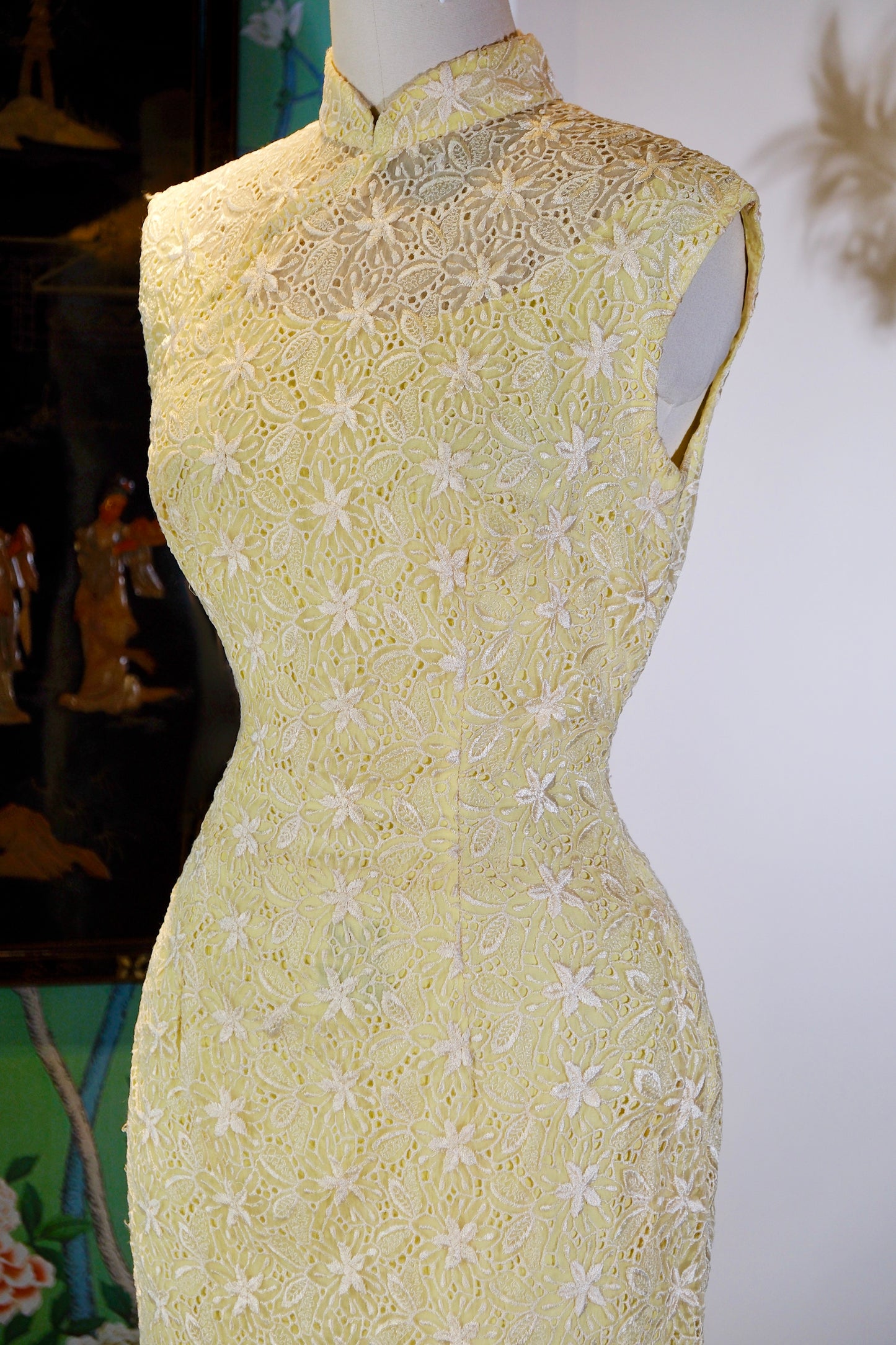
上世纪六十年代法国进口机绣蕾丝香港旗袍
衣服尺寸:
胸围/腰围/臀围:90/68/94 厘米
衣长:98 厘米
细节描述:
此件旗袍通体覆盖着繁复而精致的机绣蕾丝,其图案主体为经典的“满地花”布局。细观之,可见朵朵五瓣小花与缠枝卷叶纹样相互勾连,形成连绵不绝的锦绣图景。花朵形态简约而典雅,似梅又似杏,暗合“疏影横斜水清浅”的东方意趣;枝叶则以流畅的曲线勾勒,既显生机又不失规整,。蕾丝的镂空效果与内衬的淡黄色底料形成微妙的层次感,光影流转间,仿佛有暗香浮动。
这件诞生于上世纪六十年代香港的机绣蕾丝旗袍,是东西方文化交融与时代变迁的缩影。彼时的香港,作为远东的“东方之珠”,正经历着经济的腾飞与文化的碰撞。旗袍,这一传统中式女装,在保留立领、斜襟等经典元素的同时,亦在面料与剪裁上大胆创新。机绣蕾丝的引入,便是对欧洲维多利亚时期蕾丝工艺的借鉴与本土化改造,它既满足了当时女性对现代感与精致度的追求,又维系了东方服饰的含蓄与温婉。
其艺术风格可概括为“新古典主义”与“现代主义”的交织。一方面,它承袭了明清以来中国服饰对吉祥纹样的偏好,以花卉寓意美好;另一方面,其无袖设计与修身剪裁,则体现了六十年代全球范围内女性解放与身体意识觉醒的潮流。正如张爱玲在《更衣记》中所言:“时装的日新月异并不一定表现活泼的精神与新颖的思想。恰巧相反,它可以代表呆滞;由于其他活动范围内的失败,所有的创造力都流入衣服的区域里去。”这件旗袍,正是那个时代女性在社会角色与自我表达之间寻求平衡的物证。
尤为珍贵的是,此件旗袍保存完好,蕾丝未见明显破损或泛黄,其淡黄色调依旧清丽脱俗。在快节奏的成衣工业时代,如此一件凝聚了特定历史时期工艺与审美的古董旗袍,已属凤毛麟角。它不仅是一件衣物,更是一段凝固的时光,诉说着那个年代香港的繁华与风雅,以及东方女性独有的韵味与风骨。
A 1960s Hong Kong Qipao in French Imported Machine-Embroidered Lace
Measurements / Size Guide:
Bust / Waist / Hips: 90/68/94 cm
Total Length: 98 cm
Detailed Description:
This qipao is entirely enveloped in intricate and exquisite machine-embroidered lace, featuring a classic "all-over floral" (Man Di Hua) layout. Upon close inspection, one can see delicate five-petaled blossoms interlaced with winding vine and leaf patterns, creating a continuous and splendid pictorial landscape. The floral forms are simple yet elegant, resembling both plum and apricot blossoms, subtly echoing the Oriental poetic sentiment of "sparse shadows slanting across clear, shallow water." The branches and leaves are sketched with fluid curves, conveying a sense of vitality while maintaining a disciplined regularity. The openwork effect of the lace creates a subtle layering with the pale-yellow lining; as light and shadow shift across the fabric, it evokes the sensation of a "faint fragrance floating" in the air.
Born in 1960s Hong Kong, this machine-embroidered lace qipao is a microcosm of the fusion between Eastern and Western cultures and the shifting tides of the era. At that time, Hong Kong, known as the "Pearl of the Orient," was experiencing economic takeoff and a collision of cultures. As a traditional Chinese garment, the qipao boldly innovated in fabric and tailoring while preserving classic elements such as the standing collar and slanted closure. The introduction of machine-embroidered lace was a localized adaptation of European Victorian lace craftsmanship; it satisfied the contemporary woman's pursuit of modernity and sophistication while maintaining the traditional reserve and gentleness of Oriental attire.
Its artistic style can be summarized as the interweaving of "Neoclassicism" and "Modernism." On one hand, it inherits the preference for auspicious motifs in Chinese dress since the Ming and Qing Dynasties, using flowers to symbolize beauty and prosperity. On the other hand, its sleeveless design and form-fitting cut reflect the global trend of 1960s female liberation and the awakening of body consciousness. As Eileen Chang noted in A Record of Changing Clothes: "The rapid changes in fashion do not necessarily represent a lively spirit or novel thoughts. On the contrary, they can represent stagnation; due to failures in other spheres of activity, all creativity flows into the realm of clothing." This qipao is physical evidence of women in that era seeking a balance between social roles and self-expression.
Particularly precious is the impeccable preservation of this piece; the lace shows no significant damage or yellowing, and its pale-yellow tone remains fresh and refined. In an age of fast-paced ready-to-wear industry, an antique qipao that condenses the craftsmanship and aesthetics of a specific historical period is a true rarity. It is not merely a garment but a moment of solidified time, narrating the prosperity and elegance of old Hong Kong and the unique charm and character of the Oriental woman.