深圳溯源
Couldn't load pickup availability
如果说之前的香芋紫蕾丝是Woo女士的“晚宴华章”,
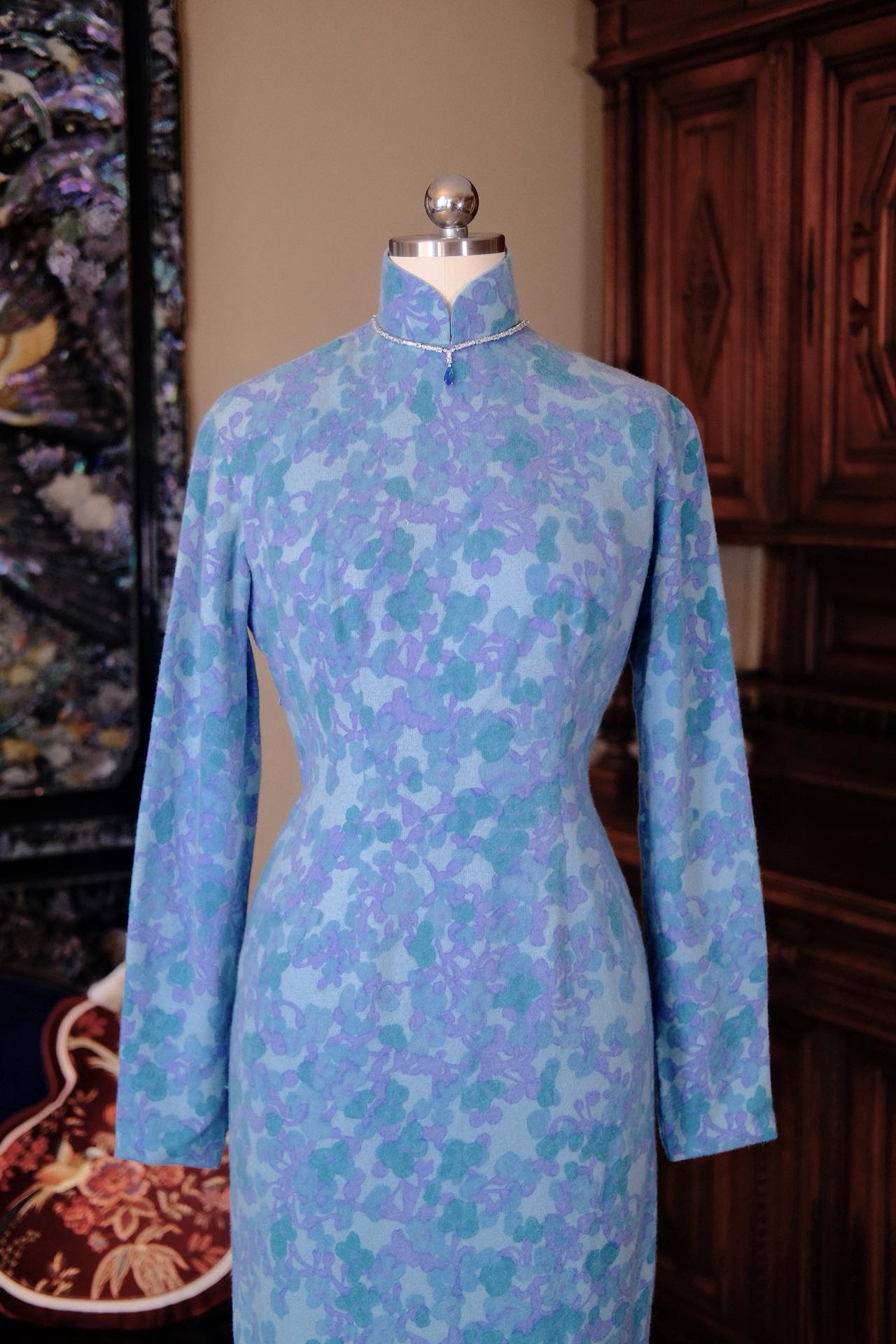
一、视觉的诗篇:水彩色晕染与小山羊绒的触感
这件旗袍最摄人心魄的,是其如梦似幻的色彩与材质。
- 色彩与图案:它并非传统的工笔花鸟,而是一种极具现代感的“
- 面料:这并非寻常的丝绸或棉麻,而是极为珍贵的小山羊绒(
- 剪裁与细节:
- 廓形:经典的修身长款旗袍,线条流畅,完美贴合身形。长袖设计,
- 领口:标准的旗袍立领,领口处点缀着一串细密的钻石项链,
二、衣以载道:从欧洲牧场到东方衣橱的奢华之旅
这件旗袍的故事,始于欧洲的牧场,终于香港的裁缝铺。
小山羊绒,被誉为“纤维中的钻石”,其产量极为稀少,价格昂贵。
香港的裁缝们,以其精湛的技艺,完美地完成了这一挑战。
我们可以想象,在六十年代温哥华的某个寒冷冬日,
这件小山羊绒印花旗袍,是Woo女士个人史诗中最温柔的一章,
If the previously celebrated taro-purple lace was Ms. Woo’s dramatic "evening concerto," this baby cashmere printed qipao represents her serene "soliloquy" on a winter afternoon or an early spring morning. Free from the intricacy of lace and the ostentation of metallic threads, it interprets the ultimate "Old Money" aesthetic of a 1960s elite global citizen with a near-Zen simplicity and warmth—low-key, extraordinarily comfortable, yet whispering of peerless taste in every thread.
The most spellbinding aspect of this piece is its dreamlike harmony of poetic coloration and decadent material:
The Impressionist Print: Moving away from the meticulous realism of traditional Chinese Gongbi florals, the textile utilizes a highly modernist "watercolor bleed" print technique. Across a serene, pale-blue base, soft washes of violet and viridian green dissolve into one another like ink on wet paper, forming abstract botanical silhouettes. The composition immediately evokes the sweeping, luminous light of French Impressionist master Claude Monet’s Water Lilies. In the 1960s, this abstract approach was a pioneer fashion statement, discarding concrete symbols for a fresh, otherworldly lyricism.
The Material Choice: This is no ordinary silk, cotton, or linen; it is crafted from incredibly precious Baby Cashmere. Close-up inspection reveals the exquisite, microscopic downy nap on its surface. Soft as passing clouds and providing unparalleled insulation, it represents the absolute pinnacle of cold-weather luxury. Applying baby cashmere to the rigid structural requirements of a qipao was an extraordinary rarity in the 1960s, highlighting Ms. Woo’s uncompromising demand for personal comfort.
Silhouettes and Accents:
The Line: A classic, long-line, form-fitting silhouette characterized by fluid contours that follow the natural line of the body. The full-length sleeves taper gracefully at the wrist, ensuring a clean, sharp posture.
The Jewels: Framing the traditional standing collar is a delicate, integrated row of diamonds culminating in a brilliant sapphire pendant. The royal blue of the stone echoes the viridian and purple washes of the print, showcasing Ms. Woo’s calculated brilliance in accessorizing.
The history of this qipao begins in the pristine pastures of the West and concludes in the legendary drafting rooms of Hong Kong.
Baby cashmere, historically dubbed the "diamond of fibers," yields incredibly low annual volumes per animal, making it an elite luxury. During her European travels, Ms. Woo was captivated by the absolute softness of this specialized textile and selected it for her private archives. However, transforming a soft, plush knit or woven wool into a sharply tailored, structurally precise oriental qipao presented a formidable engineering challenge to any dressmaker.
Hong Kong’s master tailors achieved this feat with absolute aplomb. Weaponizing the natural drape and weight of the cashmere, they sculpted a continuous, sweeping skirt line while maintaining a razor-sharp, custom-contoured fit through the torso. This marriage of ultra-premium European material and Eastern structural tailoring yielded a garment of singular distinction.
One can easily picture Ms. Woo on a frosty mid-century evening in Vancouver or Toronto, arriving at a high-profile philanthropic gala swathed in a heavy mink coat. Upon stepping inside and shedding her outerwear, she would reveal this fluid, water-like cashmere qipao. It stood as a masterful proclamation of her personal philosophy: retaining absolute inner peace, comfort, and quiet poise amid the roaring, clamorous world.
From a textile conservation and curatorial standpoint, this garment is a legendary anomaly:
The Rarity of Cashmere Printing: In the 1960s, precision textile printing on ultra-fine animal fibers like cashmere was in its industrial infancy. Unlike silk, which accepts dyes with ease, printing abstract watercolors onto a raised cashmere nap required specialized, low-yield European milling techniques, ensuring this fabric was produced in highly restricted quantities.
The Extinction of Heavy-Fiber Qipao Tailoring: The specific skill set required to draft, cut, and stabilize heavy or elastic luxury wools into the precise, unyielding lines of a high-collared mandarin silhouette without puckering is a lost art. Modern fast fashion relies on synthetic stretch blends; this purely structural manipulation of baby cashmere is a vanished craft.
A Monument to Quiet Luxury: It chronicles a specific sociopolitical movement among pioneering diasporic Chinese elites who traveled the globe, choosing to move past loud, reflective materials like brocade or gold weave toward a deeply internalized, tactile luxury that prioritized the wearer's physical experience over public display.
This baby cashmere printed qipao represents the gentlest chapter of Ms. Woo’s personal epic, as well as a brilliant pearl treasured by time in the fashion history of 1960s Hong Kong. It reminds us that true luxury lies not in outward ostentation, but in inner comfort and refined taste.