深圳溯源
Couldn't load pickup availability
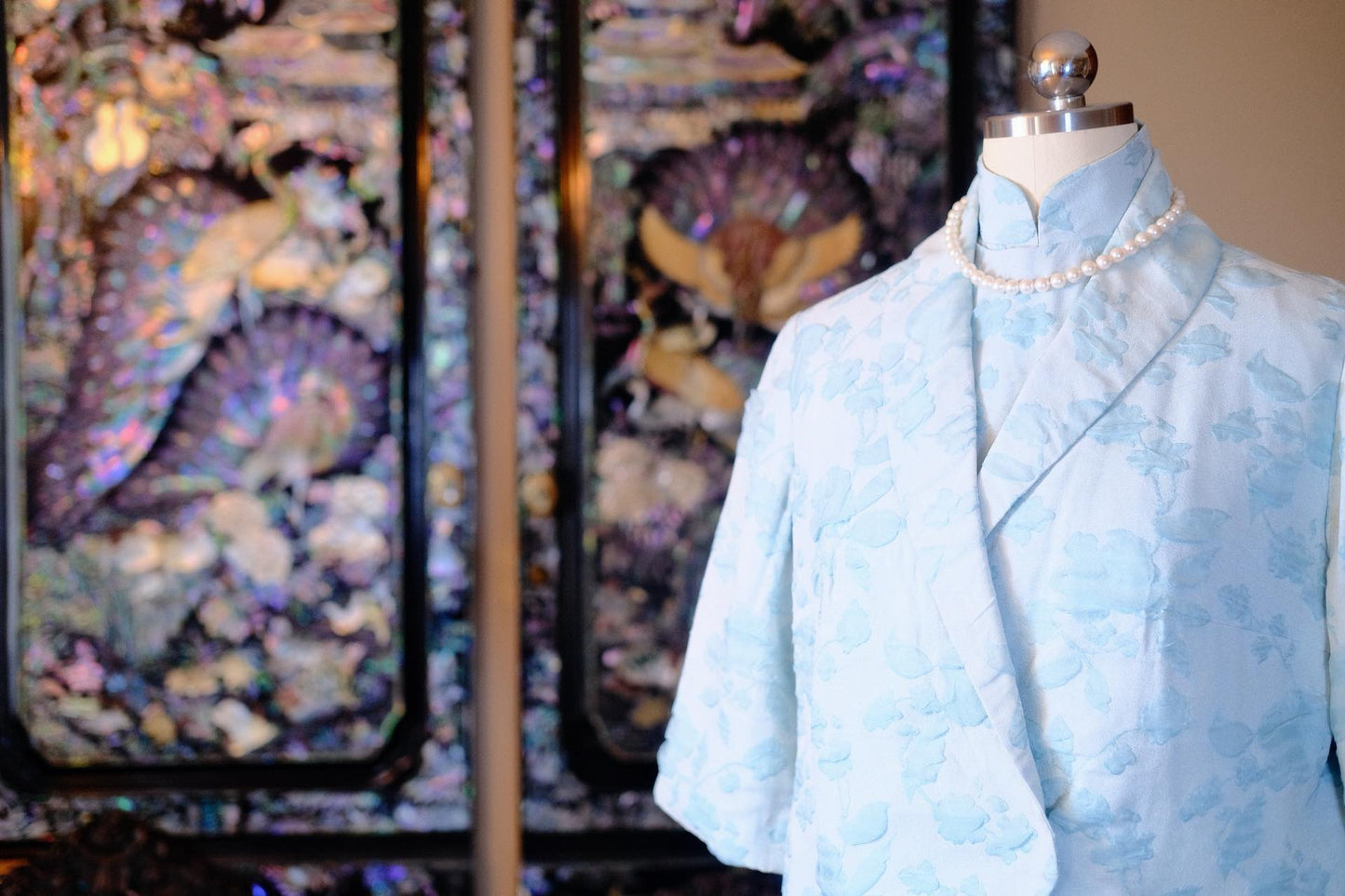
一、面料:云水间的浮雕诗学
这套旗袍套装的面料,是上世纪六十年代意大利进口的泡泡绉。
- 肌理:在纯净的底色上,浅蓝色的花卉纹样如同雨后初霁的浮雕,
- 色彩:蓝白相间,清雅如宋代汝窑的“天青色”,
二、形制:中西合璧的“海派”变奏
套装由无袖立领旗袍与翻领外套组成,是典型的六十年代香港“
- 内搭旗袍:采用无袖、肩开、无盘扣的极简设计,立领挺括,
- 外搭外套:翻领设计,借鉴了西方套装的廓形,
三、故事:Woo女士的“双城记”
这套衣服的主人Woo女士,是加拿大Super Store的老板之一,亦是六十年代“全球买手”的先驱。
- 在六十年代,像Woo女士这样的海外华商,每年必赴欧洲(
- 这套衣服就是这种生活方式的见证:
四、稀缺性:消逝的“港产高定”生态
如今这套套装的珍贵,不仅在于面料与工艺,
- 六十年代的香港,曾有数百家旗袍工坊,师傅们以“一人一版”
- 然而随着成衣工业的崛起,这种“欧洲面料+香港工艺”
这件泡泡绉旗袍套装,不仅是一件衣服,更是一段历史的见证,
The structural foundation of this two-piece ensemble resides in a premium, vintage-grade cloqué (Paopaozhou) fabric imported from Italy during the 1960s. Diverging sharply from traditional flat or slick woven silks, this material possesses a dramatic, low-relief texture that functions like an organic sculpture draped gracefully over the posture:
The Dimensional Texture: Set against a pure, crisp foundation, pale blue botanical motifs rise delicately from the surface like fresh low-relief plaster work. This distinctive "puckered" or blistered effect is engineered during the weaving process by manipulating structural tension differences between the warp and weft threads, gifting the textile a breathable, airy volume and an exceptional tactile hand-feel.
The Palette: The interlocking composition of pale blue and crisp white evokes the revered, luminous "sky-blue" (Tianqing) glazes of Song Dynasty Ru ware, capturing the atmospheric depth of a landscape clearing after rain. This low-saturation color theory stands out as remarkably serene against the otherwise loud, saturated trends of 1960s high fashion, beautifully personifying historical aesthetics of understated elegance over superficial ornament.
The structural framework of this ensemble comprises an integrated sleeveless qipao paired with a coordinating lapelled jacket—representing the absolute pinnacle of the iconic 1960s Hong Kong "qipao suit" format:
The Foundation Qipao: The interior gown adopts a radically minimalist, sleeveless design featuring a side-shoulder opening that completely sets aside traditional decorative frog closures in favor of clean, continuous structural lines. The standing mandarin collar remains impeccably crisp and upright, drawing a smooth, unbroken line that contours the silhouette flawlessly. This streamlined approach to pattern drafting reflects the mid-century shift among intellectual women who demanded structural simplicity over ornamental noise.
The Coordinating Outerwear: The matching tailored jacket introduces a sophisticated, Western-inspired straight-cut silhouette, featuring sharp lapels that establish a sophisticated geometric dialogue with the high standing collar of the qipao beneath. This layered juxtaposition multiplies the ensemble's formal weight while maintaining a highly professional, crisp composure—beautifully balancing a structured, understated Eastern composure with absolute Western independence.
The custodian of this artifact, Ms. Woo, operated as a co-director of a major Canadian enterprise, standing as a definitive visionary within the early network of global luxury textile procurement:
During the 1960s, elite international Chinese merchants made regular, calculated sourcing journeys across Europe—specifically targeting the premier heritage mills of Italy and France—to secure advanced, trend-setting fabric volumes. These precious materials were subsequently routed back to Hong Kong, where master tailors transformed the raw textiles into bespoke, one-of-a-kind garments.
This specific ensemble stands as an absolute historical marker of that exact transoceanic lifestyle: the Italian cloqué records the pinnacle of European material luxury; the precision-engineered custom tailoring tracks the absolute mastery of Hong Kong's artisan craftsmanship; and its ultimate presentation within the corporate and cultural landscapes of Canada highlights a profound narrative of identity. As the fashion historian Anne Hollander noted, "Dress is an extension of the body." Ms. Woo’s selection functions beautifully as a material expression of personal refinement and a concrete manifestation of cultural authority on the global stage.
The modern rarity of this two-piece set extends far beyond its raw material worth or its unique mineral aesthetics; it stands as a pristine archive of a highly specialized, completely vanished sartorial ecosystem:
During the 1960s, Hong Kong’s custom apparel trade thrived across hundreds of master ateliers who engineered garments based on a strict "one person, one pattern" blueprint philosophy, where senior artisans meticulously draped rare European imported fabrics to match individual anatomical requirements down to the millimeter.
With the subsequent global ascension of mechanized, mass-market ready-to-wear production scales, this resource-heavy, time-intensive synthesis of European textile technology and custom Hong Kong craftsmanship permanently dissolved. Archival records from the Hong Kong textile industry indicate that during this entire decade, the total volume of premium Italian cloqué imported to the region amounted to fewer than one hundred bolts, allocated almost exclusively to high-stakes custom commissions. Finding a fully intact, meticulously preserved matching set from this limited pool represents an exceptionally rare historical discovery. It survives as a peerless, one-of-a-kind monument—a living fragment of fashion history, recording the romance, industry, and uncompromising artistry of a golden era.