深圳溯源
Couldn't load pickup availability
衣服尺寸:
胸围/腰围/臀围:90/78/94 厘米
衣长:83 厘米
细节描述:
一、图案:几何与自然的诗意交响
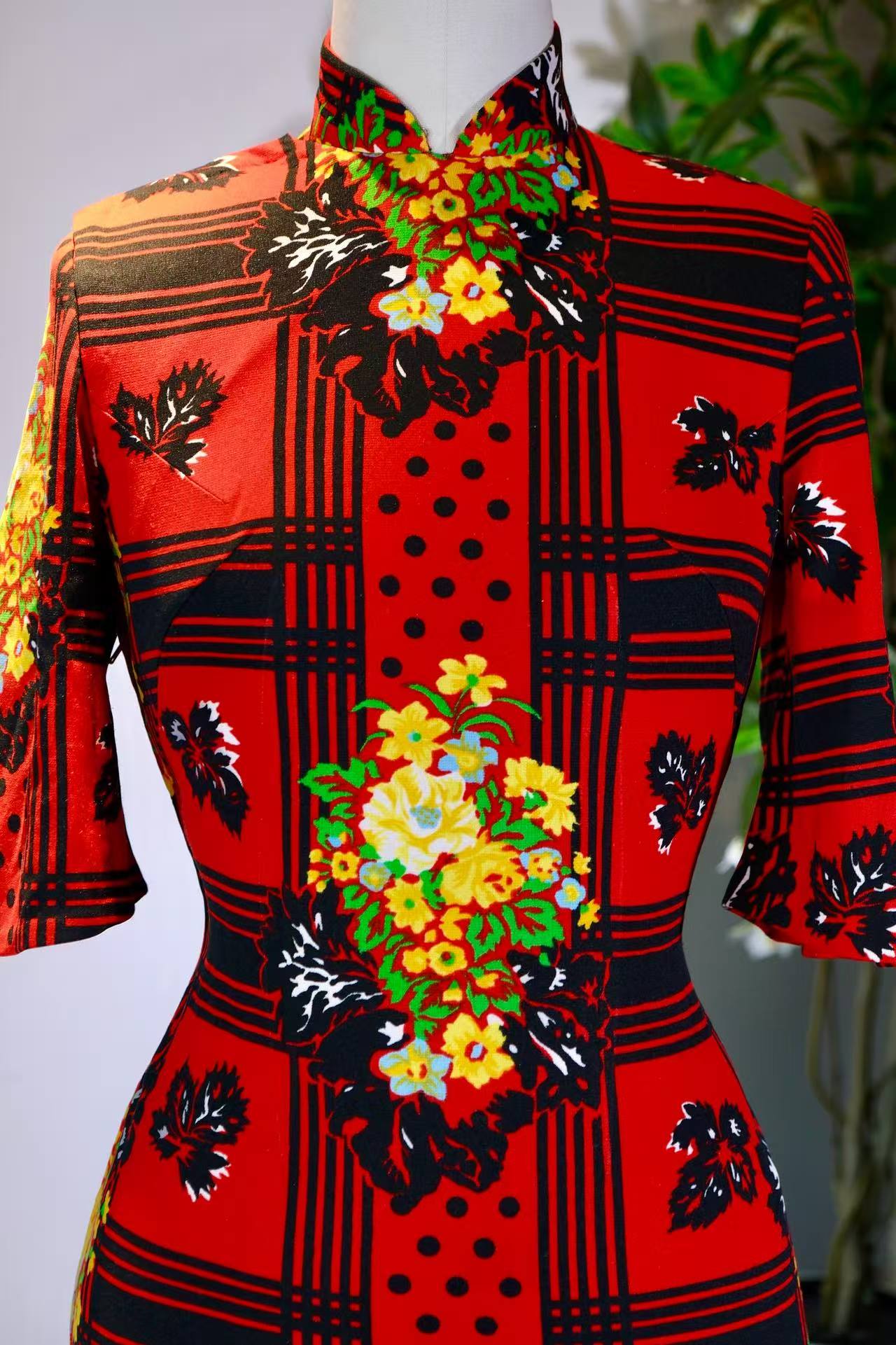
此件旗袍以正红为底色,黑格纹如经纬交织,构建出理性而秩序的骨架。其间点缀着抽象化的花卉纹样:黄蕊绿瓣的团花簇拥成束,似春日盛放的牡丹,又如秋菊傲霜,以写意笔法晕染出蓬勃生机;黑色叶片则以泼墨般的洒脱姿态散落,与规整的格纹形成“疏可走马,密不透风”的视觉张力。
二、故事:时代洪流中的优雅坚守
上世纪六十年代的台湾,正处于传统与现代的激烈碰撞中。一方面,西方文化随驻军与贸易涌入,喇叭裤与迷你裙成为街头新潮;另一方面,知识分子与匠人却在旗袍中寄托着对中华文化的坚守。此件旗袍正是这一时代的缩影:格纹的几何理性,暗合当时盛行的现代主义思潮;而花卉的写意笔触,则延续着《考工记》“天有时,地有气,材有美,工有巧”的传统造物智慧。
其剪裁亦暗藏玄机:收腰处的省道设计精准贴合女性曲线,开衩高度恰到好处,既保留传统旗袍的含蓄,又暗合当时女性追求独立与自信的时代精神。
三、艺术风格:抽象与具象的边界消融
从艺术史视角看,此件旗袍的图案设计堪称“东方抽象主义”的典范。黑格纹的重复与变异,与蒙德里安的《构成》系列异曲同工,却在秩序中注入东方的灵动;花卉的抽象化处理,既非完全写实,亦非彻底几何化,而是以“似与不似之间”的写意手法,呼应着张大千晚年泼彩山水的朦胧意境。这种“中西合璧”的美学追求,正是六十年代台湾设计界的集体自觉。
四、稀缺性:时光淬炼的孤品
历经半个多世纪,保存完好的六十年代台湾产旗袍已属凤毛麟角。此件旗袍不仅面料无明显褪色,纹样依旧鲜亮如初,更难得的是其剪裁工艺——省道处的归拔工艺精准到位,皆为机器量产无法复制的匠心。据《台湾服饰志》记载,六十年代台湾旗袍作坊多以家族式经营,产量有限,且因社会变迁,许多作坊早已湮没于历史尘埃。此件旗袍,不仅是衣物,更是一段凝固的时光,一位无声的历史见证者。
结语
“衣以载道”,此件六十年代台湾产抽象印花旗袍,以其独特的图案语言、精湛的制作工艺与深厚的时代内涵,成为研究中国近现代服饰史的重要实物资料。它不仅是一件可供赏玩的艺术品,更是一扇通往过去的窗口,让我们在格纹与花卉的交织中,触摸那个时代的温度与脉搏。
Measurements / Size Guide:
Bust / Waist / Hips: 90/78/94 cm
Total Length: 83 cm
Detailed Description:
This qipao features a vibrant crimson base, with black gridlines interlacing like longitude and latitude to create a rational and orderly framework. Nestled within are abstracted floral motifs: clusters of blossoms with yellow stamens and green petals bloom together, reminiscent of springtime peonies or autumn chrysanthemums. These are rendered with freehand brushwork (Xieyi) to exude vitality. The black leaves are scattered with the uninhibited grace of splash-ink painting, creating a visual tension against the structured grid—embodying the traditional aesthetic of being "sparse enough for a horse to gallop through, yet dense enough to stop the wind."
In 1960s Taiwan, tradition and modernity were in fierce collision. While Western influences brought bell-bottoms and miniskirts to the streets, intellectuals and craftsmen maintained their cultural heritage through the qipao. This garment is a microcosm of that era: the geometric rationality of the grid aligns with the prevailing Modernist trends, while the freehand floral strokes carry forward the ancient wisdom of the Kao Gong Ji: "The season has its timing, the earth its energy, the material its beauty, and the craftsman his skill."
The tailoring reveals further depth: precise darting at the waist perfectly fits the female silhouette, and the side slits are cut to a height that balances traditional modesty with the burgeoning spirit of female independence and confidence.
From an art history perspective, the pattern design is a masterpiece of "Oriental Abstractionism." The repetition and variation of the black grid echo Mondrian’s Composition series, yet infuse that order with Eastern fluidity. The flowers are neither fully realistic nor purely geometric; instead, they exist in the realm of "likeness and unlikeness," echoing the hazy, ethereal atmosphere of Zhang Daqian’s late-period splashed-color landscapes. This pursuit of "East-meets-West" aesthetics was a collective consciousness in 1960s Taiwanese design.
After more than half a century, well-preserved 1960s Taiwanese qipaos have become exceedingly rare. This piece shows no significant fading, and its patterns remain as vivid as ever. More remarkably, its tailoring—specifically the "iron-shaping" (Gui-Ba) technique at the darts—demonstrates a level of craftsmanship that mass production cannot replicate. According to the Records of Taiwanese Costume, 1960s workshops were often family-run with limited output. As society changed, many disappeared into history. This qipao is not just clothing; it is a frozen moment in time, a silent witness to history.
"Clothing carries the Way." This 1960s Taiwanese abstract print qipao, with its unique visual language, exquisite craftsmanship, and profound historical context, stands as a vital artifact of modern Chinese costume history. It is more than an artwork to be admired; it is a window to the past, allowing us to feel the warmth and pulse of an era within the weave of grids and flowers.