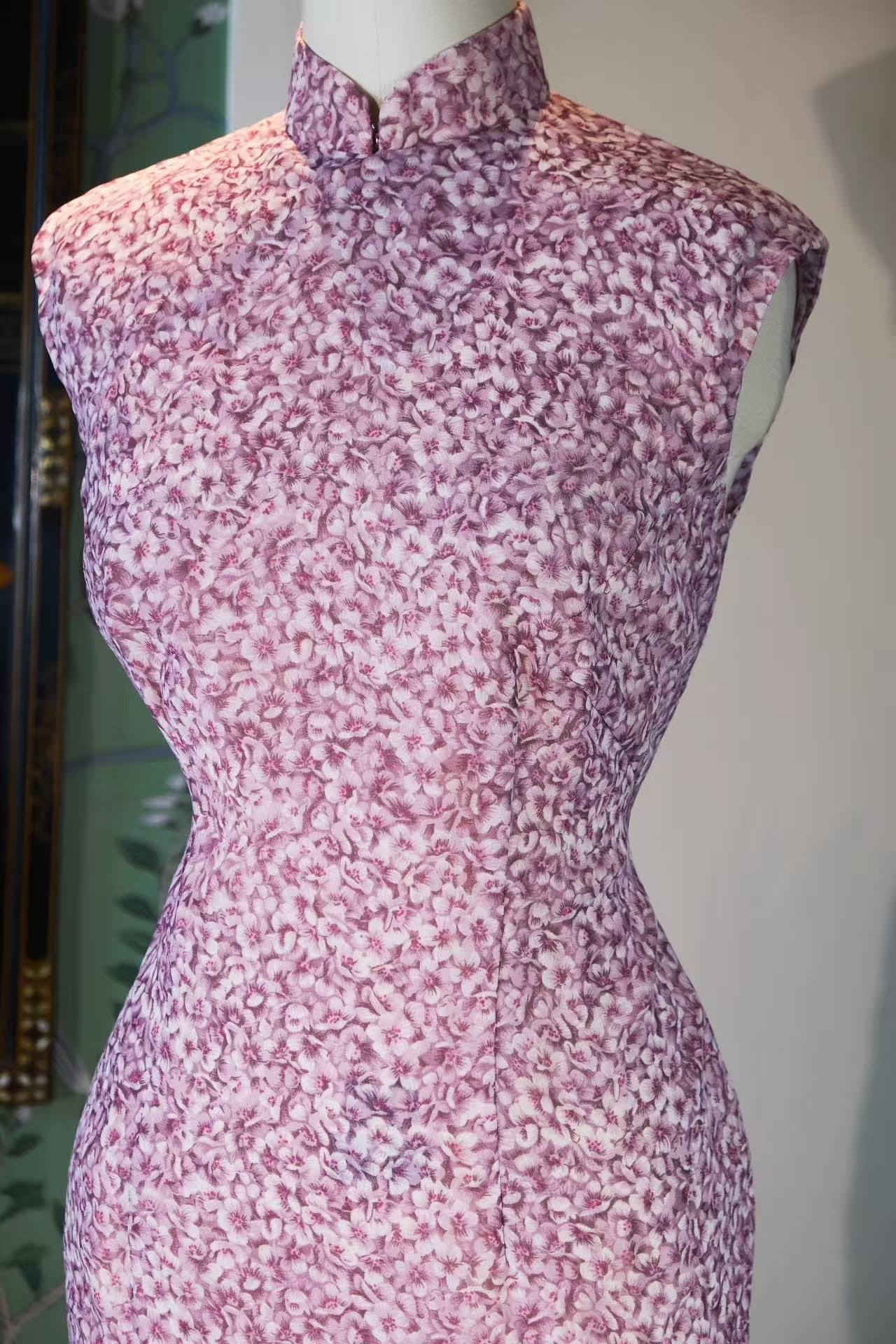
六十年代台湾产碎花雪纺古董旗袍考释
袍身以雪纺为底,满布粉紫碎花,其图案设计暗合中国古典美学“师法自然”的旨趣。细观之,花朵形态近似樱花或木槿,花瓣以晕染技法呈现层次,粉白过渡如朝露初晞,紫蕊点缀似星芒隐现,与宋代苏汉臣《货郎图》中“杂花”纹样的灵动意趣一脉相承。更妙者,花枝交错间暗藏“S”形曲线,恰如《楚辞》“纷吾既有此内美兮,又重之以修能”所言,将东方婉约与现代装饰性熔于一炉。
台湾六十年代旗袍工艺,尤擅以轻透雪纺消解传统织锦的厚重感。此袍采用“活性印花”技术(据《台湾纺织史》),使染料与纤维分子紧密结合,历经六十余载仍色泽鲜润。
彼时台湾正值出口加工转型期,旗袍作为“文化软实力”的载体,既保留中式美学内核,又吸纳西方时装的剪裁语言。此件旗袍的碎花图案,或受同时期美国“花卉摇滚”风潮间接影响,却以含蓄的东方审美过滤了西方波普艺术的张扬,成为冷战年代文化交融的微观标本。其稀缺性不仅在于面料保存之难得,更在于它凝固了特定历史时期的文化对话。
当旗袍褪去“服制”的庄严,成为日常衣装,它便成为女性身体解放与审美自觉的见证。此件碎花雪纺旗袍,以轻纱承重忆,以花影诉流年,其艺术价值不仅在于“形制之雅”,更在于“纹样之诗”与“工艺之秘”。正如沈从文先生所言:“衣必有德,方可传世”——这件跨越半个世纪的衣冠,正以其稀缺性与独特性,为后世留下一扇窥见六十年代台湾社会风尚的窗棂。
1960s Taiwan Floral Chiffon Antique Qipao: An Artistic Examination
The Poetry of Patterns: A Dialogue with Nature The garment, crafted from a delicate chiffon base, is adorned with an all-over print of pink and purple florets. Its design echoes the classical Chinese aesthetic of "learning from nature." Upon closer inspection, the blossoms—reminiscent of cherry or hibiscus—are rendered with a gradient wash technique. The transition from pale pink to white evokes the freshness of morning dew, while the purple pistils shimmer like hidden stars. This vibrant charm inherits the "miscellaneous floral" (Zahua) whimsy found in Song Dynasty masterpieces like Su Hanchen’s The Knick-knack Peddler. More subtly, the intertwining branches form soft "S" curves, melding Oriental gentleness with modern decorativeness—a visual embodiment of the Chu Ci verse: "Inner beauty I possess in abundance; I have added to it a cultivated grace."
The Craft of "Weightless" Elegance Taiwanese qipao craftsmanship of the 1960s excelled at using translucent chiffon to dissipate the historical weight of traditional brocades. According to the History of Taiwan Textiles, this piece utilizes "Reactive Printing" technology, allowing the dyes to bond intimately with the fibers. This ensures that the colors remain vivid even after sixty years. During Taiwan’s transition into an export-oriented economy, the qipao served as a vessel for "cultural soft power." It preserved the core of Chinese aesthetics while absorbing Western sartorial tailoring.
A Micro-Specimen of Cultural Convergence The floral motifs may have been indirectly influenced by the contemporary American "Floral Power" trend, yet they filtered the flamboyance of Western Pop Art through a restrained Eastern lens. This garment stands as a microscopic specimen of cultural dialogue during the Cold War era. Its rarity lies not only in the difficulty of preserving such delicate fabric but in its crystallization of a specific historical conversation.
Conclusion: A Window into the Past When the qipao shed its formal solemnity to become everyday attire, it became a witness to feminine liberation and aesthetic self-awareness. To quote the scholar Shen Congwen: "A garment must possess virtue to be passed down through generations." This piece, spanning half a century, remains a window into the social spirit and fashion of 1960s Taiwan—where memories are carried on gauze and fleeting years are told through the shadows of flowers.