六十年代和风印花台湾古董旗袍:织锦上的东方美学史诗
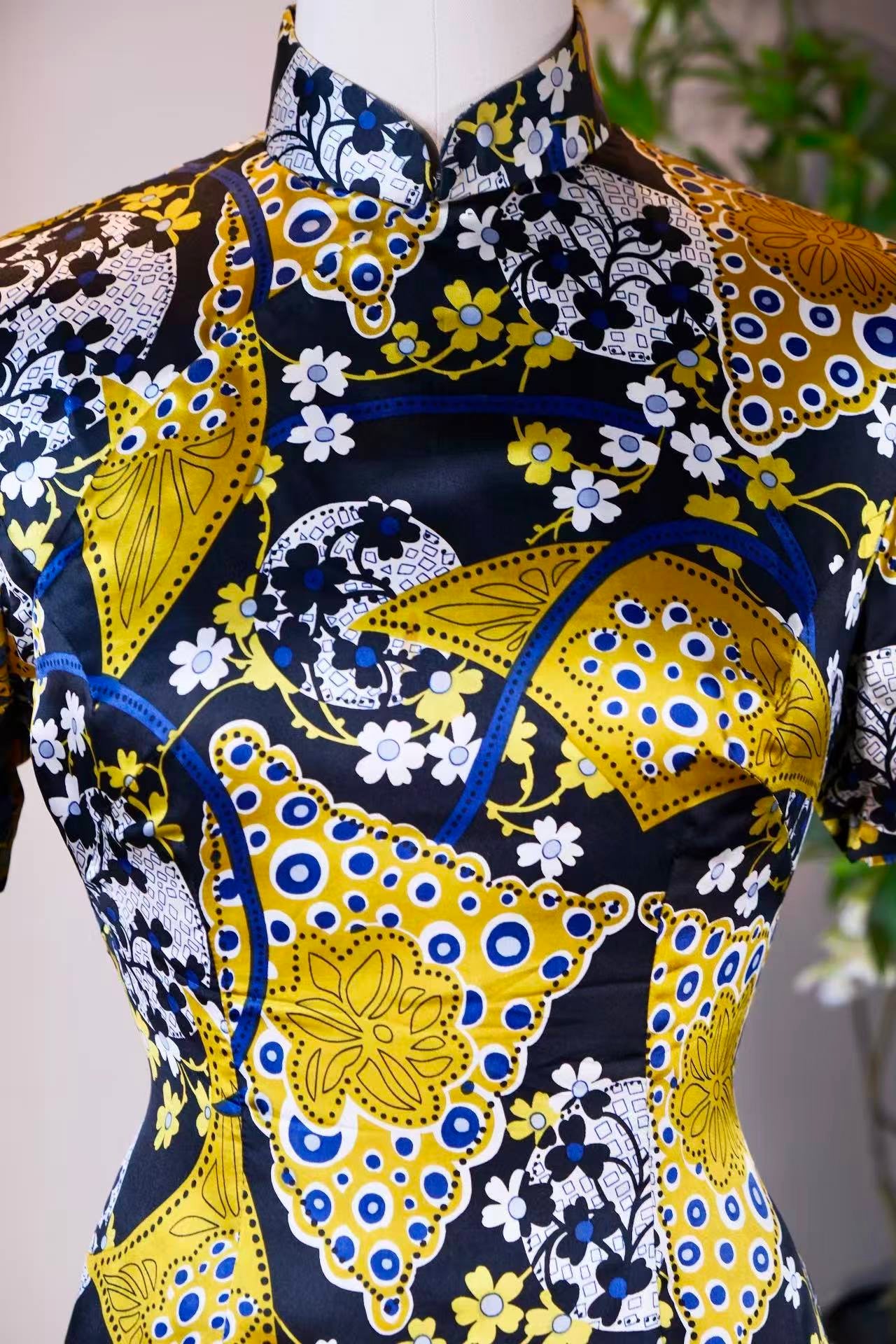
在时光的褶皱里,这件六十年代台湾产古董旗袍如一幅流动的屏风,将和风美学与华夏衣冠的精魂织就。深蓝缎面上,金箔般的黄、霁雪的白、青金的蓝交织成「百花不落」的画卷——这不是简单的印花,而是一场跨越时空的视觉雅集。
此袍采用「両面织り」技术,正反面花纹皆清晰可辨,需匠人以「手織り」木机耗时月余方成。面料选用台湾本土「蓬莱纱」,经「蓝染」后再以「型染」工艺套印金箔,使得色彩历经六十年仍如「雨过天青」般明澈。
金蝶象征「物哀」之美,青海波暗合「八百万神」的信仰,白梅与蓝菊则分别对应「菊与刀」的文化双重性。这种混血美学,恰如本居宣长所言「物のあはれ」(物哀),在繁华中透着一丝苍凉的诗意。
这件旗袍不仅是织物,更是一卷可穿戴的东亚美学手稿。当金蝶掠过青海波,当樱花与白梅在深蓝夜空中共舞,我们触摸到的,是六十年代台湾纺织匠人对东方美学的极致诠释,更是一段永不褪色的文化记忆。
A 1960s Wafuku-Print Taiwanese Antique Cheongsam: An Oriental Aesthetic Epic in Brocade
Within the folds of time, this 1960s Taiwanese antique cheongsam stands like a fluid folding screen, weaving together the essence of Japanese (Wafuku) aesthetics and traditional Chinese attire. Upon a deep navy satin ground, gold-leaf yellow, snowy white, and lapis blue intertwine to create a panorama of "Ever-blooming Flowers"—this is no mere print, but a visual Yaji (elegant gathering) transcending time and space.
This gown utilizes the Ryomen-ori (double-sided weaving) technique, where the patterns are equally distinct on both sides, a feat that requires a master artisan over a month to complete on a Te-ori (hand-weaving) wooden loom. The fabric is crafted from Taiwan’s native "Penglai Gauze," dyed using the Aizome (indigo) method and subsequently overprinted with gold leaf via the Katazome (stencil dyeing) process. This ensures that even after sixty years, the colors remain as clear as "the sky after a rain."
The golden butterflies symbolize the beauty of Mono no aware (the pathos of things); the Seigaiha (blue ocean wave) motifs resonate with the Shinto belief in the Yaoyorozu-no-kami (Eight Million Gods); while the white plum and blue chrysanthemum mirror the cultural duality of "The Chrysanthemum and the Sword." This hybrid aesthetic, much like Motoori Norinaga’s description of Mono no aware, evokes a sense of desolate poetry amidst a sea of prosperity.
This cheongsam is more than a textile; it is a wearable manuscript of East Asian aesthetics. As golden butterflies glide over the Seigaiha waves and cherry blossoms dance with white plums against a midnight-blue sky, we touch the ultimate interpretation of Oriental beauty by 1960s Taiwanese weavers—a cultural memory that will never fade.