深圳溯源
Couldn't load pickup availability
在时光的褶皱里,总有一件衣裳能唤醒一个时代的呼吸。
当世人多以丝绸为旗袍正统时,
这份厚重,不再是江南水乡的氤氲,而是北方冬日夜里的炉火旁,
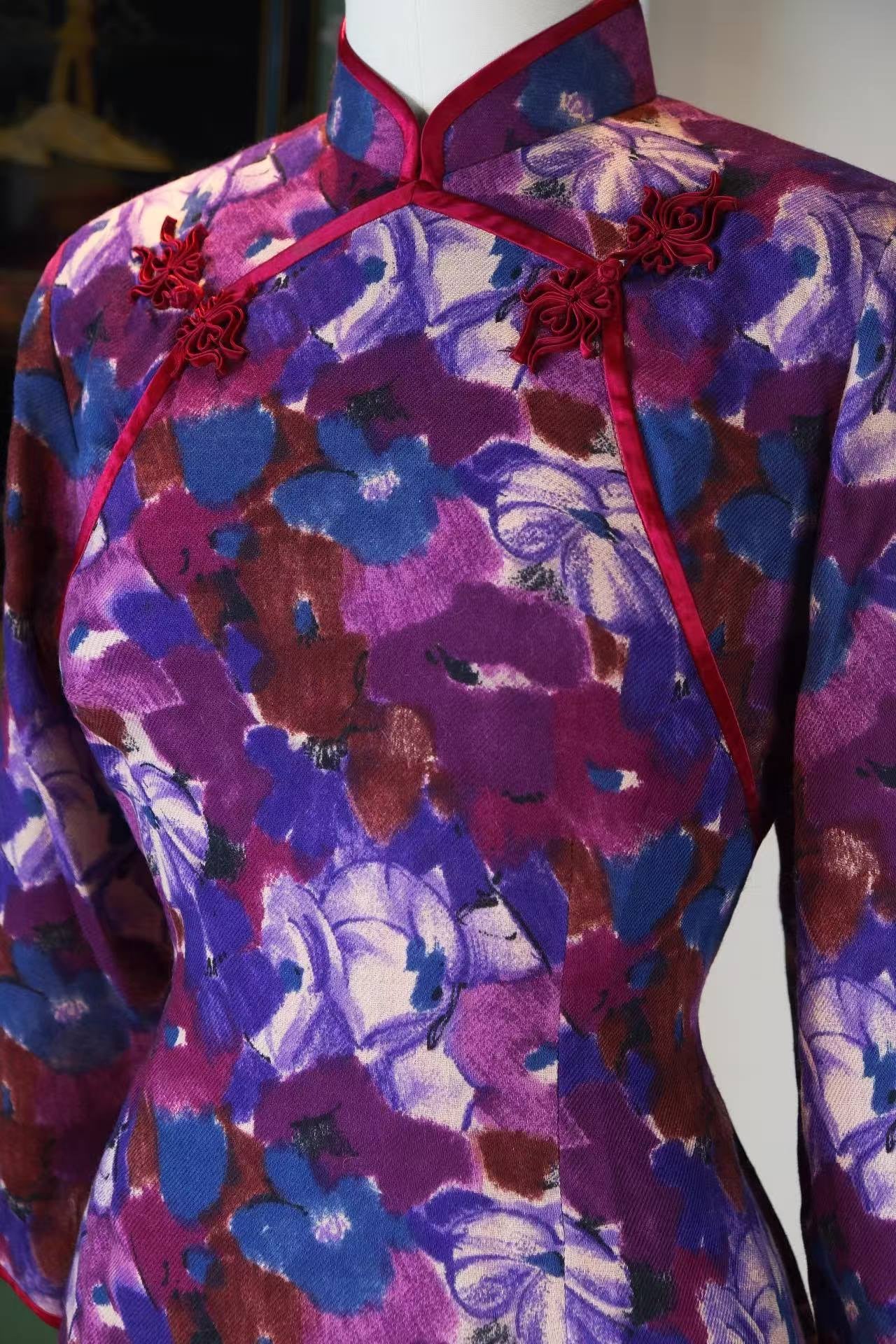
旗袍通体以紫、蓝、酒红三色为基底,
花卉图案并非刻意写实,而是以泼墨般的笔触晕染,
旗袍采用罕见的双襟设计,两道平行的斜襟从立领蜿蜒至腰际,
两对手工盘扣堪称点睛之笔,以鲜红丝线缠绕成蝶形,
这件旗袍的稀缺性,不仅在于手绘工艺与双襟形制,
在机器轰鸣、追求效率的年代,这件手绘羊毛旗袍,
The Stubborn Elegance of Twill Wool Within the folds of time, certain garments awaken the breath of an era. This mid-1960s masterpiece, crafted from hand-painted twill wool with a rare double-bodice (shuangjin) design, is more than a garment—it is a wearable epic of art. While silk is often deemed the "orthodox" medium for the qipao, this piece chooses wool as a vessel of thoughtful warmth—a defiant grace against the winter chill. The twill weave, dense and tactile, possesses the practical strength to withstand the frost while emitting an introverted luster under the nourishment of body heat, like a glass of aged red wine, mellow and intoxicating.
Sculptural Textures and Painterly Soul The weight of the wool replaces the misty imagery of Jiangnan with the searing heat of a winter hearth. The texture imbues the ink-like blossoms with a three-dimensional, relief-like presence. As light skims over the twill ridges, the flowers seem to tremble against the velvety backdrop. The depths of deep purple and azure are anchored by the wool’s matte shadow, while the intensity of wine-red becomes even more concentrated within the fibers. It resembles an oil painting rendered upon a velvet canvas—profound, rhythmic, and piercing through the very fabric of the soul.
Hand-Painted Abstraction: An Improvisation of Life The motifs are not merely realistic but are rendered with bold, "Xieyi" (freehand) brushstrokes. One can trace the vigor of the brush at the petal edges and the sculptural interplay of colors—the deep purple of Tang poetry, the ethereal celadon of Song ceramics, and the passionate crimson of A Dream of Red Mansions. In an era when mechanical printing began to overflow, this hand-painted process using natural dyes on wool stands as a rare testament to craftsmanship. Each blossom is a unique improvisation; each hue an unrepeatable imprint of time.
The Double Bodice and Butterfly Closures The rare double-bodice design—with parallel slanted openings meandering from the high collar to the waist—echoes the calligraphic flow of the character "双" (Double). Once the exclusive domain of noble ladies, it achieves a sophisticated balance between traditional majesty and modern symmetry. The butterfly frog buttons, wound with scarlet silk, serve as the "finishing touch." In Chinese symbolism, the butterfly represents longevity and fidelity. These closures melt utility and aesthetics into one, their fiery red piping acting like a stroke of liquid gold, bounding the burning floral fires within an Eastern form.
Conclusion: A Living Fossil of Aesthetic Obsession By the 1960s, the qipao had begun to retreat from daily life into private social circles and the wardrobes of those obsessed with beauty. This wool qipao is a living fossil, witnessing the resilience of traditional aesthetics during a period of transition. It is an "Art Garment" that captures the artisan’s warmth, the painter’s talent, and the wearer’s integrity within the grain of history. True beauty never fears the washing away of time; it only grows more fragrant with the settling of the years.