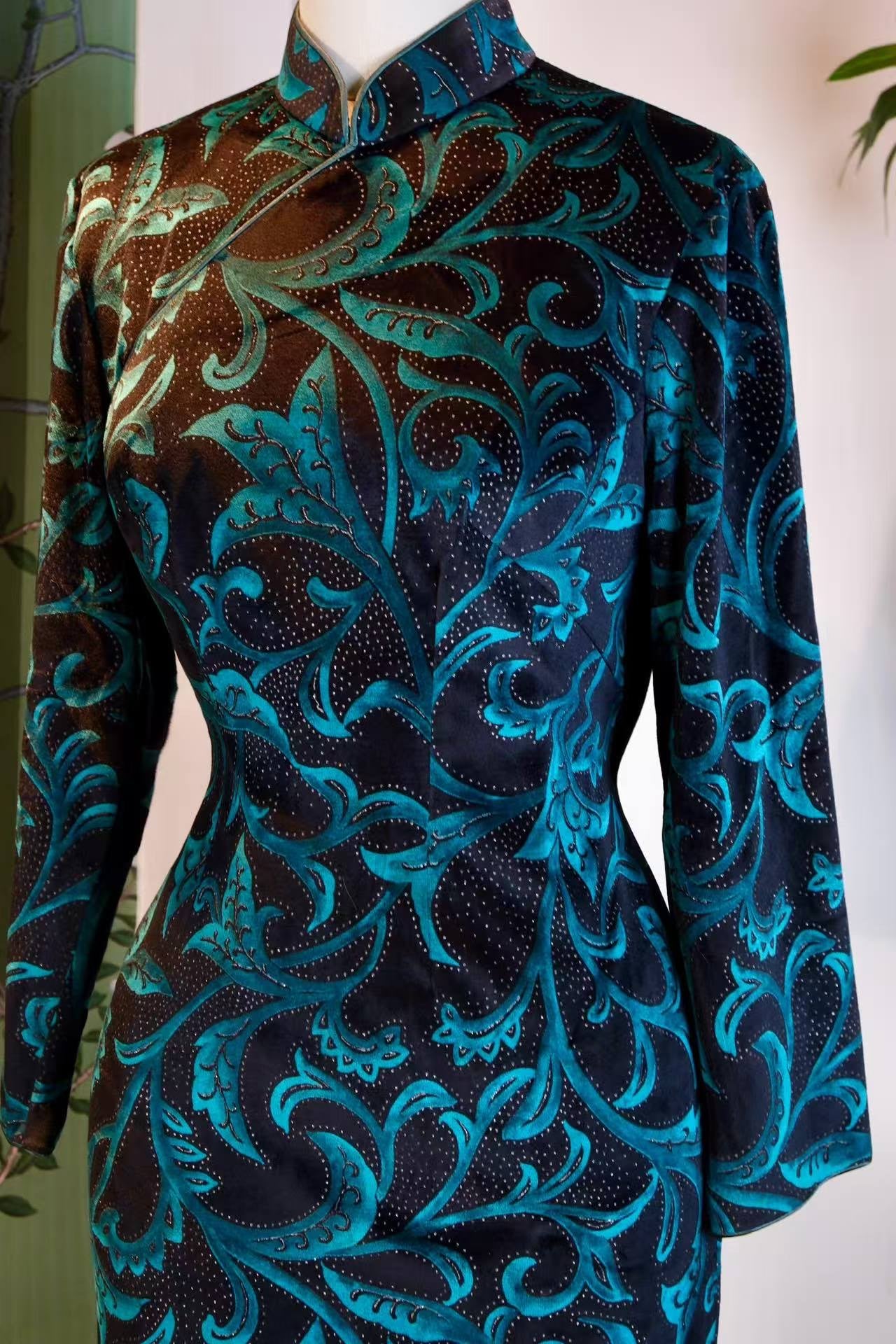
六十年代香港丝绒手绘印花旗袍:藏在青金石纹里的海上旧梦
这件六十年代香港产古董旗袍,是时间与技艺共同雕琢的孤品。丝绒面料在岁月中沉淀出温润的光泽,仿佛凝固了旧时光的呼吸,每一寸都诉说着那个年代的优雅与风华。
旗袍上的图案以青金石蓝为骨,勾勒出缠枝莲的曼妙身姿。莲叶舒卷如云,花瓣层叠似浪,其间点缀的细碎白点,恰似《诗经》中“蒹葭苍苍,白露为霜”的晶莹露珠,又似敦煌壁画里飞天散落的星子。这种“缠枝”纹样,源自宋代瓷器的典雅,却在六十年代的香港被赋予了新的生命力——它不再只是传统的符号,而是中西文化交融的见证:丝绒的华贵源自欧洲宫廷,手绘的写意却深植于东方美学,正如张爱玲笔下“华丽而苍凉”的上海传奇,在香港的土地上续写着新的篇章。
其稀缺性更在于“手绘印花”的工艺。在机器印花尚未普及的年代,画师需以毛笔蘸取矿物颜料,在丝绒上一笔笔勾勒、晕染,每一朵花的形态、每一片叶的脉络都独一无二。这种近乎奢侈的匠心,使得每一件手绘旗袍都成为不可复制的艺术品。而香港作为当时远东的时尚枢纽,汇聚了沪港两地的裁缝名师,他们将海派旗袍的修身剪裁与岭南文化的灵动气韵相融合,创造出这种既贴合东方女性曲线,又暗含现代审美意识的独特风格。
当指尖抚过丝绒上凹凸的纹路,仿佛能触摸到六十年代香港街头的霓虹与茶楼里的粤曲,听到张爱玲在《半生缘》里写下的“我们回不去了”的叹息。这件旗袍,是物质的遗存,更是文化的容器——它装着海上旧梦的余温,也藏着东方美学在时代洪流中不变的优雅。
1960s Hong Kong Hand-Painted Velvet Qipao: An Old Shanghai Dream Hidden in Lapis Lazuli Textures
This 1960s antique Qipao from Hong Kong is a unique masterpiece sculpted by both time and skill. The velvet fabric has acquired a gentle, warm luster over the decades, as if it has frozen the breath of the past, with every inch narrating the elegance and splendor of a bygone era.
I. Iconography: A Fusion of Starlight and Ancient Vines
The patterns on the Qipao use Lapis Lazuli blue as their skeletal frame, tracing the graceful form of the intertwining lotus. The lotus leaves unfurl like clouds, and the petals overlap like waves. The delicate white dots scattered among them resemble the crystalline dewdrops from The Classic of Poetry—"Green, green the reeds; white dew turns to frost"—or perhaps the stardust scattered by flying apsaras in Dunhuang murals. This "intertwining" (Chanzhi) motif originates from the elegance of Song Dynasty ceramics, yet it was endowed with new vitality in 1960s Hong Kong. It is no longer just a traditional symbol, but a witness to the fusion of East and West: the opulence of the velvet hails from European courts, while the freehand (Xieyi) brushwork is deeply rooted in Oriental aesthetics. Like the "magnificent yet desolate" Shanghai legends of Eileen Chang’s prose, it continues its new chapter on Hong Kong soil.
II. Craftsmanship: The Luxury of the Brush
Its scarcity lies primarily in the "hand-painted printing" process. In an era before machine printing was ubiquitous, artists used brushes dipped in mineral pigments to outline and wash each stroke upon the velvet. Every flower's form and every leaf's vein is unique. This near-extravagant level of ingenuity ensures that every hand-painted Qipao is an irreproducible work of art. As the fashion hub of the Far East at the time, Hong Kong gathered master tailors from both Shanghai and Hong Kong. They blended the body-conscious tailoring of the Shanghai style with the vibrant spirit of Lingnan culture, creating a unique style that fits the Oriental female silhouette while harboring a modern aesthetic consciousness.
III. Cultural Memory: A Vessel of History
As fingertips brush across the undulating textures of the velvet, one can almost touch the neon lights of 1960s Hong Kong streets and hear the Cantonese opera drifting from tea houses; one might even hear the sigh from Eileen Chang’s Half a Lifelong Romance: "We can't go back." This Qipao is a physical relic, but more importantly, it is a cultural vessel—it carries the lingering warmth of an "Old Shanghai Dream" and the unchanging elegance of Oriental aesthetics amidst the torrent of time.